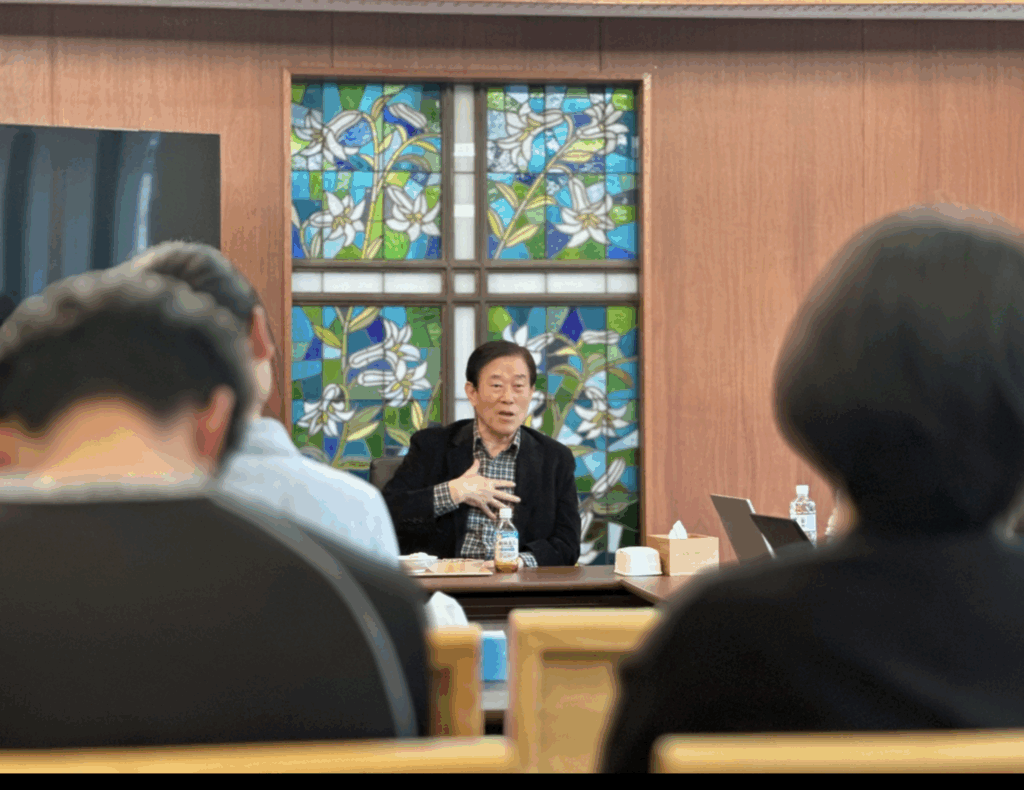
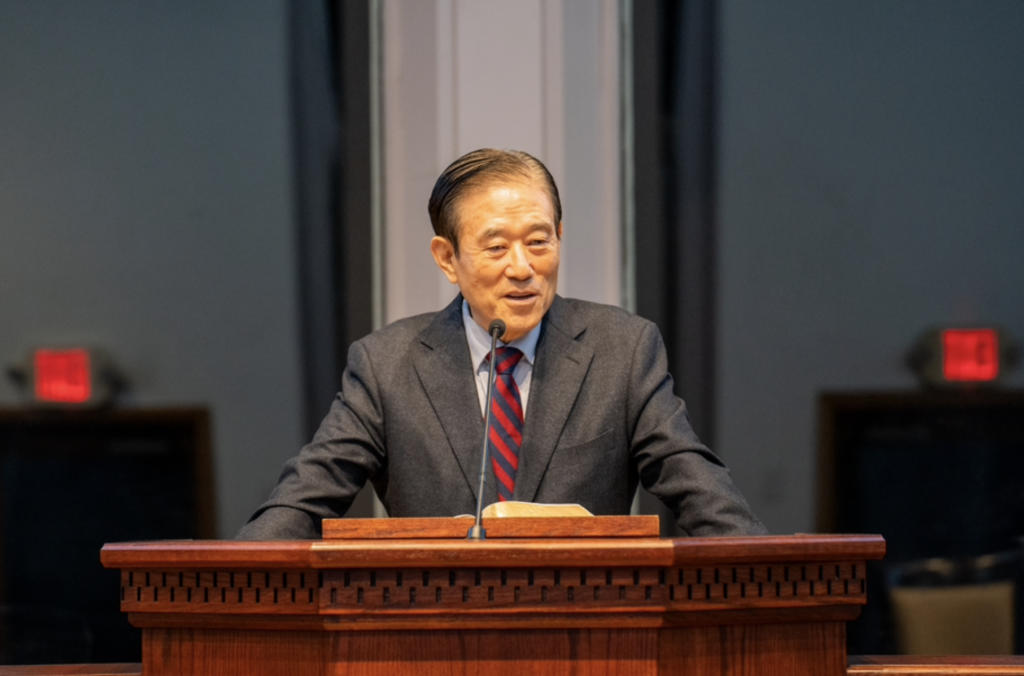
Pastor David Jang examined what mission the Lord entrusted to us in the scene where He appeared to His disciples after His resurrection. John 21 can be divided into three main sections. The first section deals with missions, the second with shepherding, and the third with “time,” that is, the end times. Following these three themes, we can see the profound exhortations the Lord Himself left with His disciples. The core of these exhortations is to fulfill the calling entrusted to each of us without confusion. Even after His resurrection, the Lord once again made clear to the disciples who He was and what they had been called to do. That same calling applies to us today. In other words, as believers in the resurrected Lord, we must carry out our clear mission and responsibility in the context of missions, shepherding, and the anticipation of the end times.
Following this message, the church finished studying First and Second Thessalonians. These letters to the beautiful Thessalonian church contain profound teachings and warnings about eschatology, along with practical pastoral advice. This is valuable instruction for our church today as well. Next, in Paul’s epistles, we come to the so-called “Pastoral Epistles”—First and Second Timothy, and Titus. Pastor David Jang emphasized the importance of paying attention to this section. The Pastoral Epistles are letters in which Paul provides pastoral guidance to his disciples in ministry, Timothy and Titus. These documents provide specific teachings on church administration, the attitude of shepherding, methods of caring for believers, and church order.
Pastor David Jang also gave a brief account of how pastoral theology has developed over the course of church history. The Catholic Church (the old church) experienced the Reformation, giving birth to the Reformed churches, i.e., Protestantism, with key reformers such as Martin Luther, John Calvin, and Ulrich Zwingli. Afterward, Protestant Orthodoxy emerged, which in turn faced backlash with the rise of Liberal Theology. However, when Liberal Theology began to threaten and undermine the church seriously, a movement called Neo-Orthodoxy arose to return once more to Protestant Orthodoxy. Leading figures such as Karl Barth, author of Church Dogmatics, Paul Tillich, Emil Brunner, and Reinhold Niebuhr strove to defend the gospel, with Karl Barth residing in Basel, Switzerland.
Eduard Thurneysen (1888–1974), a Swiss theologian from Basel, had a significant impact in establishing pastoral theology for that era. He studied at the University of Basel and later taught at the University of Berlin. His major work, Pastoral Care, offers specific guidance on how to conduct pastoral ministry in real-life settings. Pastor David Jang recalled that in his younger years, he was deeply immersed in Thurneysen’s writings and that when he visited Europe, he always wanted to visit Basel.
Pastoral theology falls under the broader discipline of Practical Theology within the study of theology. Typically, in theological education, students learn foundational subjects in the first year, biblical theology and church history (historical theology) in the second year, systematic theology (doctrine) in the third year, and practical theology in the fourth year. Homiletics (preaching) and pastoral theology fall under practical theology. The root and basis of practical theology is Scripture. Among biblical texts, Paul’s Pastoral Epistles (First and Second Timothy, Titus) contain the core principles and framework for church ministry. Hence, for those entrusted with caring for the body of Christ, these Pastoral Epistles serve as vital guides.
Following the Pastoral Epistles comes Philemon, which, though addressed to a single individual (Philemon), contains important truths meant to be read by the entire community. Then, after the thirteen Pauline Epistles (Romans through Philemon) comes the Book of Hebrews. Hebrews has long been a subject of debate because its author is not clearly identified. Its format differs from Paul’s epistles, and it lacks Paul’s customary greetings at the beginning and end. However, Hebrews 13:23 says, “You should know that our brother Timothy has been released, with whom I shall see you if he comes soon.” Because Paul so often highlighted his close relationship with Timothy, some scholars have suggested that Hebrews may be Paul’s work.
One of Paul’s beloved co-workers was Timothy, whose name appears frequently throughout Paul’s letters. Among Paul’s pastoral team, Timothy and Titus stand out as those who actually took on pastoral leadership. Of course, there must have been many unnamed servants who devoted themselves without seeking recognition. Even by looking at Romans 16, we see numerous co-laborers of Paul mentioned. Paul valued team ministry, fulfilling the mission of both evangelism and shepherding together with his many co-workers. Among them, Timothy held a particularly special role, appearing as a co-author in no fewer than six of Paul’s letters (2 Corinthians, Philippians, Colossians, 1 & 2 Thessalonians, Philemon).
When we look more closely at who Timothy was, we learn that Paul took him on as a co-worker during his second missionary journey when revisiting the region of Derbe and Lystra (Acts 16:1–3). His mother was a believing Jew, his father was a Greek, and his grandmother Lois was also a woman of sincere faith, as Paul notes in Second Timothy. Timothy was known for his gentle character, yet he was also anxious under difficult circumstances. The church faced false teachers internally and external persecution, so much so that Timothy suffered from stomach troubles (1 Timothy 5:23). According to 2 Timothy 1:4, “recalling your tears,” he was someone who shed many tears.
During the first missionary journey, Paul set out from Antioch with Barnabas and Mark, traveling through various regions to proclaim the gospel. In Lystra, he healed a man lame from birth, and the locals attempted to deify Paul and Barnabas. Paul firmly corrected their error and kept preaching, which incited some jealous Jews to stone Paul, leaving him for dead. However, God “raised him up” (Acts 14:19–20). The name “Lystra” means “a flock of sheep,” yet it was a place where Paul suffered greatly and then experienced a miraculous recovery. On the second missionary journey, when Paul returned to that land, he met Timothy, whose name means “one who fears God.” Though Lystra was a place stained with Paul’s blood and tears, it was there that God introduced Timothy, a precious co-laborer.
First Timothy is believed to have been written around AD 63–65, after Paul’s two-year house arrest in Rome when he was briefly released. After his release, Paul embarked on further travels, leaving Titus on the island of Crete and Timothy in Ephesus. The Ephesian church was a major congregation where Paul had invested three years of intense pastoral work. It was a church that experienced significant revival, making it all the more crucial to safeguard. Meanwhile, Paul was eager to go even to Spain (Rom. 15:28) and pressed on to other mission fields. However, false teachers had infiltrated the Ephesian church and were causing confusion, so Timothy had to stay and straighten things out.
Reading through the opening of First Timothy, Pastor David Jang explained in detail the meaning and background of the letter Paul wrote to Timothy:
“Paul, an apostle of Christ Jesus by the command of God our Savior and of Christ Jesus our hope” (1 Tim. 1:1).
Here, the word “Savior” is sōtēr (σωτήρ, sōtēros in the genitive form) in Greek. This was a title customarily given to the Roman Emperor at that time, but Paul uses it for God, declaring that it is God, not the emperor, who is the true Savior of the world. Furthermore, Christ Jesus is “our hope” for both Paul and Timothy:
“To Timothy, my true child in the faith: Grace, mercy, and peace from God the Father and Christ Jesus our Lord.” (1 Tim. 1:2)
Paul refers to Timothy as his “true child in the faith,” emphasizing Timothy’s special place in his life. Also, whereas Paul frequently opens his letters wishing “grace and peace,” here in First and Second Timothy he adds “mercy” as well. In chapter 1, Paul deeply reflects on God’s mercy shown to him, a sinner.
Paul states that he left Timothy in Ephesus “so that you may charge certain persons not to teach any different doctrine” (1 Tim. 1:3). Certain people in the Ephesian church were devoting themselves to “myths and endless genealogies” (1 Tim. 1:4). These individuals, relying on the Old Testament and various traditions, exaggerated or misinterpreted myths and genealogies, diverging from the fulfillment of the gospel in Christ. Also, influenced by Gnosticism, some were causing arguments and disputes within the church.
A pastor has the responsibility to protect the church from “different doctrines.” Even in this age, various foreign ideologies—such as secularism—attempt to infiltrate the church and distort the essence of the gospel. Therefore, pastors, as those entrusted with the care of God’s people, must hold firmly to the gospel and faithfully teach its core truths. This is a fundamental pastoral calling.
Paul points out that those who indulge in myths, genealogies, and contentious discourse have fallen into “vain discussion” (1 Tim. 1:6–7). He explains that, although the law itself is good (1 Tim. 1:8), its role is to make sin known and point people to the gospel (1 Tim. 1:9–11). In other words, the law can condemn sinners but cannot save them; it is a guardian leading us to the gospel (cf. Gal. 3:24).
Paul then again refers to “the gospel of the glory of the blessed God” (1 Tim. 1:11) that he had received, and he expresses his gratitude for having been entrusted with this gospel:
“I thank him who has given me strength, Christ Jesus our Lord, because he judged me faithful, appointing me to his service” (1 Tim. 1:12).
Pastor David Jang emphasized this verse in particular. Paul regarded the responsibility of his calling not merely as a burden but as an occasion for gratitude. He considered it a joy and a privilege that someone so undeserving—who was not even worthy of salvation—had been chosen for this immense task of “pastoral” ministry.
Continuing, Paul confesses,
“though formerly I was a blasphemer, persecutor, and insolent opponent. But I received mercy…” (1 Tim. 1:13).
He discloses how he once opposed Jesus Christ and took the lead in destroying the church. Recognizing that he, sinful and weak, received mercy, he can say, “Christ Jesus came into the world to save sinners, of whom I am the foremost” (1 Tim. 1:15). This humble admission resonates powerfully with both pastors and believers.
Quoting this verse, Pastor David Jang insisted that “all pastoral ministry begins with the recognition that we are sinners.” A pastor who does not truly grasp that they themselves have been forgiven and shown mercy cannot lovingly serve the church community. Like the expression “wounded healer,” only those who know what it is to be forgiven and to weep in repentance can embrace and care for the sins and wounds of others.
Paul continues,
“But I received mercy for this reason, that in me, as the foremost, Jesus Christ might display his perfect patience as an example to those who were to believe in him for eternal life” (1 Tim. 1:16).
Paul believes he, the worst of sinners, was shown mercy to serve as a model for all who would later believe and receive eternal life. In other words, the gospel’s power is proven by the fact that it not only saves the unworthy and broken but also uses them.
Pastor David Jang underscored how practical and crucial this exhortation is for real-life ministry: “wage the good warfare” (1 Tim. 1:18). In actual pastoral settings, this can be both painful and beautiful. You must guard the church from “different doctrines,” preserve the gospel’s essence, care for believers in love, and work in teams with fellow workers who share in weeping and rejoicing. Sometimes, though, there are those whose “faith is shipwrecked” (1 Tim. 1:19–20), and you must bear that pain. Such is the reality of ministry.
Paul concludes the chapter by giving “honor and glory” to “the King of the ages, immortal, invisible, the only God” (1 Tim. 1:17). Pastor David Jang stated that this is the ultimate goal of both ministry and faith. Ultimately, our life and service aim to glorify God, and that glory is possible not because of who we are, but because of the Lord’s mercy and grace.
2. Ministry Built on Mercy
Pastor David Jang then highlighted “ministry” as the overarching theme of First Timothy, and specifically the “mercy” that underpins it. In chapter 1, Paul first explains why the church must be guarded, i.e., how dangerous false teachings can be. In the end, he concludes that the driving force of ministry is the mercy of God. Recalling that he was the foremost sinner who received mercy, Paul teaches that a pastor must remember and testify to the mercy they have received, thereby caring for the congregation.
Pastor David Jang stressed that this is the power that brings forth “love.” First Timothy 1:5 declares, “The aim of our charge is love that issues from a pure heart and a good conscience and a sincere faith.” The ultimate purpose of all teaching and warning in the church is none other than “love.” And love flows naturally when we deeply realize the great mercy we have received from the Lord. This is the essence of shepherding.
A pastor must pay close attention to everything that happens inside and outside the church. This includes worldly influences that disrupt the church, false teachers within who promote erroneous doctrines, pointless debates, and even the weariness of unnamed servants who sacrifice themselves for the church. Addressing all of these requires humility and tears. As Acts 20:17–19 shows, when Paul took leave of the Ephesian elders, he said he served the Lord “with all humility and with tears.” Likewise, Pastor David Jang repeatedly said, “Pastoral ministry is tears.” Timothy, who was timid, tearful, and even suffered from stomach problems, was precisely the one God chose to place in the pastoral field—an example of how God uses “what is weak to shame the strong” (1 Cor. 1:27).
Additionally, Pastor David Jang mentioned that ministry must be carried out in teams. Beyond Timothy and Titus, Paul had many co-laborers: Silas, Luke, Aquila and Priscilla, Epaphras, and many more who were all dedicated to preaching the gospel and building up church communities. A church must never become a one-man show. Its great strength lies in weeping together, rejoicing together, and bearing one another’s burdens.
He also emphasized that evangelism (missions) and shepherding (pastoral care) are inseparable. When the risen Lord directly gave His disciples their commission, He gave them the Great Commission: “You will be my witnesses to the end of the earth” (Acts 1:8). At the same time, He also said, “Feed my lambs” (John 21:15). During his first, second, and third missionary journeys, Paul constantly revisited the churches he had planted or established, sending letters to ensure they were thriving. Whenever the gospel is preached, it reaches people; nurturing these people and guiding them is the heart of shepherding.
Shepherding is love. Without love, there can be no true shepherding. According to First Timothy 1:5, this love “issues from a pure heart and a good conscience and a sincere faith.” On the other hand, the love found in Scripture is not simply a result of our striving or hard work; it originates in grasping how God first showed mercy to us, though we were sinners. That is why Paul keeps recalling, “I am the foremost” of sinners. Because he continually remembered who he had been, and the unfathomable grace of God, he was able to preach the gospel fervently while simultaneously grieving over any possibility that a church might scatter or collapse.
It is for this reason that First and Second Timothy and Titus, among Paul’s letters, are so important, for they offer specific pastoral directives and insight into Paul’s pastoral philosophy. Reading First and Second Timothy and Titus, we learn about the qualifications for church leadership, how to interact with congregants, the priority of worship and prayer, how to respond to false teachers, and the order of the church. These are foundational truths that guide how modern pastors—like Pastor David Jang—should conduct ministry.
Tying these points back to First Timothy 1, Pastor David Jang noted that even when a church is shaken, the phrase “I remember your tears” (2 Tim. 1:4) suggests that a pastor’s tears are not a sign of weakness, but rather a holy offering to protect the congregation. Paul earnestly hoped Timothy would never give up. He reminded him that both he (Paul) and Timothy had received mercy, and in that remembrance, they would encourage one another.
The most fundamental driving force in ministry is grace and mercy. Those who have received grace and mercy become thankful stewards of God’s church. That is why Paul says, “He judged me faithful, appointing me to his service” (1 Tim. 1:12). A pastoral or ministerial office is not some position you seize through achievement or merit. When you receive a post in the church, whether you treat it as an honor and privilege, or merely a burden, will determine your fundamental attitude toward ministry. Paul, once a fierce persecutor of the church, was appointed by God’s mercy to be a preacher of the gospel. That fact alone made him grateful every day, and that gratitude became the source of his ministry.
Thus, even when encountering individuals who harbor hostility toward the church or who disrupt it, pastors must attempt correction. If that fails, they must take firm measures to preserve the church’s holiness. In First Timothy 1:19–20, Paul mentions Hymenaeus and Alexander as examples of those who made “shipwreck of their faith.” Paul says, “I have handed them over to Satan that they may learn not to blaspheme.” Though he likely tried to embrace them in love, they persisted in attacking the church and distorting the gospel, leaving no choice but expulsion. Such resolve is also needed in real ministry.
In short, pastoral ministry is not easy. In countless sermons and lectures, Pastor David Jang has repeatedly said, “Pastoral ministry is the precious work of tending the body of Christ, yet it cannot be done without tears.” We can glimpse the reality of ministry in the relationship between Paul and Timothy and between Paul and Titus. Teaching that lacks a foundation of love eventually leads to divisions and conflict. But when teaching is rooted in love, sustained by grace and mercy, it revitalizes souls and strengthens the community.
Today, the church faces numerous challenges. Secularism, pluralism, materialism, and humanism all attempt to dilute the truth of the gospel. Within the church, theological errors and selfish ambitions also arise, causing divisions among believers, compounded by the post-COVID slump. Now more than ever, we should seek wisdom from these instructions Paul gave Timothy 2,000 years ago. Ultimately, everything hinges on the love that springs from God’s grace and mercy. We must not abandon “the good fight of faith” (1 Tim. 1:18).
After His resurrection, the Lord said in John 21, “Feed my lambs,” and in Acts 1:8, “You will be my witnesses to the end of the earth.” These two commands cannot be separated, and many co-workers—like the Apostle Paul and his team—poured out tears and dedication as they engaged in both missions and pastoral care. Those who have been entrusted with the church must remember that they themselves have received mercy, love the flock, and carry the gospel to the ends of the earth.
Pastor David Jang has continued to exhort pastors and congregations worldwide, including in Korea, to maintain a biblical foundation and a correct attitude toward these two tasks (missions and shepherding). Every time we open First Timothy, we should give glory to God our Savior and remember with gratitude the “mercy” that came to us, the foremost of sinners. That gratitude should free us from meaningless debates, genealogies, and hollow words, enabling us to build up the church, resolve confusion, and guide people to life through genuine love.
First Timothy 1 shows Paul telling Timothy, “Guard the church, defend the gospel, and never forget that you, too, were once the foremost sinner who received mercy.” Paul’s vision of ministry is not adorned with lofty rhetoric. It is not preoccupied with myths or genealogies or complex reasoning. At its heart lies the love that springs from the Lord’s grace and mercy. Therefore, modern church leaders and believers must constantly revisit the basics of ministry and strive to make the church community a place of love and grace rather than contention and argument.
The reason this task is not easy is that even a major church like Ephesus faltered, and today’s churches face no fewer difficulties. Yet just as Paul was able to rise again, just as Timothy endured despite his frailties, so will those who cling to God’s love and mercy find the strength to persevere. With that strength, we can establish our churches firmly and, in obedience to the command of our Savior God and our hope Christ Jesus, take the gospel to the ends of the earth. This, according to Pastor David Jang, is the true substance of “the proper posture toward ministry, missions, and the end times.”
Hence, we see that John 21 and Paul’s counsel to Timothy form a continuous thread. The commission of the risen Lord and Paul’s exhortation to uphold the church both serve as foundational pillars of pastoral theology. The church must lovingly care for the flock, guard itself from deceptive doctrines, and prepare for the Lord’s return. Throughout all of this, as Pastor David Jang’s messages repeatedly affirm, we must remain rooted in “the mercy of God.” The mercy that saved us from our sins is the eternal power that sustains both evangelism and pastoral care.
El pastor David Jang examinó junto con la congregación qué misión nos fue encomendada cuando el Señor resucitado se apareció a sus discípulos. El capítulo 21 del Evangelio de Juan puede dividirse en tres grandes apartados: el primero trata sobre la misión (la obra misionera), el segundo sobre el pastoreo, y el tercero sobre el “tiempo”, es decir, el fin de los tiempos (escatología). Siguiendo estos tres temas, podemos confirmar la profunda exhortación que el Señor dio personalmente a sus discípulos. La esencia es clara: sin confusión, debemos cumplir con la misión que se nos ha encomendado. Incluso después de su resurrección, el Señor volvió a mostrar a los discípulos quién era Él y para qué obra habían sido llamados. Ese contenido se aplica igualmente a nosotros hoy. Es decir, como creyentes en el Señor resucitado, debemos cumplir con la misión y la responsabilidad que nos tocan, contemplando la obra misionera, el pastoreo y la perspectiva de los últimos tiempos.
Después de compartir este mensaje, en la iglesia se concluyó el estudio de las Cartas a los Tesalonicenses (1 y 2 Tesalonicenses). Estos escritos contienen enseñanzas y advertencias profundas sobre la escatología dirigidas a la hermosa iglesia de Tesalónica, así como consejos pastorales muy prácticos, que también resultan provechosos para la iglesia de hoy. Luego, dentro de las cartas de Pablo, encontramos las llamadas “cartas pastorales”: 1 y 2 Timoteo y Tito. El pastor David Jang hizo hincapié en prestar especial atención a esta sección. Las cartas pastorales son escritos en los que Pablo guía a sus discípulos en el ministerio —es decir, Timoteo y Tito— sobre cómo pastorear. A través de ellas podemos aprender de manera concreta acerca del funcionamiento de la iglesia, la actitud pastoral, la forma de cuidar a los creyentes, el orden eclesiástico, entre otras muchas cosas.
El pastor David Jang también explicó brevemente la evolución histórica de la teología pastoral. La Reforma (Reformation) marcó la transición de la Iglesia Católica (iglesia antigua) a la Iglesia Reformada (protestantismo). Entre los principales reformadores estuvieron Lutero, Calvino y Zwinglio. Después surgió la ortodoxia protestante, y ante la oposición que suscitaba, emergió la teología liberal (liberalismo). Sin embargo, al observar que esta teología liberal amenazaba y disolvía seriamente la iglesia, se levantó un movimiento para volver a la ortodoxia protestante llamado “neo-ortodoxia”. Teólogos como Karl Barth (autor de Kirchliche Dogmatik o Dogmática Eclesiástica), Paul Tillich, Emil Brunner y Reinhold Niebuhr se esforzaron por defender el evangelio. Entre ellos, Karl Barth se encontraba en Basilea, Suiza.
Eduard Thurneysen (1888-1974) fue un teólogo de Basilea que marcó profundamente el pensamiento de su época al sistematizar la teología pastoral. Estudió en la Universidad de Basilea y posteriormente enseñó en la Universidad de Berlín. Su obra representativa, Die Lehre von der Seelsorge (publicada en español simplemente como Pastoral o “La pastoral”), ofrece una guía detallada sobre cómo ejercer el ministerio en el contexto real de la iglesia. El pastor David Jang recordó que en su juventud quedó fascinado con el libro de Thurneysen y que, cuando viajaba por Europa, siempre sintió el deseo de visitar Basilea.
La teología pastoral se engloba dentro de la teología práctica. Por lo general, cuando se estudia teología, en el primer año se sientan las bases fundamentales; en el segundo se aborda la teología bíblica e historia de la iglesia (teología histórica); en el tercero se estudia la teología sistemática (la doctrina); y en el cuarto, la teología práctica. La homilética (predicación) y la pastoral pertenecen a esta área de la teología práctica. Y la raíz y fundamento de esta teología práctica se hallan en la Biblia. En particular, las Cartas Pastorales de Pablo (1 y 2 Timoteo, Tito) contienen el meollo y la estructura básica del cuidado pastoral de la iglesia. Por ello, para quienes cuidan del cuerpo de Cristo, estas cartas pastorales son guías de enorme importancia.
Junto a las Cartas Pastorales se encuentra la Carta a Filemón, que, si bien fue escrita a una sola persona (Filemón), contiene valiosos contenidos que deben ser leídos en comunidad. De este modo, tras las 13 cartas de Pablo (desde Romanos hasta Filemón), aparece la Carta a los Hebreos, cuyo autor no se identifica. Por esta razón ha habido un largo debate sobre su autoría. Además, su forma difiere del estilo epistolar típico de Pablo, pues no presenta ni su saludo inicial ni su despedida de la manera habitual. Sin embargo, en Hebreos 13:23 se lee: “Sabed que nuestro hermano Timoteo ha sido liberado; si él viene pronto, iré a veros con él”. Basándose en que Pablo solía subrayar su cercana relación con Timoteo, algunos académicos conjeturan que Pablo podría ser el autor, si bien no hay unanimidad al respecto.
Así pues, Timoteo era uno de los colaboradores más apreciados por Pablo, y su nombre aparece en numerosos pasajes de las cartas paulinas. Entre los colaboradores de Pablo dedicados al ministerio, destacan especialmente Timoteo y Tito. Sin duda, hubo muchos héroes anónimos que sirvieron sin reconocimiento. Basta con revisar Romanos 16 para encontrar a un gran número de colaboradores de Pablo. Él valoraba en gran manera el trabajo en equipo, de modo que cumplía la misión de evangelización y pastoreo junto a muchos compañeros de ministerio. Entre ellos, Timoteo ocupó un lugar tan especial que aparece como coautor en seis de las cartas paulinas (2 Corintios, Filipenses, Colosenses, 1 y 2 Tesalonicenses, Filemón).
Si observamos quién era Timoteo, vemos que este se convirtió en colaborador de Pablo durante su segundo viaje misionero, cuando Pablo volvió a visitar las regiones de Derbe y Listra (Hechos 16:1-3). Su madre era una judía creyente y su padre era griego, mientras que su abuela Loida también era una fiel creyente, como indica Pablo en 2 Timoteo. Timoteo tenía un carácter apacible, y en situaciones difíciles se preocupaba mucho. Tan complicadas eran las circunstancias —tenía que enfrentar herejías dentro de la iglesia y persecución externa— que llegó a padecer de problemas estomacales (1 Timoteo 5:23). Asimismo, Pablo menciona en 2 Timoteo 1:4, “al acordarme de tus lágrimas”, lo que señala que Timoteo era alguien muy sensible y propenso al llanto.
En su primer viaje misionero, Pablo salió de Antioquía junto con Bernabé y Marcos, llevando el evangelio a varias regiones. En Listra, ocurrió el milagro de la sanidad de un hombre cojo de nacimiento, lo que llevó a la gente a deificar a Pablo y Bernabé. Pero Pablo rechazó con firmeza aquella equivocada reacción y continuó predicando el evangelio. Entonces, a causa de la envidia de los judíos, Pablo fue apedreado hasta casi morir, y su cuerpo fue arrojado fuera de la ciudad. Sin embargo, Dios “lo levantó” (Hechos 14:19-20). El nombre de la región, “Listra”, significa “rebaño de ovejas”, pero allí Pablo sufrió un apedreamiento casi mortal y experimentó el milagro de volver a la vida. Cuando regresó a esa misma tierra durante su segundo viaje misionero, encontró allí a Timoteo, cuyo nombre significa “temeroso (o temeroso de Dios)”, y lo tomó como colaborador. Para Pablo, Listra era una zona marcada por sangre y lágrimas, pero el Señor permitió que allí conociera a Timoteo, un servidor valioso.
Se piensa que 1 Timoteo fue escrita aproximadamente entre los años 63 y 65 d.C., después de que Pablo cumpliera dos años de arresto domiciliario en Roma y fuera liberado temporalmente. Tras salir de la prisión, Pablo emprendió otro viaje misionero. En ese trayecto dejó a Tito en la isla de Creta y a Timoteo en Éfeso. La iglesia de Éfeso era una gran congregación en la que Pablo había invertido tres años de ministerio con gran esfuerzo y dedicación, y que había experimentado un notable avivamiento. Pablo deseaba ardientemente llegar hasta Hispania (España) para proclamar el evangelio (Romanos 15:28), y seguir expandiéndose a otros lugares. Sin embargo, había falsos maestros que se habían infiltrado en la iglesia de Éfeso, sembrando confusión, por lo que Timoteo debía quedarse allí para enderezar la situación.
El pastor David Jang leyó y explicó el texto de 1 Timoteo, ilustrando con detalle el significado y el contexto de la carta que Pablo envió a Timoteo. Pablo comienza la epístola saludando:
“Pablo, apóstol de Cristo Jesús por mandato de Dios nuestro Salvador, y de Cristo Jesús nuestra esperanza” (1 Timoteo 1:1).
Aquí, el término “Salvador” proviene del griego soter (σωτήρ), un título que en aquella época se atribuía exclusivamente al emperador romano, pero que Pablo aplica a Dios, proclamando que no el emperador, sino Dios es el verdadero Salvador de todo el mundo. Además, para Pablo y Timoteo, Cristo Jesús constituye “la esperanza”.
“A Timoteo, verdadero hijo en la fe: Gracia, misericordia y paz de Dios Padre y de Cristo Jesús nuestro Señor” (1 Timoteo 1:2).
Pablo llama a Timoteo “verdadero hijo en la fe”. Timoteo ocupaba un lugar muy especial en su corazón. También Pablo extiende la bendición de “gracia, misericordia y paz”. Normalmente, sus saludos incluyen “gracia y paz”, pero aquí añade “misericordia”, algo distintivo en 1 y 2 Timoteo. En el capítulo 1 se ve que Pablo reflexiona profundamente sobre la misericordia de Dios derramada sobre un pecador como él.
Pablo explica que dejó a Timoteo en Éfeso para encargarle que previniera a ciertas personas de enseñar “doctrina diferente” (1 Timoteo 1:3). Al parecer, en la iglesia de Éfeso había quienes se dedicaban a “fábulas y genealogías interminables” (1 Timoteo 1:4). Estos individuos, basados en el Antiguo Testamento y diversas tradiciones, exageraban o interpretaban mal historias y genealogías, desviando el camino que debía culminar en el evangelio consumado en Cristo. Además, bajo la influencia del gnosticismo, causaban disputas y confusión en la comunidad cristiana.
El pastor debe proteger a la iglesia de estas “doctrinas diferentes”. Incluso hoy, el secularismo y otros pensamientos ajenos al evangelio intentan infiltrarse en la iglesia, distorsionando la esencia de la fe. Por eso el pastor, como responsable de la iglesia, debe guardar el evangelio con firmeza y enseñar fielmente lo fundamental. Ese es uno de los encargos primordiales del pastor.
Pablo subraya que aquellos que se enredan en controversias, fábulas y genealogías caen en la vanidad (1 Timoteo 1:6-7). Aclara que la ley es buena (1 Timoteo 1:8), pero que esta sirve para revelar el pecado y conducir a las personas al evangelio (1 Timoteo 1:9-11). La ley, por sí sola, basta para condenar a la gente, pero no puede salvar. Por eso, señala Gálatas 3:24, la ley es un “ayo” o tutor que nos lleva a Cristo.
A continuación, Pablo describe una vez más el evangelio que recibió, llamándolo “el evangelio glorioso del Dios bendito” (1 Timoteo 1:11), y manifiesta su gratitud por haber sido puesto a su servicio:
“Doy gracias a Cristo Jesús nuestro Señor, que me fortaleció, porque me tuvo por fiel poniéndome en el ministerio” (1 Timoteo 1:12).
El pastor David Jang resaltó este pasaje de manera especial. Pablo considera un “motivo de gratitud” el haber recibido su ministerio. No ve el cargo que se le ha conferido como un mero peso o carga, sino que, siendo uno que ni siquiera merecía la salvación, fue llamado a ejercer un ministerio tan importante como el pastoral, y por ello lo asume con gozo y gratitud.
“Habiendo sido yo antes blasfemo, perseguidor e injuriador, pero fui recibido a misericordia…” (1 Timoteo 1:13).
Pablo confiesa que en el pasado se había dedicado a oponerse a Jesús y a destruir la iglesia. Reconoce que él era pecador y débil, pero que, por la compasión de Dios, recibió perdón y salvación, llegando incluso a decir: “Cristo Jesús vino al mundo para salvar a los pecadores, de los cuales yo soy el primero” (1 Timoteo 1:15). Esta confesión tan sincera de Pablo conmueve profundamente tanto a los pastores como a los creyentes.
El pastor David Jang citó este versículo, destacando que “el ministerio comienza con el reconocimiento de que somos pecadores”. Un pastor que no reconozca haber sido perdonado y objeto de la misericordia divina no podrá servir a la comunidad eclesial con amor. Tal como se habla del “sanador herido” (wounded healer), solo quien conoce el perdón y las lágrimas del arrepentimiento puede cargar con el pecado y el dolor ajenos para cuidar a otros.
“Pero por esto fui recibido a misericordia… para que en mí, el primero, mostrase Jesucristo toda su clemencia, para ejemplo de los que habrían de creer en Él para vida eterna” (1 Timoteo 1:16).
Pablo explica que el hecho de que él, “el primero de los pecadores”, recibiera compasión tiene como propósito convertirse en un modelo para todos los que luego crean en el Señor y obtengan la vida eterna. En otras palabras, el evangelio es un testimonio poderoso de que puede alcanzar y transformar aun a la persona más indigna y llena de errores, salvándola y usándola para su obra.
El pastor David Jang insistió en la importancia del mandato: “milites la buena milicia” (1 Timoteo 1:18). Esto es de vital relevancia en la práctica pastoral: hay que detener las “doctrinas diferentes”, defender la esencia del evangelio, amar y cuidar a los hermanos y, además, trabajar en equipo, llorando y gozándose conjuntamente. Sin embargo, a veces sucede que algunos naufragan en la fe, y el pastor debe sobrellevar también esa pena (1 Timoteo 1:19-20). Esta es la realidad del pastoreo.
Pablo concluye el capítulo 1 glorificando a Dios:
“Por tanto, al Rey de los siglos, inmortal, invisible, al único y sabio Dios, sea honor y gloria por los siglos de los siglos. Amén” (1 Timoteo 1:17).
El pastor David Jang afirmó que este es el objetivo último del ministerio y de la fe. En definitiva, nuestra vida y nuestro servicio apuntan a dar gloria a Dios, y esa gloria no es fruto de lo que seamos nosotros, sino de la misericordia y la gracia del Señor.
2. Un ministerio edificado en la misericordia
Ahora, el pastor David Jang resaltó el tema central que atraviesa toda 1 Timoteo: el “ministerio” y la “misericordia” que le sirve de base. En 1 Timoteo 1, Pablo expone por qué es necesario proteger la iglesia —ya que los falsos maestros son peligrosos— y concluye que la fuerza del ministerio proviene de la compasión de Dios. Rememora que él mismo, siendo el peor de los pecadores, recibió misericordia, y exhorta a que el pastor nunca olvide este hecho, dando testimonio de ello al cuidar de la comunidad.
El pastor David Jang explica que esto es precisamente la fuerza que produce “amor”. En 1 Timoteo 1:5 se lee: “El propósito de este mandamiento es el amor nacido de corazón limpio, y de buena conciencia, y de fe no fingida”. Es decir, el fin de toda enseñanza y corrección en la iglesia es “el amor”. Y ese amor brota naturalmente cuando comprendemos profundamente la gran misericordia que recibimos del Señor. Este es el meollo del pastoreo.
Quien pastorea debe observar cuidadosamente lo que sucede tanto dentro como fuera de la iglesia: la influencia mundana que la sacude desde afuera, los falsos maestros en su interior, discusiones vanas o incluso las dificultades que padecen los fieles que sirven en silencio. Para asumir todo esto se necesitan humildad y lágrimas. Así como Pablo se despidió de los ancianos de Éfeso en Hechos 20:17-19 diciendo que había servido “con toda humildad y con muchas lágrimas”, el pastor David Jang insiste una y otra vez en que “pastorear implica lágrimas”. Timoteo, siendo una persona tímida, sensible, incluso con problemas de estómago, fue ubicado en pleno campo de batalla pastoral, lo cual demuestra la obra de Dios que “escoge lo débil para avergonzar a lo fuerte” (1 Corintios 1:27).
Asimismo, el pastor David Jang subraya que el ministerio se realiza en equipo. Pablo contó no solo con Timoteo y Tito, sino con multitud de colaboradores: Silas, Lucas, Priscila y Aquila, Epafrodito, etc. La lista es larga, y todos se unieron para edificar la comunidad cristiana y proclamar el evangelio. La iglesia no debe ser un lugar para el lucimiento personal, sino un cuerpo donde se comparten las cargas, lloran juntos y se alegran juntos. Esa es la gran fortaleza de la iglesia.
El pastor también enfatiza que la evangelización (misión) y el pastoreo no pueden separarse. Cuando el Señor resucitado dio la misión a sus discípulos, dijo: “Hasta lo último de la tierra” (Hechos 1:8), la llamada Gran Comisión, y simultáneamente ordenó: “Apacienta mis ovejas” (Juan 21:15). Pablo, en sus viajes misioneros (primer, segundo y tercer viaje), nunca abandonó a las iglesias que fundaba. Las revisaba continuamente, las visitaba de nuevo o les enviaba cartas para que maduraran. Cuando se predica el evangelio, se ganan “personas” para Cristo, y guiarlas y cuidarlas es el corazón del pastoreo.
El pastoreo consiste en amar. Y sin amor, no se puede sostener. Tal como se menciona en 1 Timoteo 1:5, el amor proviene de “corazón limpio, buena conciencia y fe sincera”. Por otra parte, este amor no es resultado de nuestro esfuerzo, sino que surge cuando entendemos la misericordia de Dios que se derramó sobre nosotros, pecadores. Pablo, quien repetía una y otra vez que era “el primero de los pecadores”, recordaba su condición pasada. Conociendo semejante salvación y amor, predicó con fervor, y al mismo tiempo velaba con lágrimas para que la iglesia no se dispersara ni se viniera abajo.
Las Cartas Pastorales (1 y 2 Timoteo y Tito) son particularmente importantes dentro de las epístolas paulinas porque muestran de manera específica la filosofía pastoral de Pablo. Al leer estos textos, aprendemos sobre la cualidad necesaria en el liderazgo de la iglesia, la actitud hacia los creyentes, la prioridad de la adoración y la oración, cómo responder a los falsos maestros y organizar el orden de la iglesia. Todo esto brinda una columna vertebral para los pastores de hoy, como el pastor David Jang, que buscan ejercer su ministerio en el presente.
En relación con lo que dice 1 Timoteo 1 y la situación de una iglesia sacudida, David Jang recuerda la frase “acordándome de tus lágrimas” (2 Timoteo 1:4), subrayando que las lágrimas del pastor no son prueba de debilidad, sino un indicio de una entrega sagrada para proteger a los creyentes. Pablo deseaba que Timoteo no se rindiera. Al evocar la misericordia que él mismo había recibido, Pablo se esforzaba en animarlo.
La fuerza motriz esencial del ministerio es la gracia y la compasión. Cuando uno recibe esa gracia y misericordia, cuida la iglesia con gratitud. Por eso Pablo dijo:
“Doy gracias a Cristo Jesús nuestro Señor… porque me tuvo por fiel poniéndome en el ministerio” (1 Timoteo 1:12).
El oficio, la posición o el servicio en la iglesia no es algo que se conquiste por méritos propios, sino algo que se recibe como un honor y un privilegio. Tomar esa responsabilidad con gratitud o como una carga condiciona la actitud fundamental en el ministerio. Pablo, siendo un perseguidor de la iglesia, fue acogido por la compasión divina y se convirtió en un predicador del evangelio. Para él, esto bastaba para darle gracias a Dios cada día; esa gratitud era su energía para el servicio.
Así, incluso cuando surgen personas hostiles o que causan tropiezos en la congregación, el pastor debe intentar corregirlas, y si es imposible, debe tomar medidas firmes por la santidad de la iglesia. Al final del capítulo 1 (1 Timoteo 1:19-20), Pablo menciona a Himeneo y Alejandro como ejemplos de quienes naufragaron en la fe. Dice: “Los he entregado a Satanás, para que aprendan a no blasfemar”. Aunque se procura amarlos, si continúan destruyendo la iglesia y socavando el evangelio, no queda más remedio que expulsarlos. Esta clase de determinación también se requiere en la práctica pastoral.
En conclusión, el ministerio no es algo fácil. El pastor David Jang ha repetido a lo largo de sus sermones y enseñanzas que “pastorear la iglesia, que es el cuerpo del Señor, es una labor valiosa y a la vez imposible de realizar sin lágrimas”. Tanto la relación entre Pablo y Timoteo como entre Pablo y Tito reflejan la realidad del ministerio. Una enseñanza carente de amor genera disputas y divisiones, pero la que se arraiga en el amor y se nutre de la gracia y la compasión del Señor salva almas y edifica la comunidad.
Hoy día la iglesia enfrenta muchos desafíos: secularismo, pluralismo, materialismo, humanismo, y tantas otras corrientes que intentan desvirtuar la verdad del evangelio. Internamente, puede haber errores teológicos, motivaciones egoístas, división entre los miembros e incluso un estancamiento posterior a la pandemia. Todo esto crea un panorama complejo. Precisamente en tales circunstancias, debemos obtener sabiduría de la carta que Pablo escribió a Timoteo hace dos mil años. La clave es que todo nace de la misericordia y la gracia de Dios. Desde allí, no debemos abandonar la “buena batalla de la fe” (1 Timoteo 1:18).
El Señor resucitado, en Juan 21, ordenó: “Apacienta mis ovejas”, y en Hechos 1:8, enfatizó: “Seréis mis testigos hasta lo último de la tierra”. Estas dos tareas no se pueden separar, y numerosos colaboradores, junto al apóstol Pablo, las cumplieron con lágrimas y entrega, combinando la labor evangelística y el pastoreo. Quien tiene a su cargo el cuidado de la iglesia ha de recordar la misericordia recibida, amar a las ovejas y, al mismo tiempo, proclamar el evangelio hasta los confines de la tierra.
El pastor David Jang, ya sea instruyendo a pastores y creyentes en la iglesia coreana o en diversas partes del mundo, siempre ha exhortado a que asuman una postura bíblica y correcta frente a ambas tareas (misión y pastoreo). Al leer 1 Timoteo, debemos dar gloria a Dios, nuestro Salvador, y al Cristo Jesús, nuestra esperanza, recordando incesantemente la “misericordia” que se nos ha concedido como pecadores. Esa gratitud nos permite trascender las discusiones sin sentido y las genealogías interminables, edificando en cambio la iglesia, acallando la confusión y promoviendo el amor que da vida.
1 Timoteo 1 muestra a Pablo diciendo a Timoteo: “Protege la iglesia y defiende el evangelio, pero no olvides jamás que tú también eras el peor de los pecadores y que has recibido misericordia”. El ministerio que describe Pablo no está cubierto de palabras floreadas, ni de mitos ni de genealogías o teologías rebuscadas. Su centro es el amor que brota de la gracia y la compasión del Señor. Por tanto, los líderes y miembros de la iglesia actual deben reflexionar continuamente sobre los fundamentos de la pastoral, convirtiendo a la iglesia no en un espacio de discusiones y peleas, sino en un lugar de amor y gracia.
Esta tarea no es sencilla, ya que, de la misma manera que la gran iglesia de Éfeso se tambaleó, la iglesia de hoy enfrenta innumerables pruebas. Pero así como Pablo pudo levantarse de nuevo, y Timoteo pudo resistir pese a sus debilidades, también hoy quienes se aferran al amor y la compasión de Dios recibirán la fortaleza necesaria para triunfar. Con esa fuerza se edifica la iglesia y se cumple el mandato de proclamar el evangelio hasta el fin de la tierra, obedeciendo el mandato del Dios que es nuestro Salvador y de Cristo Jesús, nuestra esperanza. Este es el contenido práctico del mensaje que el pastor David Jang ha enfatizado constantemente: la correcta actitud ante el ministerio, la misión y la esperanza en los últimos tiempos.
Así, Juan 21 y las enseñanzas de Pablo a Timoteo se unen en una misma corriente. El mandato del Señor resucitado y la insistencia de Pablo sobre la importancia de proteger la iglesia conllevan los fundamentos más esenciales de la pastoral. La iglesia debe alimentar a sus ovejas con amor, salvaguardar a la comunidad de enseñanzas engañosas y prepararse para la venida del Señor. En todo ese proceso, tal como destaca el pastor David Jang, es fundamental echar raíces en “la misericordia de Dios”. Haber sido rescatados del pecado y recibir la compasión divina es el impulso que sostendrá por siempre la evangelización y la pastoral.
장재형(장다윗)목사는 주님께서 부활하신 후 제자들에게 나타나신 장면에서 우리에게 위임하신 사명이 무엇인지 함께 살펴보았다. 요한복음 21장은 크게 세 단락으로 나뉜다. 첫 번째 단락은 선교에 관한 것이고, 두 번째 단락은 목양에 관한 것이며, 세 번째 단락은 때, 곧 종말에 관한 것이다. 이러한 세 주제를 따라, 주께서 친히 제자들에게 남기신 심오한 당부가 무엇인지를 확인할 수 있다. 그 핵심은 혼돈 없이 우리의 맡은 바 사명을 다하라는 것이다. 주님은 부활하신 후에도 제자들에게 다시금 자신이 누구이며 그들이 무슨 일을 하도록 부르심을 받았는지 깨닫게 해주셨다. 그 내용은 오늘날 우리에게도 동일하게 적용된다. 즉, 우리는 부활의 주를 믿는 이들로서, 선교와 목양, 그리고 종말을 바라보는 가운데 분명한 사명과 책임을 다해야 한다.
이 말씀에 이어서, 교회에서는 데살로니가전후서를 지난 시간까지 마쳤다. 데살로니가전후서는 아름다운 데살로니가 교회에 주어진 종말론에 대한 깊은 가르침과 경고, 그리고 실제적인 목회적 권면이 담겨 있다. 이는 오늘 우리 교회에게도 유익한 교훈이 된다. 그 후 바울서신 중에서 목회서신이라고 불리는 디모데전후서와 디도서로 이어지는데, 장재형목사는 이 부분에 주목하자고 강조했다. 목회서신은 바울이 목회를 했던 제자, 즉 디모데와 디도에게 목회에 관한 가이드를 준 편지들이다. 교회의 운영, 목양의 자세, 성도들을 돌보는 방법, 교회의 질서 등 여러 가지를 구체적으로 배울 수 있는 문서가 바로 이 목회서신들이다.
장재형목사는 신학사적으로 목회학이 어떻게 발전해 왔는지도 덧붙여 설명했다. 가톨릭교회(구교)에서 종교개혁(Reformation)이 일어나 개혁교회, 곧 개신교가 출범했다. 루터, 칼뱅(칼빈), 츠빙글리 등이 대표적인 종교개혁자들이다. 이후 개신교 정통주의(Protestant Orthodoxy)가 등장했고, 그에 대한 반발로 자유주의 신학(liberalism)이 나타났다. 그런데 이 자유주의 신학이 교회를 심각하게 위협하고 해체하는 모습을 보이자, 이를 보고 다시 프로테스탄티즘 정통주의로 돌아가자는 ‘신정통주의(Neo-Orthodoxy)’가 일어났다. 대표적으로 『교회교의학』을 쓴 칼 바르트, 그리고 폴 틸리히, 에밀 브루너, 라인홀드 니버 등의 신학자들이 복음을 수호하기 위해 노력했고, 이들 가운데 칼 바르트는 스위스 바젤에 있었다.
투르나이젠(Eduard Thurneysen, 1888-1974)이라는 신학자는 스위스 바젤 출신으로, 목회학을 정립하여 한 시대의 사상에 큰 영향을 미친 인물이다. 그는 바젤대학교에서 공부했고, 나중에는 베를린대학교에서도 가르쳤다. 그의 대표작인 『목회학』은 실제적인 목회현장 속에서 어떻게 목회를 해야 하는지 구체적으로 안내한다. 장재형목사는 젊은 시절, 투르나이젠의 책에 심취했으며, 유럽을 방문할 때면 바젤을 꼭 가보고 싶어 했던 추억을 회상했다.
목회학은 신학의 여러 분야 중 실천신학(practical theology)에 속한다. 일반적으로 신학을 공부하면, 1학년 때 기초를 배우고2학년 때 성서신학과 교회사(역사신학)를 배우며, 3학년 때 조직신학(systematic theology) 즉 교리를 배우고, 4학년 때 실천신학을 배운다. 설교학과 목회학 등은 실천신학 영역이다. 그리고 이 실천신학의 뿌리와 기초는 바로 성경이다. 그중에서도 바울의 목회서신(디모데전후서, 디도서)에 교회 목양의 핵심과 뼈대가 담겨 있다. 그러므로 주님의 몸된 교회를 돌보는 이들에게 목회서신은 매우 중요한 지침서가 된다.
목회서신 다음으로 빌레몬서가 있는데, 바울이 개인적으로 한 사람(빌레몬)에게 보낸 편지이지만, 공동체가 함께 읽어야 할 소중한 내용을 담고 있다. 이렇게 바울이 기록한 13권의 서신(로마서부터 빌레몬서까지) 다음에는 히브리서가 이어지는데, 히브리서는 저자가 누구인지 밝혀져 있지 않아 오랜 논쟁이 있었다. 바울서신과는 편지 형식도 다르고, 바울 특유의 첫인사와 끝인사 등 일반적인 서신 격식도 보이지 않는다. 다만 히브리서 마지막에 “우리 형제 디모데가 놓인 것을 너희가 알라 그가 속히 오면 내가 그와 함께 가서 너희를 보리라”(히 13:23)라는 구절이 있어, 일부 학자들은 바울이 디모데와 밀접한 관계를 늘 강조했던 점을 들어 히브리서를 바울의 저작으로 추정하기도 한다.
이렇듯 바울이 아꼈던 동역자 중 한 사람인 디모데에 대해, 바울서신 곳곳에서 그 이름이 나타난다. 바울의 목회자 그룹 중에서 실제로 목회를 맡았던 이들로서, 디모데와 디도가 특히 두드러진다. 물론 이름 없이 헌신한 무명용사들도 많았을 것이다. 로마서 16장에서만 봐도 바울의 수많은 동역자들이 언급된다. 바울은 팀 미션을 중요하게 여겼고, 여러 동역자와 함께 선교와 목양이라는 사명을 감당했다. 그 중에서도 디모데는 바울의 편지들에서 무려 6곳(고린도후서, 빌립보서, 골로새서, 데살로니가전후서, 빌레몬서)에 공동 저자의 이름으로 기록될 정도로 특별한 위치에 있었다.
이 디모데가 어떤 사람인지 살펴보면, 그는 바울이 2차 선교여행에서 더베와 루스드라 지역을 다시 방문했을 때 얻은 동역자다(행 16:1-3). 모친은 믿는 유대인이었고 부친은 헬라이인이었는데, 외할머니 로이스도 신실한 신앙인이었다고 바울은 디모데후서에서 밝힌다. 디모데는 성품이 온유했고, 어려운 상황에서 신경을 많이 쓰는 편이었다. 교회 내부에서는 거짓 교사들이 교회를 흔들었고, 외부적으로는 핍박이 있는 상황에 처하다 보니 위장병까지 앓을 정도였다(딤전 5:23). 디모데후서 1장에서 “네 눈물을 생각하여”(딤후 1:4)라고 말할 만큼 눈물도 많은 인물이었다.
1차 선교여행 때 바울은 바나바, 마가와 함께 안디옥에서 출발해서 여러 지역을 다니며 복음을 전했다. 그중 루스드라에서 앉은뱅이를 치유하는 기적을 행했고, 사람들은 바울과 바나바를 신격화했다. 그러나 바울은 단호하게 사람들의 잘못된 반응을 막았고 계속 복음을 전파했다. 그러자 이를 시기한 유대인들이 바울을 돌로 쳐 죽이기에 이르렀는데, 시체를 성 밖에 버릴 만큼 끔찍한 상황이었다. 그러나 하나님께서 바울을 ‘일으키셨다’(행 14:19-20). 루스드라라는 지역 이름은 ‘양의 무리’란 뜻이지만, 그곳에서 바울은 죽을 만큼의 고난을 당했고, 다시 살아난 기적을 경험했다. 그리고 2차 선교여행에서 다시 그 땅을 찾았을 때, 거기서 ‘하나님을 경외하는 자’라는 뜻의 이름을 지닌 디모데를 동역자로 삼았다. 바울에게 루스드라는 피와 눈물이 서린 지역이었지만, 주께서 그 땅에서 디모데라는 귀한 사람을 만나게 해주신 것이다.
디모데전서는 바울이 로마 감옥에서 2년간 가택연금 상태로 지내다가 잠시 풀려났을 때(약 AD 63~65년경) 기록된 것으로 알려져 있다. 감옥에서 나온 바울은 다시 선교여행을 떠났는데, 그 여정 중 그레데(크레타) 섬에 디도를 두었고, 에베소에는 디모데를 남겨두었다. 에베소 교회는 바울이 3년 동안 심혈을 기울여 목회했던 큰 공동체였다. 큰 부흥이 있던 교회였기에 더욱 중요했다. 바울은 서바나(스페인)까지 가서 복음을 전하기를 간절히 원했고(롬 15:28), 또 다른 지역으로 끊임없이 나아가려 했다. 그러나 에베소 교회 안에 거짓 교사들이 침투하여 교회를 혼란스럽게 만들고 있었기에, 디모데가 남아서 이를 바로잡아야 했다.
장재형목사는 디모데전서 본문을 읽어가며, 바울이 디모데에게 보내는 이 편지의 의미와 배경을 구체적으로 설명했다. 바울은 편지 서두에서 먼저 인사를 한다.
“우리 구주 하나님과 우리 소망이신 그리스도 예수의 명령을 따라 그리스도 예수의 사도 된 바울은”(딤전 1:1).
여기서 ‘구주’라는 말은 헬라어로 ‘소테로스(σωτήρος, soteros)’이다. 당시 로마 황제에게만 붙이던 칭호였는데, 바울은 이것을 하나님께 사용함으로써 황제가 아니라 하나님이야말로 온 세상의 참 구주이심을 선포한다. 또한 바울과 디모데에게 그리스도 예수는 곧 ‘소망’이 되었다.
“믿음 안에서 참 아들 된 디모데에게 편지하노니 하나님 아버지와 그리스도 예수 우리 주께로부터 은혜와 긍휼과 평강이 네게 있을지어다”(딤전 1:2).
바울은 디모데를 ‘믿음 안에서 참 아들 된 자’라 부른다. 디모데는 바울에게 매우 특별한 존재였다. 또한 바울은 “은혜와 긍휼과 평강”이라는 표현을 쓰는데, 일반적인 바울서신 인사에서 “은혜와 평강”은 자주 나오지만 ‘긍휼’(자비)이 함께 들어간 것은 디모데전서와 디모데후서에 두드러진 특징이다. 바울은 1장 전체에서 죄인인 자기를 향해 부어주신 하나님의 자비를 깊이 묵상한다.
바울이 디모데를 에베소에 남긴 이유는 “어떤 사람들을 명하여 다른 교훈을 가르치지 말게 하기 위함”이라고 밝힌다(딤전 1:3). 당시 에베소 교회에서는 “신화와 끝없는 족보에 착념”(딤전 1:4)하는 자들이 있었다. 구약과 여러 전승에 기초해 신화나 족보 등을 과장하거나 잘못 해석하여, 그리스도 안에서 완성된 복음으로 나아가려는 방향을 흐트러뜨리는 이들이 있었다. 또 영지주의의 영향으로 말미암아, 교회 공동체를 변론과 논쟁으로 어지럽히는 무리도 있었던 것으로 보인다.
목회자는 ‘다른 교훈’으로부터 교회를 보호할 책임이 있다. 이 시대에도 세속주의(secularism)를 비롯하여 여러 이질적인 사상들이 교회 안으로 파고들어 복음의 본질을 훼손하려 한다. 그렇기에 목회자는 교회를 맡은 자로서, 복음을 굳건히 지키고 본질에 충실하게 가르쳐야 한다. 이것이 목양의 근본 사명 중 하나라는 것이다.
바울은 변론과 신화, 족보 등에만 집중하는 이들이 얼마나 헛된 말에 빠져 있는지 지적한다(딤전 1:6-7). 그러면서 율법 자체는 선한 것이지만(딤전 1:8), 율법은 죄를 죄로 알게 하여 복음으로 나아가게 하는 역할을 한다고 가르친다(딤전 1:9-11). 결국 율법은 사람을 정죄하기에 충분하지만 구원을 주지는 못하기에, 복음으로 나아가게 하는 몽학선생일 뿐이다(갈 3:24 참조).
그리고 바울은 여기서 다시금 “복되신 하나님의 영광의 복음”(딤전 1:11)이라고 자신이 받은 복음을 설명하며, 그 복음이 자기에게 맡겨진 것에 대한 감사로 이어진다. 곧 “나를 능하게 하신 그리스도 예수 우리 주께 내가 감사함은 나를 충성되이 여겨 내게 직분을 맡기심이니”(딤전 1:12)라고 고백하는데, 장재형목사는 이 부분을 특별히 강조했다. 바울은 직분을 맡게 된 것을 ‘감사’로 받아들였다. 자신에게 어떤 위치가 주어진 것을 무겁게만 여기거나 부담으로만 여긴 것이 아니라, 구원받을 자격조차 없었던 자가 ‘목회’라는 중대한 사역에 부름받았다는 사실을 기쁨과 감사로 여겼던 것이다.
“내가 전에는 훼방자요 핍박자요 포행자이었으나 도리어 긍휼을 입은 것은”(딤전 1:13)이라고 고백하면서, 자신이 과거에 얼마나 예수 그리스도를 거스르고 교회를 파괴하는 데 앞장섰던 자인지 드러낸다. 바울은 허물 많고 연약한 자신이지만 주께서 자비를 베푸셔서 용서와 구원을 주셨기에, “죄인 중에 내가 괴수니라”(딤전 1:15)고 참회한다. 이런 바울의 진솔한 고백은 목회자에게나 성도들에게 큰 울림을 준다.
장재형목사는 이 구절을 인용하며, “우리가 다 죄인임을 아는 것에서 목회가 시작된다”고 역설했다. 자신이 죄 사함을 받고 긍휼을 입은 자라는 사실을 모르는 목회자는 교회 공동체를 사랑으로 섬길 수 없다는 것이다. 그러므로 ‘상처받은 치유자(wounded healer)’라는 표현처럼, 자신이 죄 사함과 회개의 눈물을 안 자만이 다른 이들의 죄와 상처를 품고 돌볼 수 있다.
“그러나 내가 긍휼을 입은 까닭은 … 후에 주를 믿어 영생 얻는 자들에게 본이 되게 하려 하심이니라”(딤전 1:16). 바울은 자신이 죄인 중의 괴수였으나 긍휼을 입은 것은, 이후에 주를 믿어 영생을 얻게 될 모든 이들에게 표본이 되기 위한 것이라고 말한다. 곧 복음은 자격 없고 허물 많은 사람에게까지 임하여, 그를 구원하고 사용하신다는 강력한 증거가 된다.
장재형목사는 “믿음의 선한 싸움을 싸워야 한다”(딤전 1:18)라는 권면이 얼마나 실제적인 목회 현장 속에서 중요하며, 또 동시에 고통스럽고도 아름다운 싸움인지를 역설했다. 교회를 흔드는 ‘다른 교훈’들을 막아야 하고, 복음의 본질을 지켜야 하며, 성도들을 사랑으로 돌봐야 하고, 팀을 이루어 함께 울고 웃으며 사역해야 한다. 그러면서도 간혹 믿음이 파선하는 이들이 생겨나는 아픔도 감수해야 한다(딤전 1:19-20). 이것이 목회의 실제적 풍경이다.
바울은 “만세의 왕 곧 썩지 아니하고 보이지 아니하고 홀로 하나이신 하나님께”(딤전 1:17) 존귀와 영광을 돌리며 1장을 마무리한다. 장재형목사는 이것이 목회와 신앙의 궁극적 지향점이라고 했다. 결국 우리의 삶과 사역은 하나님께 영광을 돌리기 위한 것이며, 그 영광은 우리의 어떠함이 아닌 주님의 긍휼과 은혜 때문에 가능한 것이다.
2. 긍휼로 세워지는 목회
이제, 장재형목사는 디모데전서를 통째로 관통하는 핵심 주제인 ‘목회’와 그 근간에 있는 ‘긍휼’에 대해 강조했다. 디모데전서 1장에서 바울은 우선 교회를 지켜야 하는 이유, 즉 교회 안에 퍼져 있는 거짓 교훈들이 얼마나 위험한지 밝힌 뒤에, 결국 목회의 동력은 하나님의 자비(긍휼)에서 나온다고 결론지었다. 그가 죄인 중에 괴수였으나 긍휼을 입은 것을 회상하며, 목회자는 자신이 받은 긍휼을 잊지 않고 간증함으로써 공동체를 돌봐야 한다.
장재형목사는 이것이 곧 ‘사랑’을 이뤄내는 힘이라고 역설한다. 디모데전서 1장 5절에서 “경계의 목적은 청결한 마음과 선한 양심과 거짓이 없는 믿음으로 나는 사랑이라”고 했는데, 교회에서의 모든 가르침과 경계의 최종 목적지는 다름 아닌 ‘사랑’이라는 것이다. 사랑이란, 우리가 주님에게서 받은 그 크신 긍휼을 깊이 깨달을 때 자연스럽게 흘러나온다. 이것이 목양의 본질이다.
목회자는 교회 안팎에서 벌어지는 일들을 주의 깊게 살펴야 한다. 교회를 어지럽히는 외부의 세속적 영향, 내부에서 일어나는 거짓 교사들의 가르침, 쓸데없는 논쟁들, 심지어는 이름 없이 헌신하는 성도들의 고달픔까지도 살펴야 한다. 이를 담당하는 데에는 겸손과 눈물이 필요하다. 바울이 사도행전 20장 17~19절에서, 에베소 교회 장로들에게 작별인사를 하면서 “모든 겸손과 눈물”로 주를 섬겼다고 말한 것처럼, 장재형목사 역시 “목양은 눈물이다”라고 거듭 강조했다. 디모데가 소심하고 눈물 많고, 심지어 위장병까지 앓을 정도였지만, 그를 목회의 현장에 두셨다는 사실이야말로 ‘약한 자를 들어 강한 자를 부끄럽게 하시는’(고전 1:27) 하나님의 역사다.
나아가 목회는 팀으로 이루어야 한다는 점도 장재형목사는 함께 언급했다. 바울에게는 디모데와 디도 외에도 수많은 동역자들이 있었다. 실라, 루가, 아굴라와 브리스길라, 에바브라 등등, 너무나 많은 동역자들이 한마음으로 복음 전파와 교회 공동체를 세우는 일에 헌신했다. 교회는 결코 개인의 독주가 되어선 안 된다. 함께 울고 함께 기뻐하며, 서로 짐을 나누어 지는 것이 교회가 가진 큰 힘이다.
또한 전도(선교)와 목양은 분리될 수 없는 사명이라고 강조했다. 주님이 부활 후에 제자들에게 직접 사명을 주셨을 때, 그 사명은 “땅 끝까지 이르러 내 증인이 되라”(행 1:8)는 지상명령(Great Commission)이었다. 동시에 “내 어린 양을 먹이라”(요21:15)라는 목양 명령도 주셨다. 바울은 1차, 2차, 3차 선교여행을 통해 복음을 전할 때, 자신이 개척하거나 세운 교회를 결코 방치하지 않고 계속 돌아보았다. 다시 방문하거나 편지를 보냄으로써 그 교회들이 잘 서 가도록 목양했다. 복음이 전파되면 반드시 ‘사람’을 얻는데, 이 사람들을 지도하고 돌보는 것이 목양의 핵심이다.
목양은 곧 사랑이다. 사랑 없이 목양이 유지될 수 없다. 이 사랑은 본문에서 말하듯, “청결한 마음과 선한 양심과 거짓이 없는 믿음으로부터 나는 사랑”(딤전 1:5)이다. 다른 한편으로 이 사랑은 우리가 먼저 수고해서 얻어낸 결실이 아니라, 하나님께서 죄 많은 우리에게 베푸신 자비를 깨달음으로써 시작된다. 그래서 바울은 “죄인 중에 내가 괴수니라”라고까지 말하며, 늘 자신이 어떤 존재였는가를 회상했다. 그 놀라운 구원과 사랑을 아는 사람이기에, 바울은 누구보다 뜨겁게 복음을 전했고, 동시에 교회가 흩어지거나 무너질까 늘 전전긍긍하며 눈물로 목양했다.
바울서신 중 특별히 디모데전후서, 디도서가 중요한 것은, 그것이 이렇게 구체적인 목양 지침과 바울의 목회철학을 보여주기 때문이다. 디모데전후서를 비롯해 디도서를 읽다 보면, 교회 리더십의 자질, 교인들을 대하는 태도, 예배와 기도의 우선순위, 거짓 교사에 대응하는 자세, 교회의 질서 등을 체계적으로 배울 수 있다. 그리고 그것은 곧 오늘날 장재형목사와 같은 현대의 목회자들이 어떻게 사역해야 하는지를 알려주는 기본 뼈대가 된다.
장재형목사는 이러한 내용을 디모데전서 1장의 말씀과 연결지어, 교회가 흔들리는 상황에서도 “네 눈물을 생각하여”(딤후 1:4)라는 표현이 보여주듯이, 목회자의 눈물이 결코 약함의 증거가 아니라 오히려 성도들을 지키기 위한 거룩한 헌신의 표징임을 거듭 상기시켰다. 바울은 끝까지 디모데가 포기하지 않도록, 자신이 먼저 받았던 긍휼을 떠올리며 서로 격려하길 원했다.
목회의 가장 본질적 동력은 은혜와 긍휼에 있다. 이 은혜와 긍휼을 받은 자는 감사함으로 교회를 돌보게 된다. 그래서 바울은“나를 충성되이 여겨 내게 직분을 맡기심이니”(딤전 1:12)라고 말했다. 직분은 스스로 쟁취하거나 업적을 쌓아 받은 지위가 아니다. 교회 안에서 어떤 직분을 맡게 되었을 때, 그것을 영광과 감사로 여기느냐, 혹은 짐으로 여기느냐가 목회의 기초 태도를 결정한다. 바울은 성도들을 핍박하던 그였음에도 불구하고, 주님의 자비로 말미암아 복음 전파자로 세움을 받았다. 이 사실 하나만으로도 그는 매일 감사했고, 그 감사가 사역의 힘이 되었다.
이러한 이유로, 교회 공동체에 적대감을 품거나 교회를 흔드는 이들이 발생하더라도, 목회자는 끝까지 그들을 바로 잡고, 불가능할 경우엔 교회의 거룩을 위해 단호한 조치를 취해야 한다. 디모데전서 1장 마지막(딤전 1:19-20)에 언급된 후메내오와 알렉산더 같은 이들이 바로 믿음에서 파선한 자들의 예다. 바울은 “내가 사단에게 내어준 것은 저희로 징계를 받아 훼방하지 말게 함이라”고 표현했다. 사랑으로 품으려 했지만, 끝까지 교회를 훼방하고 복음의 본질을 뒤흔드는 자들은 결국 교회 밖으로 내쫓을 수밖에 없었다. 이런 단호함 또한 목회 현장에서 필요하다.
결국 목회는 쉽게 할 수 있는 일이 아니다. 장재형목사는 수없이 설교와 강의 속에서 “목회는 주님의 몸된 교회를 돌보는 소중한 일이자, 동시에 눈물 없이 할 수 없는 사역”이라고 말해왔다. 바울과 디모데가 보여준, 그리고 바울과 디도가 보여준 관계 속에서도 우리는 목회의 실제를 엿볼 수 있다. 사랑에 기초하지 않은 가르침은 결국 논쟁을 낳고 교회를 분열시킨다. 그러나 사랑에 뿌리를 두고, 은혜와 긍휼을 힘입어 전해지는 말씀은 사람들의 영혼을 살리고 공동체를 바로 세운다.
오늘날도 교회는 여러 도전 앞에 놓여 있다. 세속주의, 다원주의, 물질주의, 인본주의 등이 복음의 진리를 무색하게 만들려 한다. 또 교회 내부에서는 신학적 오류, 사리사욕을 채우려는 거짓된 움직임, 성도들 간의 분열, 코로나 이후의 침체 등이 복잡하게 얽혀 있다. 이럴 때일수록 우리는 2천 년 전 바울이 디모데에게 보낸 이 편지에서 지혜를 얻어야 한다. 결국 핵심은 하나님의 은혜와 긍휼로부터 시작되는 사랑이다. 거기서 시작해 ‘믿음의 선한 싸움’을 포기하지 않는 것이다(딤전 1:18).
부활하신 주님은 요한복음 21장에서 “내 양을 먹이라”고 명령하셨고, 동시에 사도행전 1장 8절에서 땅 끝까지 이르러 증인이 되라는 지상명령을 주셨다. 이 두 사명은 결코 분리되지 않으며, 그 완성을 위해 사도 바울과 수많은 동역자들이 눈물과 헌신으로 선교와 목양을 병행했다. 교회를 맡은 자는, 자신이 받은 긍휼을 깊이 기억하며, 양 떼를 사랑으로 돌보고 세상 끝까지 복음을 전파하는 이 사명을 감당해야 한다.
장재형목사는 오늘도 한국 교회를 비롯하여 세계 여러 지역에서 목회자와 성도들을 가르치며, 바로 이 두 가지 사명(선교와 목양)에 대해 성경적 기초 위에서 올바른 자세를 취할 것을 당부해 왔다. 디모데전서를 펼쳐 읽을 때마다 우리를 구원하신 하나님께 영광을 돌리고, 죄인 중 괴수인 우리에게 임한 ‘긍휼’을 늘 기억하며 감사해야 한다. 그리고 그 감사가 헛된 말이나 논쟁, 족보에 매이는 것을 뛰어넘어, 교회를 세우고 혼란을 잠재우며, 생명을 살리는 참사랑으로 이어지도록 해야 한다.
디모데전서 1장은 바울이 디모데에게 “교회를 지키고 복음을 변증하되, 너 자신도 죄인 중 괴수였으나 긍휼을 입은 자임을 잊지 말라”고 말하는 장면이다. 바울이 이야기하는 목회는 화려한 말로 치장된 것이 아니다. 신화나 족보, 복잡한 논리에 치우친 것도 아니다. 오직 주의 은혜와 긍휼에서 나오는 사랑이 핵심 동력이다. 그러므로 현대를 사는 교회 지도자나 성도들도, 목회의 기본이 무엇인지 끊임없이 되새기고, 교회 공동체를 논쟁과 변론의 장이 아니라 사랑과 은혜의 장으로 세워 나가야 한다.
이 과업이 쉽지 않은 이유는, 에베소 교회 같은 큰 교회가 흔들리듯이 오늘의 교회도 수많은 도전에 직면해 있기 때문이다. 그러나 바울이 다시 일어설 수 있었던 것처럼, 디모데가 연약한 몸으로도 견뎌낼 수 있었던 것처럼, 하나님의 사랑과 자비를 붙드는 자는 반드시 이길 힘을 얻게 된다. 그리고 그 힘으로 교회를 바로 세우고, 구주이신 하나님과 소망이신 그리스도 예수의 명령을 따라 땅 끝까지 복음을 전하는 것이다. 이것이 바로 장재형목사가 늘 강조해 온 ‘목회와 선교, 그리고 종말을 바라보는 온전한 자세’의 실제적인 내용이다.
이렇듯 요한복음 21장과 바울이 디모데에게 준 교훈이 한 흐름으로 이어진다. 부활하신 주님의 명령과, 바울이 교회를 지켜야 함을 강조하며 보여준 자기 고백은 모두가 목회학의 가장 기초적인 토대다. 교회는 사랑으로 양 떼를 돌보고, 동시에 미혹의 가르침으로부터 공동체를 지키며, 주님 다시 오실 종말을 준비해야 한다. 이런 모든 과정에서, 우리는 장재형목사가 전해주는 메시지대로 ‘하나님의 자비’에 뿌리를 두어야 한다. 죄에서 건짐받은 우리가 받은 긍휼이야말로, 선교와 목회를 지탱하는 영원한 동력이기 때문이다.
« Car je n’ai pas honte de l’Évangile : c’est la puissance de Dieu pour le salut de quiconque croit, du Juif premièrement, puis du Grec. »
Cette simple déclaration, à la fois brève et puissante, renferme la réalité historique à laquelle faisait face l’Église primitive, tout comme elle exprime de manière concise le plan de salut de Dieu manifesté en Jésus-Christ. À l’époque où Paul prêchait, ceux qui annonçaient l’Évangile se heurtaient souvent à la moquerie du monde environnant ou à des barrières culturelles solidement établies dans la civilisation gréco-romaine. C’est dans ce contexte que Paul proclame haut et fort qu’il n’a pas honte de l’Évangile, affirmant à la fois sa certitude missionnaire et sa perspicacité théologique.
Au 1ᵉʳ siècle, l’Empire romain était une superpuissance jouissant d’une suprématie politique, militaire et culturelle. Ses édifices majestueux, son réseau routier développé, et l’héritage philosophique déjà enrichi par la pensée helléniste, tout concourait à éblouir le monde de l’époque. Les ruines des anciens forums ou des arènes, que l’on visite encore aujourd’hui, témoignent de la splendeur et de la puissance qui caractérisaient Rome il y a deux mille ans. Or, au cœur de cette civilisation imposante, annoncer « le Christ crucifié » était tout sauf aisé. Pour les Juifs, la mort sur la croix s’apparentait à une malédiction ; pour les Grecs (en particulier les élites intellectuelles), c’était le summum de la folie. Dans la première épître aux Corinthiens, Paul le souligne :
« Car la prédication de la croix est une folie pour ceux qui périssent ; mais pour nous qui sommes sauvés, elle est une puissance de Dieu. » (1 Co 1.18)
Ces propos révèlent à quel point l’Évangile pouvait sembler absurde non seulement pour les Romains de l’époque, mais aussi pour les penseurs grecs en quête d’une « sagesse » subtile et raffinée. Pourtant, en dépit de ces résistances, Paul ose proclamer avec audace : « Je n’ai pas honte de l’Évangile. » Il soutient au contraire que cet Évangile est « la puissance de Dieu pour le salut de quiconque croit ». Les hommes, chacun à leur manière, se vantent d’avoir trouvé la « puissance » ou la « sagesse » ultime ; mais du point de vue de l’apôtre Paul, tous ces prétendus pouvoirs ou connaissances demeurent prisonniers du péché et, finalement, conduisent à la perdition. Rome avait beau être resplendissante, et ses connaissances aussi profondes qu’elles paraissaient, aucun être humain n’échappait à la condamnation du péché ni au tribunal de Dieu. Dès lors, Paul était convaincu que l’Évangile était la seule voie de salut, la seule source véritable de puissance.
Pour mieux saisir la situation, pensons également aux chrétiens de Corinthe, qu’il avait en tête alors qu’il écrivait aux Romains. Corinthe, cité portuaire prospère, était néanmoins marquée par une profonde confusion morale et spirituelle, et comptait une forte population d’esclaves et de classes défavorisées. Paul reconnaissait que, dans cette société, les prédicateurs de l’Évangile et les croyants de l’Église locale étaient traités comme « les balayures du monde » (1 Co 4.13). Pourtant, malgré leur statut social méprisé, Paul, qui avait fait l’expérience personnelle de la grâce du salut, savait que l’Évangile contenait une réalité bien plus profonde. La croix ne représentait pas quelque chose de « honteux » ; c’était au contraire la seule puissance ultime et éternelle qui conférait une gloire réelle aux croyants.
Le pasteur David Jang souligne souvent, dans ses prédications et ses enseignements, que l’attitude et la certitude de Paul devraient s’appliquer de la même manière aux chrétiens d’aujourd’hui. Dans un monde moderne éblouissant, porté par la prospérité matérielle, la révolution numérique, et une prodigieuse diversité culturelle et artistique, nombreux sont les croyants qui hésitent : « Et si l’Évangile paraissait trop simplet ? », « Et si le message de la croix semblait démodé ? ». Selon David Jang, ces craintes sont infondées. Bien au contraire, l’époque actuelle a plus que jamais besoin de l’essence de l’Évangile, car l’humanité subit de plein fouet les désillusions et les dérives produites par ses propres idéologies, technologies et systèmes. D’où l’importance, aujourd’hui encore, de clamer avec Paul : « Je n’ai pas honte de l’Évangile. » Par nature, cet Évangile est éternel et transcende tout jugement humain, car il est la « puissance de Dieu ».
Ainsi, que signifie l’expression de Paul : « la puissance de Dieu pour le salut de quiconque croit » ? Le cœur de la foi chrétienne déclare que quiconque confesse que Jésus est mort et ressuscité pour lui, et le reconnaît comme Seigneur et Sauveur, obtient le pardon de ses péchés et la vie éternelle. Ce salut n’est pas destiné aux seuls Juifs. Lorsque Paul dit : « d’abord pour les Juifs, mais aussi pour les Grecs », il affirme que cette bonne nouvelle est offerte à toute l’humanité. Dans le langage de l’époque, « Juifs » et « Grecs » désignaient à la fois le peuple d’Israël et l’ensemble des païens. Le salut offert par l’Évangile transcende donc toutes les frontières, pour s’adresser « à tous ceux qui cherchent Dieu ». C’est d’ailleurs ce qu’on constate dans le livre des Actes des Apôtres, qui montre comment la Bonne Nouvelle, annoncée initialement à Jérusalem lors de la Pentecôte, s’est propagée en Samarie, puis dans les régions païennes, jusqu’aux extrémités du monde. L’Évangile n’a cessé de s’étendre, faisant expérimenter la même grâce et la même puissance divine à tous ceux qui l’ont reçu.
Dans 1 Corinthiens 1.22-24, Paul déclare :
« Les Juifs demandent des miracles, et les Grecs recherchent la sagesse : nous, nous prêchons Christ crucifié ; scandale pour les Juifs et folie pour les païens, mais pour ceux qui sont appelés, […] Christ, puissance de Dieu et sagesse de Dieu. »
Le Christ crucifié, au départ, était un message totalement déroutant pour Juifs et Grecs. Les premiers ne concevaient pas qu’un Messie puisse être pendu au bois, car « celui qui est pendu au bois est maudit » (Ga 3.13), tandis que les philosophes grecs ne pouvaient imaginer une « Sophia » (sagesse) centrée sur un condamné à la crucifixion. Et pourtant, cet « événement insensé » de la croix était le cœur même du plan de salut prévu par Dieu. Paul l’a expliqué avec ferveur et a rattaché son argumentation à l’annonce du prophète Habacuc : « Le juste vivra par la foi. » (Ha 2.4)
Compte tenu des circonstances dans lesquelles Paul se trouvait au moment de la rédaction de l’épître aux Romains, et de la révélation divine qu’il avait reçue, son attitude – ne pas avoir honte de l’Évangile – va au-delà de la simple audace : elle témoigne de la joie profonde et de la certitude d’avoir découvert dans l’Évangile la « puissance exclusive de Dieu » pour le salut de l’âme. C’est cette même assurance que l’on retrouve chez Augustin, dans Les Confessions ou La Cité de Dieu, où il rapporte avoir cherché la vérité dans les philosophies anciennes, pour ne la découvrir pleinement que dans l’Évangile. Cet intellectuel passionné par la pensée grecque et romaine a finalement reconnu que la seule véritable sagesse, le seul roc sur lequel s’appuyer, était la croix du Christ. Son témoignage entre en résonance avec la déclaration de Paul : « Je n’ai pas honte de l’Évangile. »
De la même façon, le pasteur David Jang insiste sur la puissance de la croix pour notre XXIᵉ siècle plongé dans la civilisation numérique et l’abondance d’informations. Les notions de « salut », « d’expiation » ou encore de « jugement divin » peuvent aujourd’hui sembler archaïques ou dépassées, mais la nature humaine pécheresse demeure inchangée, et les désordres moraux ou spirituels sont peut-être encore plus aigus. Dans ce contexte, David Jang rappelle : « C’est précisément maintenant qu’il nous faut revenir à l’essence de l’Évangile. Car les civilisations, même les plus brillantes, restent vulnérables aux ravages du péché et de la mort, et seule la puissance de Dieu, contenue dans l’Évangile, peut y remédier. » Ce message fait écho à l’affirmation de Paul : « Je n’ai pas honte de l’Évangile », car cette Bonne Nouvelle est éternelle et résiste à toutes les fluctuations de l’histoire.
Plus encore, dans 1 Corinthiens 4.13, Paul se décrit lui-même, en tant que messager de l’Évangile, comme « le balayure de ce monde ». C’était le statut social réservé aux chrétiens à l’époque. Loin d’avoir conquis la sympathie des hautes sphères, le christianisme s’est d’abord répandu parmi « ceux qui peinent et ploient sous le fardeau », « les brebis perdues », les exclus, pour reprendre les paroles mêmes de Jésus. En étudiant le ministère de Paul, on s’aperçoit qu’il ne se laisse nullement intimider par l’autorité suprême de Rome ou par la philosophie grecque, mais qu’il considère plutôt ces puissances comme « sans espoir et ayant besoin de l’Évangile ». Ainsi, après avoir proclamé : « Je n’ai pas honte de l’Évangile », Paul enchaîne aussitôt avec un « car » (ou « parce que ») dans le texte original grec, expliquant que cet Évangile n’est autre que la puissance divine capable de délivrer du péché et de la mort pour apporter la vie nouvelle.
À cet égard, les chrétiens d’aujourd’hui héritent de la confession de Paul. Il arrive que l’Église soit ridiculisée par le monde, que l’on se moque de sa prétendue simplicité ou de son côté « dépassé » aux yeux des élites intellectuelles et culturelles. Pourtant, Romains 1.16 nous exhorte à garder en mémoire que l’Évangile n’est pas une vieille idéologie périmée, mais la seule réponse à la problématique universelle du péché et de la mort. Celui qui réalise cette vérité peut s’écrier à son tour, en toutes circonstances : « Je n’ai pas honte de l’Évangile. » Et ce cri s’appuie non sur notre savoir ou notre condition, mais sur l’événement inouï de la mort et de la résurrection de Jésus-Christ, qui demeure la seule source de la puissance éternelle de Dieu.
II. Le juste vivra par la foi
Après avoir affirmé sa fierté à l’égard de l’Évangile, Paul poursuit dans Romains 1.17, dévoilant la profondeur du message :
« En effet, la justice de Dieu s’y révèle, par la foi et pour la foi, selon qu’il est écrit : Le juste vivra par la foi. »
Ce verset est considéré comme le thème central de toute l’épître aux Romains et, plus largement, comme l’un des versets clés de la doctrine chrétienne du salut. D’ailleurs, l’étincelle de la Réforme protestante, allumée par Martin Luther, est souvent liée à sa (re)découverte de ce concept de « la justification par la foi », qu’il a puisé dans le célèbre passage : « Le juste vivra par la foi. »
1) « La justice de Dieu s’y révèle, par la foi et pour la foi »
Selon Paul, la « justice de Dieu » est le moyen par lequel le pécheur devient juste, la clé de voûte se trouvant dans l’œuvre de Jésus-Christ à la croix. Autrement dit, le plan de salut de Dieu, manifesté par la mort expiatoire de Jésus, est la révélation concrète de « la justice de Dieu ». Sous l’ancienne alliance, le pécheur ne pouvait qu’encourir la peine de mort, car « le salaire du péché, c’est la mort » (Rm 6.23). Étant incapable d’observer parfaitement la loi, l’homme ne pouvait pas produire par lui-même la justice exigée par Dieu. Mais Dieu, dans son amour, a envoyé son Fils unique Jésus-Christ, qui a pris sur lui la condamnation du péché, en mourant sur la croix à notre place. Ainsi, la « justice de Dieu » consiste dans l’acte de « déclarer juste » le pécheur par le sang de Jésus, c’est-à-dire dans l’œuvre rédemptrice accomplie par le Père à travers son Fils.
Paul le résume dans 1 Corinthiens 1.18 : « La prédication de la croix est une folie pour ceux qui périssent ; mais pour nous qui sommes sauvés, elle est une puissance de Dieu. » La croix peut paraître absurde à l’esprit naturel, mais pour ceux qui ont déjà expérimenté la grâce de Dieu, c’est la source d’une puissance salvatrice. Ce paradoxe illustre le fonctionnement concret de la « justice de Dieu » : comment un pécheur pourrait-il devenir juste ? À vue humaine, c’est impossible. Mais Dieu a rendu cette justification possible en permettant que son Fils, qui était sans péché, meure pour nous. Nous n’avons plus qu’à recevoir ce don « par la foi » ; ainsi, un chemin nouveau s’ouvre pour passer du statut de pécheur à celui de justifié.
Paul ajoute que cette justice se révèle « par la foi pour la foi » (ou « de foi en foi »). Plusieurs interprétations existent, mais la plus commune y voit un processus de croissance : la foi initiale, au moment de la conversion, s’approfondit au fil du temps, conduisant à une foi plus mûre et plus ferme. Nous commençons par accueillir l’Évangile et reconnaissons Jésus comme notre Sauveur. Puis, à mesure que nous avançons avec Dieu, nous voyons s’étendre cette justice divine dans toute notre vie, et nous recevons de plus en plus le témoignage intérieur du Saint-Esprit. Nous sommes alors amenés à « aller de foi en foi ».
Si l’on se penche sur les écrits de grands théologiens tels qu’Augustin ou Thomas d’Aquin, on retrouve la même insistance : ce n’est pas par nos mérites ou nos efforts que nous sommes sauvés, mais uniquement par la grâce de Dieu. Augustin raconte, dans Les Confessions, comment il a mené une vie dispersée entre diverses philosophies et plaisirs, avant de réaliser qu’il n’était, en vérité, qu’un pécheur éloigné de Dieu. En lisant l’épître aux Romains, il a compris que la seule voie possible était « la foi et la grâce ». Les Pères de l’Église avaient donc déjà défini les bases de cette doctrine de la « grâce », doctrine que, plus tard, Luther et Calvin ont remise à l’honneur au moment de la Réforme. L’idée maîtresse – la justice de Dieu révélée en Christ, reçue par la foi – demeure le pivot de la sotériologie chrétienne depuis deux millénaires.
Le pasteur David Jang, quant à lui, met en garde les croyants contemporains contre deux pièges : le « salut par ses propres forces » (penser que nos bonnes œuvres nous rendent justes) et le « relativisme » (penser que, comparés à d’autres, nous sommes peu pécheurs). Dès l’instant où nous nous comparons aux plus grands malfaiteurs et où nous concluons : « Je ne suis pas si mauvais que ça », nous perdons de vue que nous sommes, devant Dieu, tous condamnés par le péché. Seule « la justice de Dieu » nous libère, et c’est par la foi en Jésus-Christ, selon l’enseignement de Paul, que nous pouvons accéder à cette justice. La « foi », ici, ne désigne pas un simple assentiment intellectuel, mais un abandon total, un confi complet de tout notre être. « De foi en foi », elle grandit et se fortifie, conformément à la phrase de Paul.
2) Signification concrète de « Le juste vivra par la foi »
La formule « Le juste vivra par la foi » est une citation d’Habacuc 2.4. Le prophète Habacuc, face à la menace de l’invasion babylonienne, implorait la justice et la protection divines. Dieu lui a alors révélé cette vérité : le juste survivra grâce à sa foi, c’est-à-dire grâce à sa confiance inébranlable en la parole de Dieu, même dans la tourmente. Quel que soit l’effondrement apparent du monde, celui qui s’attache à la promesse du Seigneur subsiste et n’est pas anéanti.
En reliant cette parole au Christ, Paul enseigne que l’on devient « juste » lorsqu’on croit en Jésus, et que cette foi procure la vie. Comme Israël qui tremblait devant Babylone, l’humanité contemple aujourd’hui des menaces multiples – péché, mort, chaos de toutes sortes. Pourtant, la proclamation « Le juste vivra par la foi » demeure un message d’espérance. Notre justification ne vient pas de notre propre valeur, mais de notre foi en Christ. Autrement dit, la vie dont parle l’Écriture n’est pas une simple survie biologique, mais la « vraie vie » dans la relation restaurée avec Dieu. La traduction œcuménique du même verset dans Romains 1.17 ajoute : « Celui qui, grâce à la foi, est juste aux yeux de Dieu vivra. » Être « juste » signifie alors « être rétabli dans la communion avec Dieu », et « vivre » signifie « jouir de la vie éternelle en Lui ».
C’est pourquoi le pasteur David Jang insiste, dans ses prédications, sur l’importance d’une relation « vivante » avec Dieu. Il est possible d’accumuler des connaissances bibliques, ou de fréquenter l’Église depuis des années, tout en demeurant spirituellement sec si nous ne cultivons pas une communion personnelle avec Dieu. Si cette communion est réelle et tangible, alors « Le juste vivra par la foi » devient aussi naturel que la respiration. C’est la progression de la foi, « de foi en foi », qui se déploie dans chaque instant du quotidien.
De plus, l’expression « vivra » inclut la certitude qu’au jour du jugement, nous ne périrons pas, mais accéderons à la vie éternelle. De la même manière que le peuple d’Israël, bien que confronté à l’ennemi, n’a pas été détruit, Paul et l’Église primitive, au milieu des persécutions romaines et des sarcasmes de la philosophie grecque, s’accrochèrent à cette même promesse. Et l’on sait comment, sans recourir à aucune force militaire ou pouvoir politique, la foi chrétienne a fini par transformer de l’intérieur l’Empire romain.
En étudiant l’histoire de l’Église, on voit en effet que, bien avant que l’empereur Constantin ne légalise la foi chrétienne, d’innombrables croyants ont enduré la prison ou livré leur vie dans l’arène, tout en demeurant fermes dans leur foi. Ils incarnaient la mise en pratique de « Le juste vivra par la foi ». Leur force ne venait pas d’un accord social ou d’un appui du pouvoir, mais de la certitude intérieure que l’œuvre de la croix et la résurrection de Jésus garantissaient à chacun d’eux la vie éternelle.
Aujourd’hui encore, ces principes s’appliquent à notre XXIᵉ siècle, bouleversé par la pandémie de Covid-19, les conflits internationaux, la croissance des inégalités, la solitude, et tant d’autres épreuves. Quand l’homme réalise la limite de ses propres ressources, la lumière de l’Évangile resplendit d’autant plus intensément. « Le juste vivra par la foi » nous rappelle que, face au désespoir, il existe encore un plan de salut. Nous sommes justifiés non par nos mérites, mais par la foi dans l’événement historique et surnaturel de la mort et de la résurrection de Jésus. Jésus Lui-même l’avait annoncé :
« Le Fils de l’homme est venu, non pour être servi, mais pour servir et donner sa vie en rançon pour beaucoup. » (Mt 20.28) « Il n’y a pas de plus grand amour que de donner sa vie pour ses amis. » (Jn 15.13)
C’est cette mort expiatoire de Jésus qui révèle parfaitement la « justice de Dieu ». En acceptant par la foi cette œuvre, Dieu nous déclare justes et nous donne accès à la vie éternelle. Voilà l’essence de l’Évangile et l’aboutissement de Romains 1.16-17.
David Jang détaille souvent comment mettre en pratique ce « vivre par la foi ». Il reconnaît que le péché, ancré au plus profond de notre nature, ne disparaît pas en un instant. C’est pourquoi il appelle les croyants à se souvenir chaque jour de l’Évangile, à se laisser conduire par l’Esprit Saint et à poursuivre la « sainteté pratique ». Toutefois, tout commence par la reconnaissance que notre salut ne dépend pas de notre bonne conduite, mais uniquement de la « justice de Dieu » déjà accomplie par Christ. Le chemin de la justification, c’est de recevoir cette grâce par la foi, et de persévérer ensuite dans une vie conforme à cette foi.
Un exemple classique de la Bible pour illustrer ce principe est celui d’Abraham dans Genèse 15.6 :
« Abram eut foi en l’Éternel, qui le lui compta comme justice. »
Dès l’Ancien Testament, on voit que « croire en la promesse de Dieu » équivalait à « être considéré comme juste ». Abraham n’était pas justifié en raison de ses vertus ou de ses succès, mais parce qu’il avait cru la Parole divine. Cette vérité, pleinement manifestée en Jésus-Christ, montre la continuité entre l’ancienne et la nouvelle alliance. Depuis toujours, la clé a été la foi ; et depuis la venue de Jésus, cette foi se centre clairement sur sa personne, sa mort et sa résurrection, qui établissent définitivement le salut.
La phrase « Le juste vivra par la foi » agit donc comme un axe autour duquel s’articule toute notre vie spirituelle. Dans l’évangélisation, cela signifie qu’il ne faut pas d’abord exiger des gens qu’ils soient « parfaits » ou qu’ils atteignent un haut niveau de réflexion philosophique, mais simplement leur annoncer l’Évangile pour qu’ils reçoivent le Christ par la foi. Et dans notre propre existence, cela implique de vérifier constamment dans quel degré de confiance nous marchons devant Dieu, en nous souvenant que, si Paul a pu dire : « Je n’ai pas honte de l’Évangile », c’est parce qu’il avait expérimenté en profondeur la puissance de la croix. Nous sommes, nous aussi, appelés à vivre cette expérience, et à croître « de foi en foi » pour toucher du doigt la réalité de « Le juste vivra par la foi ».
On retrouve cette idée jusque dans des œuvres médiévales comme La Divine Comédie de Dante Alighieri, où, à travers la description symbolique de l’enfer, du purgatoire et du paradis, transparaît le thème de la foi. Selon la vision du Moyen Âge chrétien, sans la grâce de Dieu, l’homme ne peut échapper à la condamnation. Même si Dante ne livre pas un exposé théologique rigoureux, son œuvre littéraire illustre le besoin d’un salut qui dépasse les capacités humaines, reprenant ainsi, à sa manière, le thème paulinien de la foi salvatrice. À travers l’histoire, que ce soit dans la philosophie, la théologie, la littérature ou les arts, des générations entières ont réaffirmé, sous des formes diverses, cette vérité : « Le juste vivra par la foi. »
En Romains 1.16-17, Paul pose donc le fondement et en dessine aussi l’aboutissement. En résumé, l’Évangile est entièrement l’œuvre de Dieu pour le salut de l’humanité, s’accomplissant par la mort et la résurrection de Jésus-Christ, qui manifestent « la justice de Dieu ». Le pécheur devient juste uniquement par la foi en cette œuvre rédemptrice, et cette justice divine octroie la vie éternelle. La déclaration de Paul, « je n’ai pas honte de l’Évangile », reste un défi d’actualité qui résonne au-delà de deux mille ans d’histoire. Elle incarne une puissance de vie inébranlable, centrée sur Jésus crucifié et ressuscité. Et le fait que « la justice de Dieu s’y révèle » signifie qu’un pécheur peut être déclaré juste et vivre dans la sainteté, voilà le mystère majeur que l’Évangile met en lumière : « Le juste vivra par la foi. »
De nombreux leaders chrétiens, dont le pasteur David Jang, continuent de proclamer l’importance de ce cœur de l’Évangile. Aucune culture ni aucune philosophie, si brillantes soient-elles, ne peut résoudre le problème radical du péché et de la mort ; or, l’Évangile porte en lui la « justice de Dieu » et la « puissance » capables de délivrer l’humanité. Il ne s’agit pas de traiter l’Évangile comme un simple objet d’étude intellectuelle, mais de l’appliquer concrètement, jour après jour, en faisant le choix de « vivre par la foi » et de marcher avec un Dieu bien réel. C’est ce que souligne l’ouverture de l’épître aux Romains :
« Je n’ai pas honte de l’Évangile… car en lui est révélée la justice de Dieu… et le juste vivra par la foi. »
Revenons à l’essentiel : c’est par la foi que nous, hommes et femmes pécheurs, accédons à la relation juste et saine avec Dieu, et c’est là que nous trouvons la « vraie vie », la vie éternelle. Sur ce roc se sont appuyés Paul, l’Église primitive, mais aussi l’Église à travers les siècles – au Moyen Âge, à la Réforme, et jusqu’à nos jours. La même vérité demeure : lorsque nous n’avons pas honte de l’Évangile, nous proclamons qu’il est l’unique puissance véritable, et quand nous regardons à la croix où se révèle la justice de Dieu, nous nous souvenons que nos péchés sont déjà pardonnés. Dans cette reconnaissance s’épanouit la paix et l’assurance que le monde ne peut nous offrir, et nous pouvons enfin vivre en conformité avec la parole : « Le juste vivra par la foi. »
Tel est, en définitive, le message central de Romains 1.16-17 et la substance même de l’enseignement que le pasteur David Jang ne cesse de répéter. Peu importe l’éclat des civilisations, sous la surface, la souffrance, le péché et les manques se font toujours sentir. Seul l’Évangile peut y remédier, car seule la justice de Dieu, s’exerçant en Christ, met fin à la condamnation et ouvre l’accès à la vie éternelle. Ce message demeure inchangé, hier, aujourd’hui et pour l’éternité :
结合保罗写《罗马书》时所处的环境,以及他从主那里领受的启示和信念就能看出,不以福音为耻的态度不仅仅是简单的“勇敢”,更是他在“拯救灵魂”这一层面上发现世上任何知识或权势都无能为力,而只有“上帝的能力”——即十字架的福音,才能完成这大工后所迸发的“欢喜且笃定的确信”。就如同古代文学中奥古斯丁的《忏悔录》和《上帝之城》(De Civitate Dei)所示,奥古斯丁青年时对世俗哲学和学术孜孜以求,但最终在基督教福音中找到了自己灵魂深处向往的“真正真理”。对于深受希腊—罗马哲学滋养的奥古斯丁来说,在他回转归主之后,也承认唯有十字架的道才是人最终应该倚靠的、独一无二的“真正智慧”。他的见证,正与使徒保罗所说的“我不以福音为耻”的宣告相互呼应。
ローマ書を記した当時のパウロの置かれた状況、そして彼が主から受け取った啓示と確信を考慮すると、福音を恥じない彼の態度は単なる「大胆さ」を超える意味を持っています。それは一人の魂を救うにあたり、世のいかなる知識や権勢でもなし得ない「神だけが持つ力」が十字架の福音の内にあることを発見した者の、喜びにあふれた確信なのです。たとえば古典文学において、アウグスティヌスの『告白録』や『神の国(De Civitate Dei)』を例に挙げることができますが、アウグスティヌスもまた若い頃には世の哲学や学問を追い求めました。しかし結局はキリスト教の福音の内にこそ、彼が切に求めていた「真理」を見いだしたと告白します。ギリシア・ローマ哲学への愛着と探究心が人一倍強かったアウグスティヌスさえ、回心後は十字架の道こそ人間が最終的に拠り頼むべき「唯一の知恵」だと語りました。これはまさしく使徒パウロの「私は福音を恥じません」という宣言とも軌を一にする証言です。
In Romans 1:16, the Apostle Paul makes the following declaration:
“For I am not ashamed of the gospel, because it is the power of God that brings salvation to everyone who believes: first to the Jew, then to the Gentile.”
Within this succinct yet powerful statement, we see a compressed reflection of the historical context facing the early church, as well as God’s plan of salvation revealed in Christ. Surrounded by the mockery of a hostile world or the cultural barriers of the Hellenistic-Roman society with its wholly different value systems, Paul proclaims that he is “not ashamed of the gospel,” revealing both his missionary conviction and theological insight.
In the first century, the Roman Empire was a superpower boasting solid dominance in politics, military might, and culture. Its magnificent architecture, advanced road networks, and high level of philosophical tradition blended with Hellenistic worldview made Rome truly a “glorious empire.” Even seeing the ruins of the Colosseum or the remains of the Roman Forum today allows us to infer just how powerful and enormous Rome was 2,000 years ago. In the midst of such an imposing empire, proclaiming the message of “Christ crucified” was certainly not an easy task. To the Jews, crucifixion was regarded as a curse, and to the Greeks (the intellectual class of that era), it was considered the height of folly. Indeed, in 1 Corinthians, Paul wrote, “For the message of the cross is foolishness to those who are perishing, but to us who are being saved it is the power of God” (1 Cor. 1:18). This underscores just how offensive or disagreeable the gospel might have sounded not only to the Romans (particularly the intellectuals) but also to those pursuing the lofty academic world shaped by Hellenistic philosophy.
Despite this, Paul boldly declares, “I am not ashamed of the gospel.” He affirms instead that the gospel “is the power of God for the salvation of everyone who believes.” The world may speak of its own pursuit of power—whether in knowledge, status, or authority—but in Paul’s eyes, all such human “powers” (be they wisdom or might) ultimately lie under the shadow of sin and head toward destruction. No matter how brilliant Rome may have appeared, no matter how profound its knowledge, and no matter how formidable its rulers, all humanity is still under the penalty of sin and cannot escape standing before God’s judgment. Therefore, the gospel is the only way—the sole true power—for salvation.
When reading Paul’s letters, it is helpful to keep in mind the believers at Corinth, for whom he also wrote. Corinth was a port city, economically wealthy but filled with many lower-class people and slaves, and it was known for severe moral and spiritual confusion. Paul does not conceal that evangelists like himself, or even the local Christians, were regarded as the “scum of the earth” (1 Cor. 4:13) in that society. Yet, irrespective of such a lowly status or social humiliation, Paul—who had already experienced the grace of salvation in Christ—knew the “reality” of the gospel. He was convinced that the message of the cross was anything but shameful; rather, it was the ultimate and eternal power. He taught believers that the gospel itself is a sign of glory to them.
Particularly, Pastor David Jang has repeatedly emphasized in various lectures and sermons that Paul’s boldness and conviction should be applied directly to the faith of modern-day believers. He notes that, in the face of our era’s material abundance, rapid information age, and spectacular cultural and artistic developments, many Christians feel an unnecessary sense of shame or intimidation, wondering whether the gospel seems “too naïve” or whether the message of the cross appears “outdated.” However, Pastor David Jang says, “Now is precisely the time when the essence of the gospel is needed. This is because the civilization, technology, ideologies, and philosophies that human beings have created are actually leading to deeper confusion and despair.” This sentiment is directly connected to Paul’s declaration: “I am not ashamed of the gospel.” The gospel is, by nature, eternal and transcends any temporal values or human judgments, for it is “the power of God.”
We must then understand what Paul meant by the phrase “the power of God that brings salvation to everyone who believes.” The central doctrine of the Christian gospel is that every sinner is saved by believing in the death and resurrection of Jesus Christ and confessing Him as Lord. It is not salvation for the Jews alone. When Paul writes, “first to the Jew, then to the Gentile,” he explains that the gospel is open to all humanity. In the context of that time, “Jews” and “Greeks” (or Gentiles) encompassed everyone who was either a Jew or a non-Jew. Thus, it means that anyone—Jew or Gentile—who believes in Christ is led to salvation. This aligns exactly with the historical reality that, as seen in the Book of Acts, the gospel which began in Jerusalem after Pentecost gradually spread to Samaria and eventually to Gentile regions, proclaiming Christ to all nations. The “gospel” possesses this astonishing transcendence, extending its invitation to “all who seek God,” inviting them to experience the same grace and power in the Lord.
1 Corinthians 1:22–24 states:
“Jews demand signs and Greeks look for wisdom, but we preach Christ crucified: a stumbling block to Jews and foolishness to Gentiles, but to those whom God has called… Christ the power of God and the wisdom of God.”
The crucified Christ was an unfamiliar message for both Jews and Greeks. Under the Old Testament notion—“Cursed is everyone who is hung on a pole” (Gal. 3:13)—it was inconceivable that a crucified Messiah could be accepted. Simultaneously, from the viewpoint of Greek philosophers who pursued the morally and intellectually refined realm of “sophia,” the idea of a crucified criminal at the center of their wisdom was absurd. Yet this seemingly “foolish” event on the cross was the core of God’s plan for salvation. Paul, more ardently than anyone else, defends this point, and he directly connects his argument to the words of the prophet Habakkuk: “But the righteous person will live by his faith.”
Considering both the circumstances Paul faced when writing Romans and the revelation and conviction he had received from the Lord, his attitude of not being ashamed of the gospel conveys more than mere boldness. It is the joyful assurance of someone who has discovered that the cross contains a power belonging to God alone—something no earthly knowledge or authority can provide to save a single soul. Take, for instance, the classical works of Augustine, such as Confessions or City of God (De Civitate Dei). Augustine also pursued worldly philosophy and wisdom in his youth, only to find the “true truth” he longed for within the Christian gospel. Although Augustine had an exceptional attachment to and curiosity about Hellenistic and Roman thought, after his conversion he also proclaimed that the message of the cross was the “only wisdom” that people should ultimately rely upon. His testimony aligns exactly with Paul’s declaration, “I am not ashamed of the gospel.”
In a similar vein, Pastor David Jang repeatedly highlights the power of the cross. While digital civilization has advanced and new ideas and information flood the twenty-first century, topics such as “salvation,” “atonement,” and “the judgment of God” might appear outdated. In reality, however, the sinful nature of humankind remains the same; ethical confusion and spiritual emptiness have grown even more severe. Therefore, says Pastor Jang, we now need more than ever the confession, “I am not ashamed of the gospel.” Whether it is an empire or a civilization, knowledge or power that appears great and glorious, all will collapse under sin and death, and only the gospel stands as “the power of God that brings salvation to everyone who believes.” Paul’s declaration from 2,000 years ago remains just as valid today.
Furthermore, in 1 Corinthians 4:13, Paul confesses that, as a gospel worker and a believer in Jesus Christ, he is treated “like the scum of the earth.” This expression starkly reveals the social status of Christians at the time. Christianity did not begin with the support of the upper class or those in power; rather, as Jesus said, it was the “weary and burdened,” the “lost sheep,” the “outcasts,” who came into the grace of the gospel, and through them its power was manifested. When you consider Paul’s ministry, it is clear that he never cowered before the absolute authority of Roman society or Greek philosophy; rather, he viewed them from the perspective that they were “perishing,” in need of the gospel. Hence, after stating, “I am not ashamed of the gospel,” he gives the reason: “because” (as indicated in the original Greek text). Paul was proud of the gospel and proclaimed it powerfully, precisely because it is the true “power of God” that breaks the power of sin and death and grants new life.
Likewise, as modern Christians, we are also called to inherit Paul’s confession. There are times when the church is ridiculed in society, times when we face attacks from intellectuals at the cutting edge of culture and scholarship, accusing Christianity of being an “outdated myth.” Yet we must once again reflect on Romans 1:16. The gospel is not an old-fashioned idea that worked only in the ancient world but is, in fact, “the power of God,” which fundamentally resolves humanity’s universal crisis of sin and death. Holding onto this truth, we can boldly proclaim in every circumstance, “I am not ashamed of the gospel!” And that proclamation does not depend on our own knowledge or position, but rather on the eternal power that comes from “the cross and the resurrection of Jesus Christ.”
II. “The Righteous Will Live by Faith”
Paul continues in Romans 1:17, delving into the deeper meaning contained in the gospel:
“For in the gospel the righteousness of God is revealed—a righteousness that is by faith from first to last, just as it is written: ‘The righteous will live by faith.’”
This verse is widely known as the core theme of Romans and the central pillar of the Christian doctrine of salvation. Martin Luther, who sparked the Reformation, famously testifies that when he grasped the profound meaning of “The righteous will live by faith,” he rediscovered the doctrine of justification by faith (that we are justified by faith alone) and rejoiced greatly.
1. “For in the gospel the righteousness of God is revealed—a righteousness that is by faith from first to last”
First, the “righteousness of God” that Paul speaks of here is the channel through which a sinner becomes righteous; its source and center lie in the cross of Jesus Christ. In other words, “the righteousness of God” is God’s plan of salvation revealed through “the atoning sacrifice of Jesus Christ.” Under the Law, a sinner had no way to avoid punishment—“the wages of sin is death” (Rom. 6:23). Humans, being incapable of achieving righteousness on their own, could never meet the standard of righteousness presented by the Law. Yet God, in His love, sent His only begotten Son, Jesus Christ, whose sacrificial death on the cross paid the penalty for our sin. Thus, “the righteousness of God” took concrete form in “the redemptive act of God the Father, who declares sinners righteous by the blood of Jesus.”
Paul declares in 1 Corinthians 1:18, “For the message of the cross is foolishness to those who are perishing, but to us who are being saved it is the power of God.” Though the cross appears to be utter foolishness to those who reject the gospel, to those who have experienced the grace of Christ it is the power that brings life. This power is where God’s righteousness operates in practice. How can a sinner become righteous? Human reason and logic cannot explain this. However, God accomplished this seemingly impossible feat—declaring sinners righteous at the cost of His only Son—on the cross. All we need to do to be justified is to accept it “by faith,” and so we are made righteous. A new path has opened.
Here, Paul says that this “brings faith from first to last,” meaning it starts in faith and leads to further faith. Since the early church, there have been various interpretations, but the most common is that the believer’s faith begins with trusting the gospel message and acknowledging Jesus as Lord and continues to grow deeper and more mature. Ultimately, in the declaration that “the righteous will live by faith,” the believer arrives at an unshakable assurance of salvation and an experience of the Spirit’s power.
If we examine the theological studies of early Christian thinkers like Augustine or Thomas Aquinas, we see that they commonly emphasize one point: Salvation is achieved solely by God’s grace, not by any merit or works of man.Augustine, reflecting on his youth in Confessions, reveals that, after a long period of philosophical wandering and hedonistic living, he recognized himself as a “sinner away from God,” and upon encountering passages from Romans, he discovered the path of “sola gratia, sola fide” (by grace alone, through faith alone). Having been solidified already in ancient Christianity, this “doctrine of grace” reemerged prominently during the Reformation era under figures such as Martin Luther and John Calvin. The doctrine of justification by faith (that it is by faith we become righteous) rooted in “the righteousness of God” revealed in Jesus Christ remains the most important framework for the Christian understanding of salvation to this day.
Among contemporary voices proclaiming this same message is Pastor David Jang, who has preached and written extensively on the pitfalls modern people often fall into—namely, “self-salvation” (thinking one can become righteous through personal good works or merit) and “relativism” (believing one is “less sinful” compared to others). People tend to say, “I’m not that bad. There are far worse people out there,” and in so doing, miss the absolute fact that everyone stands as a sinner before God. God’s righteousness, however, points us to the singular, objective solution—Jesus Christ—and calls us to place our trust in that righteous gospel. When we live by faith in God’s righteousness, we can finally embark on a path of true freedom and holiness. The “faith” here is not mere intellectual agreement but an all-encompassing trust—staking one’s life upon Christ. This aligns precisely with Paul’s statement that our faith grows “from first to last.”
2. The Practical Meaning of “The Righteous Will Live by Faith”
The phrase “The righteous will live by faith” is a quotation from Habakkuk 2:4 in the Old Testament. The prophet Habakkuk, facing the threat of invasion by the powerful Babylonians of his time, cried out to God for justice and protection. God’s response came through a revelation: “The righteous will live by their faith.” This affirms the transcendent truth that, in the turbulent storms of history—where human power and wisdom fail—the only thing that truly remains is “faith in God’s promise.” Even if the world crumbles, those who cling to God’s covenant will never perish.
Paul connects this Old Testament promise to the gospel of Jesus Christ, teaching that “now those who believe in Jesus Christ are the righteous, and they will live by faith.” Just as Israel once trembled before the Babylonian invasion, we today witness a world plagued by sin, death, and confusion, and at times we too are overwhelmed by fear. We face economic crises, wars, famines, diseases, and countless personal struggles large and small. Yet “The righteous will live by faith” declares that God’s plan of salvation transcends all circumstances and assures us of hope. We become righteous not because of our inherent virtue or qualification, but through faith in Jesus Christ. Through the channel of faith, God’s life and righteousness enter us, enabling us to truly “live.”
“Live,” in the biblical sense, does not merely refer to physical survival. In Scripture, “life” refers to the “true life enjoyed in relationship with God.” In the Common Bible Translation, Romans 1:17 is rendered, “Whoever is put right with God through faith shall live.” This underscores that being declared righteous is equivalent to having our relationship with God restored, and “living” refers to enjoying eternal life within that relationship.
Pastor David Jang particularly stresses this “living relationship with God.” We can attend church for a long time or study the Bible and theology extensively, but if we do not establish a true personal bond with God, we may remain stuck in a dry faith. However, if that relationship is truly alive and dynamic, then the confession “The righteous will live by faith” naturally becomes as essential as breathing, evident in our worship, devotions, and in every moment of daily life. This growth from “doctrinal faith” to an “experiential, personal faith” is what Paul describes as moving “from faith to faith.”
Additionally, “The righteous will live by faith” carries within it an eschatological assurance that we will not perish under God’s final judgment, but rather enjoy eternal life. Just as the prophet Habakkuk declared that even if Babylon invades, those who truly believe and fear the Lord will not be destroyed, the early Christians in Paul’s day held onto that same promise amidst widespread Roman persecution and the derision of many pagan philosophies. Indeed, without military or political might, the faith in the gospel ultimately transformed the Roman Empire itself—the world’s greatest superpower at the time.
A close examination of early church history shows that, even before Christianity was officially recognized throughout the Roman Empire under Emperor Constantine, countless Christians persevered through imprisonment or death in the arenas, all the while maintaining their faith. This was a real-life application of “The righteous will live by faith.” They did not compromise with the powers of the world, and many even laid down their lives. What fueled such steadfastness was their unshakeable conviction in “the righteousness of God” revealed in the gospel—that same cross and resurrection of Christ that guaranteed them eternal life.
We can apply this same perspective to the twenty-first century. In the face of the COVID-19 pandemic, international conflicts, economic disparities, personal isolation, broken relationships, and countless other challenges, many people feel powerless and fearful. Yet paradoxically, it is precisely when human power and knowledge reveal their limits that the power of the gospel shines brightest. “The righteous will live by faith” assures us that we share the same hope the early church did in these times of chaos. Our justification, salvation, and eternal life—all of these become possible through the channel of faith, whose basis is the historical and transcendent event of “the cross and resurrection of Jesus Christ.”
Jesus Himself said, “The Son of Man did not come to be served, but to serve, and to give His life as a ransom for many” (Matt. 20:28). And John 15:13 states, “Greater love has no one than this: to lay down one’s life for one’s friends.” Jesus’ death was a substitutionary death, “atoning for us,” and it represents the clearest expression of “the righteousness of God.” When we personally accept by faith that Jesus died on our behalf, God declares us righteous and welcomes us onto the path of eternal life. This is the heart of the Christian gospel, and the conclusion presented by Romans 1:16–17.
In numerous seminars and talks, Pastor David Jang elaborates on living “by faith.” He notes that the sinful nature within us does not vanish in a single moment of initial belief. It is crucial, therefore, to meditate on the gospel daily and walk in obedience to the Holy Spirit—a process he calls “practical holiness.” However, the starting point of that journey is never our own “good works” or “efforts,” but our acceptance of “God’s righteousness, already accomplished” on the cross. We must never lose sight of the fact that the sole path to being made righteous—that is, entering a right relationship with God—is opened by embracing the grace of the cross by faith.
This point is also illustrated in Genesis 15:6, a well-known passage: “Abram believed the Lord, and He credited it to him as righteousness.” This shows that even in the Old Testament era, trusting God was counted as righteousness. Abraham received justification not through his own merit or accomplishments, but by believing in God’s promise. This principle is made even clearer in the era of Jesus Christ. Therefore, from the Old Testament to the New, the central thread has always been “faith.” The difference is that after Christ’s crucifixion, we now have the definitive historical reality of “the Messiah who has come, died, and risen” as our basis for salvation—an era-specific blessing that did not exist before.
Hence, this single phrase, “The righteous will live by faith,” surprisingly influences every aspect of our spiritual journey and practice of faith. In evangelism, we need not wait for people to become perfect or reach some lofty philosophical understanding. We preach the gospel as it is, and if people receive Jesus by faith, God will declare them righteous—this is what we must boldly proclaim. In our own day-to-day lives, we should examine how firmly we stand in the conviction that we are already saved and belong to God’s family. Paul’s pride in “the righteousness of God” revealed in the gospel—and his statement that he was “not ashamed of the gospel”—arose from his own profound personal encounter with the grace of the cross. We too must continually partake of that living experience if we are to grow from faith to faith and truly know what it means that “the righteous will live by faith.”
A classical literary example from the Middle Ages is Dante Alighieri’s Divine Comedy (La Divina Commedia). In allegorical fashion, Dante depicts Hell, Purgatory, and Paradise while emphasizing “faith,” exemplifying how the medieval Christian worldview conveyed the theme that sinful humanity cannot avoid judgment in purgatory or hell apart from “divine grace.” Although it might not be as systematically rigorous as formal theology, Dante’s work poetically and artistically illustrates the doctrine “the righteous will live by faith.” It is also a testament to the fact that Paul’s teaching on salvation did not just apply to the apostolic age or the early church but has resonated throughout history, inspiring numerous artists and believers in various forms. This reaffirms how deep and powerful the words “The righteous will live by faith” truly are.
Romans 1:16–17, then, contains both the starting point and the conclusion of the Christian journey of faith. In summary, the gospel is the historical event through which God Himself accomplished humanity’s salvation, fulfilled through the death and resurrection of Jesus Christ—that is, the revelation of “God’s righteousness.” And as sinners, we can only become righteous by accepting it “through faith,” whereby we obtain eternal life and truly “live.” Therefore, the voice of Paul, “I am not ashamed of the gospel,” echoes across 2,000 years and continues to challenge believers today. It is the power of life that remains unshaken by any earthly values or judgments, with the crucified Jesus at the center. And Paul’s bold pronouncement that “in the gospel the righteousness of God is revealed” exposes the mystery whereby the sinner, unable to achieve righteousness by any human means, now receives justification by grace. This entire process is the tangible fulfillment of “The righteous will live by faith” and the ultimate fruition of God’s marvelous plan of salvation for humankind.
Pastor David Jang and many modern church leaders hold firmly to this central truth of the gospel as they address the contemporary world. They remind us that no culture or philosophical trend can fundamentally resolve the human problem of sin and death, whereas the gospel alone contains the righteousness and power of God to do so. They also urge believers not to treat the gospel merely as an intellectual pursuit or cultural refinement, but to apply it in daily life and walk closely with the living God “by faith.” This is precisely the core message of Romans as introduced by Paul—“I am not ashamed of the gospel… the righteous will live by faith”—a truth that stands firm under all circumstances.
We must remember that only “by faith” can humankind be brought into a right relationship with God and thereby experience true life and eternal salvation. Upon this confession stands the faith of the Apostle Paul, the early church, medieval believers, Reformation-era saints, and the church of today. It still holds true. By refusing to be ashamed of the gospel, we can testify that it is the power of God, and as we look to the cross where God’s righteousness was revealed, we recall that our sins have been forgiven and offer heartfelt thanksgiving. Only then can we experience a peace and assurance that the world cannot give and live a life worthy of the proclamation that “the righteous will live by faith.”
This, indeed, is the core message of Romans 1:16–17 and the fundamental focus of Pastor David Jang’s continued gospel preaching. Though the world still appears glittering and grand, beneath the surface lie countless unresolved sins, deprivations, sufferings, and losses. Only the gospel can address these problems, for it bears the righteousness and power of God to save. And to those who embrace this gospel by faith, God’s righteousness is given. Sinners become righteous, are delivered from destruction, and granted everlasting life. That is the unchanging heart of the gospel—yesterday, today, and forever—and the eternal declaration of “The righteous will live by faith.”
El apóstol Pablo declara en Romanos 1:16 de la siguiente manera: “Porque no me avergüenzo del evangelio, porque es poder de Dios para salvación a todo aquel que cree; al judío primeramente y también al griego.”
En esta expresión tan simple como poderosa, se condensa tanto la situación histórica que enfrentaba la Iglesia primitiva como el plan de salvación que Dios manifestó en Cristo. Ante las burlas del mundo y las barreras culturales del Imperio helenístico-romano, repleto de valores totalmente distintos, Pablo proclama: “No me avergüenzo del evangelio”, exhibiendo así su plena certeza misionera y su profunda visión teológica.
En el siglo I, el Imperio romano era la superpotencia indiscutible en lo político, lo militar y lo cultural. Sus construcciones magníficas, su extensa red de caminos y la elevada tradición filosófica, que fusionaba la herencia helenística con la grandeza romana, convertían a Roma en un “imperio resplandeciente”. Incluso viendo hoy las ruinas del Coliseo o el Foro Romano, podemos imaginar cuán poderoso y descomunal era el Imperio romano hace dos mil años. En tal centro imperial, predicar “a Cristo crucificado” no era, ni de lejos, una tarea fácil. Para los judíos, la muerte en cruz era considerada una maldición, y para los griegos (la élite intelectual de la época), constituía la máxima necedad. El mismo Pablo lo expresa en 1 Corintios: “La palabra de la cruz es locura para los que se pierden; pero para los que se salvan, esto es, para nosotros, es poder de Dios” (1 Co 1:18). Con esto, deja claro lo ofensivo que podía llegar a sonar el evangelio para los ciudadanos romanos (y en especial para sus pensadores), quienes con frecuencia valoraban altamente la filosofía helenística y la cultura refinada.
Aun así, Pablo declara con valentía: “No me avergüenzo del evangelio”. Es más, proclama que este evangelio “es poder de Dios para salvación de todo aquel que cree”. El mundo exalta innumerables caminos como su “poder” (llámense sabiduría o autoridad), pero a los ojos de Pablo, todos ellos están bajo la sombra del pecado y, por ende, se encaminan a la perdición. Por muy esplendorosa que fuese Roma, por muy profunda que pareciera su sabiduría o por muy imponente que resultara la fuerza de sus gobernantes, todo ser humano sigue sin librarse de la condena del pecado y no tiene forma de escapar del tribunal divino. En consecuencia, para Pablo, el evangelio es el único poder verdadero y la única vía de salvación.
Al leer la carta de Pablo, conviene pensar también en los creyentes de la iglesia de Corinto, a quienes él tenía muy presentes. Corinto era una ciudad portuaria rica en comercio, con muchos estratos sociales bajos y una gran cantidad de esclavos, donde abundaban la confusión moral y espiritual. Pablo reconoce que él mismo y otros mensajeros del evangelio, así como los cristianos que vivían allí, eran vistos como “la escoria del mundo” (1 Co 4:13). Sin embargo, esa condición social inferior y el desprecio que sufrían no menguaron el gozo de Pablo, quien había experimentado la gracia de la salvación en Cristo y conocía la “realidad” del evangelio. Para él, la cruz no era una vergüenza, sino el poder supremo y eterno, y constituía un signo de gloria para los creyentes.
En múltiples conferencias y predicaciones, el Pastor David Jang ha subrayado la importancia de aplicar hoy la misma confianza de Pablo. En una época en que la prosperidad material, la rápida digitalización y el florecimiento de la cultura y el arte hacen que la civilización moderna luzca deslumbrante, muchos cristianos pueden sentirse avergonzados o retraídos pensando: “¿Acaso el evangelio puede parecer infantil?” o “¿No considerarán anticuado el mensaje de la cruz?”. Pero el Pastor David Jang insiste: “Precisamente esta era requiere la esencia del evangelio, porque el mundo, lejos de resolver sus problemas, experimenta un caos y un abatimiento aún mayores debido a los excesos de la propia civilización humana, de la tecnología, de las ideologías y de los sistemas que hemos creado”. Este planteamiento conecta directamente con el “No me avergüenzo del evangelio” de Pablo. El evangelio es, por naturaleza, eterno y trasciende cualquier valor o apreciación meramente humana; es, en definitiva, “poder de Dios”.
Ahora bien, ¿cómo entender esa expresión de Pablo: “Es poder de Dios para salvación a todo aquel que cree”? El núcleo esencial del evangelio cristiano se revela: quien crea en la muerte y resurrección de Jesús y lo confiese como Señor y Salvador, ese alcanzará salvación, sea judío o griego. La frase “al judío primeramente y también al griego” indica que el evangelio está destinado a toda la humanidad. En la terminología de la época, “judío” y “griego” abarcaban, en conjunto, a judíos y gentiles. Por tanto, Pablo afirma: “Sin importar si eres judío o gentil, aquel que cree en Cristo obtendrá la salvación”. Esto coincide con el dato histórico reflejado en el libro de los Hechos, donde el evangelio, tras descender el Espíritu Santo en Pentecostés, comenzó en Jerusalén, se extendió por Samaria y llegó paulatinamente a las regiones gentiles, proclamándose así a todas las naciones. De este modo, el evangelio “amplía” su alcance a quienes “buscan a Dios”, invitándolos a experimentar la misma gracia y el mismo poder en el Señor.
1 Corintios 1:22-24 dice: “Porque los judíos piden señales, y los griegos buscan sabiduría; pero nosotros predicamos a Cristo crucificado, para los judíos tropezadero, y para los gentiles locura. Mas para los llamados… Cristo es poder de Dios y sabiduría de Dios.” Para judíos y helenos, la cruz de Cristo resultaba al principio un mensaje extraño y hasta ofensivo. Según la Ley del Antiguo Testamento, “maldito todo el que es colgado en un madero” (Gá 3:13), de modo que un “Mesías crucificado” era inaceptable para muchos judíos. Por otro lado, en el ámbito de la alta cultura y la filosofía griega, era inconcebible que un “ajusticiado en la cruz” se convirtiera en el centro de un sistema moral o intelectual. Sin embargo, ese aparente acto “insensato” era en realidad el corazón del plan de salvación de Dios. Y Pablo, más que nadie, defendió ardientemente este punto, relacionándolo directamente con la profecía del profeta Habacuc: “El justo por la fe vivirá”.
En el contexto de la época en que Pablo escribía Romanos, así como considerando la revelación y la certeza que había recibido del Señor, su actitud de “no avergonzarse del evangelio” trasciende la simple valentía. Manifiesta la alegría de quien ha descubierto el “poder de Dios” que salva al ser humano, algo que ninguna sabiduría ni autoridad terrenal podía brindar. Un ejemplo destacado en la literatura cristiana es Agustín de Hipona, cuyas obras Confesiones y La Ciudad de Dios (De Civitate Dei) muestran cómo Agustín, tras dedicarse en su juventud a filosofías e intereses mundanos, halló en el evangelio la “verdad” que anhelaba su alma. Aun siendo un gran admirador de la filosofía grecorromana, Agustín concluyó, después de su conversión, que la “palabra de la cruz” era la auténtica sabiduría en la que el ser humano debe reposar. Esto sintoniza con la declaración paulina: “No me avergüenzo del evangelio”.
El Pastor David Jang, situándose en esta misma línea, insiste en el poder de la cruz. En el siglo XXI, caracterizado por la civilización digital, la avalancha de nuevas corrientes de pensamiento y la sobreabundancia de información, temas como “la salvación”, “la expiación” o “el juicio de Dios” pueden parecer anticuados. Sin embargo, la realidad es que la naturaleza pecaminosa del ser humano persiste y la confusión moral y el vacío espiritual se acentúan. Por ello, sostiene David Jang, hoy resulta aún más imprescindible confesar: “No me avergüenzo del evangelio”. El esplendor de los grandes imperios, civilizaciones y saberes es efímero ante el poder del pecado y la muerte; en cambio, el evangelio es “poder de Dios para salvación” de todo aquel que cree, una verdad que trasciende dos mil años y permanece vigente.
Además, 1 Corintios 4:13 muestra la realidad de los creyentes de entonces, cuando Pablo dice que son tratados como “la escoria de todos”. Esto revela el lugar social que ocupaban muchos cristianos primitivos. El cristianismo no nació con el respaldo mayoritario de la élite, sino que, tal como Jesús dijo, “los cansados y cargados”, “las ovejas perdidas” y “los marginados” se acercaron al evangelio y hallaron en él la fuerza que transformó sus vidas. Al examinar el ministerio de Pablo, notamos que no cedía ante la imponente autoridad del Imperio romano ni ante la filosofía helénica; al contrario, veía al mundo como “aquellos que perecerán y necesitan el evangelio”. Tras “No me avergüenzo del evangelio”, Pablo añade una razón (tal como se aprecia en el original griego): él se gloriaba en el evangelio y lo presentaba con firmeza porque sabía que el evangelio era el poder de Dios, el único que destruye el dominio del pecado y la muerte, otorgando una vida nueva a los que lo reciben.
Así también los cristianos de hoy tenemos la responsabilidad de encarnar esa misma confesión de Pablo. Es posible que la Iglesia sufra burlas o que, en ocasiones, la intelectualidad más vanguardista del arte o la ciencia descalifique el cristianismo como un mito obsoleto. Pero es entonces cuando debemos recordar Romanos 1:16, pues el evangelio no es una ideología antigua e inservible, sino el poder de Dios para atajar el mayor problema de la humanidad: el pecado y la muerte. Si comprendemos esto, podremos decir con convicción, en cualquier circunstancia: “No me avergüenzo del evangelio”. Y esa afirmación no se basa en nuestros conocimientos ni en nuestra posición, sino en el poder eterno que emanan la cruz y la resurrección de Cristo.
II. El justo por la fe vivirá
Continuando en Romanos 1:17, Pablo profundiza aún más: “Porque en el evangelio la justicia de Dios se revela por fe y para fe, como está escrito: Mas el justo por la fe vivirá.”
Este versículo constituye el tema central de toda la Epístola a los Romanos y la columna vertebral de la doctrina cristiana de la salvación. Se cuenta que Martín Lutero, al comprender en profundidad el significado de “el justo por la fe vivirá”, redescubrió la doctrina de la justificación por la fe y se regocijó enormemente, desencadenando el movimiento de la Reforma protestante.
1. “Porque en el evangelio la justicia de Dios se revela por fe y para fe”
Ante todo, la “justicia de Dios” de la que habla Pablo es el medio por el cual el pecador se transforma en justo, y su origen y centro están en la cruz de Jesucristo. Es decir, el plan de salvación de Dios, evidenciado en la muerte vicaria de Jesús, define la “justicia de Dios”. Bajo la ley, no había manera de eludir la sanción correspondiente al pecado, pues “la paga del pecado es muerte” (Ro 6:23). El ser humano es incapaz de cumplir por sí mismo la norma perfecta de justicia que exige la ley, quedando condenado. Pero Dios, en su amor, envió a su Hijo unigénito, Jesucristo, para que en la cruz pagara la deuda de nuestro pecado. Así, la “justicia de Dios” se vuelve concreta al declarar Dios Padre “justo” al pecador que ha sido redimido por la sangre de Jesús.
Pablo escribe en 1 Corintios 1:18: “Porque la palabra de la cruz es locura a los que se pierden, pero a los que se salvan, es decir, a nosotros, es poder de Dios”. Esto significa que, para quienes rechazan el evangelio, la cruz resulta un absurdo; pero para quienes han experimentado la gracia de Cristo, constituye poder y vida. Precisamente allí es donde “actúa” la justicia de Dios: ¿cómo puede un pecador ser hecho justo? Desde un punto de vista meramente humano, parece imposible. Pero lo que el ser humano no puede lograr, Dios lo llevó a cabo en la cruz, entregando a su propio Hijo. Solo quien acepte ese sacrificio “por fe” podrá ser declarado justo; se le abre así un camino nuevo e impensado.
Por otra parte, Pablo describe este proceso diciendo que la justicia de Dios “se revela por fe y para fe”. Es decir, parte de la fe y se dirige otra vez a la fe. Se han propuesto diversas interpretaciones desde la era de la Iglesia primitiva, pero la más común alude a un crecimiento progresivo de la fe: comenzamos confiando en el evangelio y, conforme avanza nuestra vida cristiana, esa fe madura, se profundiza y se encamina a su plenitud, de modo que, con el tiempo, vivimos plenamente la certeza de la salvación y el poder del Espíritu, según la proclamación: “Mas el justo por la fe vivirá”.
Si revisamos a Agustín, Tomás de Aquino u otros teólogos, observamos que todos coincidieron en subrayar que “la salvación no depende de nuestro mérito ni de nuestras obras, sino únicamente de la gracia de Dios”. Agustín, en sus Confesiones, recuerda cómo, en su juventud, se sumió en la filosofía y el placer, hasta que entendió que era un “pecador alejado de Dios”. Fue al encontrarse con el mensaje de Romanos que halló la senda de “solo por la gracia, solo por la fe”. Esta doctrina de la gracia, que ya en la Iglesia antigua estaba bien asentada, resurgió con gran fuerza en la época de la Reforma, con Martín Lutero, Juan Calvino y otros reformadores. La justificación por la fe (que el pecador sea declarado justo por creer en Cristo) sigue siendo el pilar fundamental de la soteriología cristiana.
El Pastor David Jang, en numerosas prédicas y escritos, señala que el ser humano moderno cae con frecuencia en dos trampas: la “autosuficiencia” (la creencia de poder alcanzar la justicia mediante las propias acciones o méritos) y el “relativismo” (la idea de que uno no es tan pecador si se compara con otros). A menudo solemos decir: “No soy tan malo; hay gente mucho peor que yo”. Sin embargo, es una actitud equivocada si perdemos de vista que, ante Dios, somos pecadores absolutos. La “justicia de Dios” es la respuesta objetiva y suprema, encarnada en Jesucristo, y solo al aceptarla “por fe” hallamos la verdadera libertad y santidad. Esa “fe” no es mera convicción intelectual, sino una confianza total. Según Pablo, se trata de un proceso que comienza en la fe y crece hasta consolidarse, “por fe y para fe”.
2. El sentido práctico de “Mas el justo por la fe vivirá”
La frase “Mas el justo por la fe vivirá” proviene de Habacuc 2:4. El profeta Habacuc clamaba en medio de la amenaza del poderoso Imperio babilónico. Entonces Dios le reveló que “el justo por su fe vivirá”. Es decir, en medio de las turbulencias históricas y de problemas irresolubles para el hombre, lo que finalmente subsiste es la fe en las promesas divinas. Aunque parezca que todo el mundo se derrumba, quienes confíen en el pacto de Dios no perecerán.
Pablo retoma esta profecía y la vincula con el evangelio de Jesucristo, afirmando que “ahora, quienes creen en Jesucristo son los justos, y estos vivirán por la fe”. Así como en tiempos de Habacuc Israel temía ante la inminente invasión de Babilonia, hoy observamos la realidad del pecado y la muerte, el caos mundial y el temor que conllevan. Crisis económicas, guerras, pandemias, hambre, problemas en el día a día… Ante estos panoramas, muchos sucumben a la desesperación. Pero el grito “El justo por la fe vivirá” trasciende ese escenario y anuncia la esperanza: Dios sostiene un plan de salvación que supera cualquier circunstancia. El ser humano no se hace justo por sus méritos, sino por la fe en Jesucristo, de modo que, al creer, recibe la vida verdadera.
La palabra “vivirá” va más allá del simple hecho de respirar o sobrevivir. En la Biblia, “vida” significa comunión con Dios, la experiencia del “verdadero vivir”. Algunas traducciones, como la Biblia latinoamericana, vierten Romanos 1:17 así: “El que es justo por la fe, vivirá en amistad con Dios”. Con esto se destaca que ser justificado implica restaurar la relación con Dios y, por ende, gozar de vida eterna.
En este aspecto, el Pastor David Jang hace hincapié en la “relación viva con Dios”. Uno puede llevar años asistiendo a la iglesia, conocer mucha doctrina y hasta estudiar teología, pero si no mantiene una relación personal con Dios, su fe seguirá seca. Cuando esa relación está verdaderamente viva, la confesión “el justo por la fe vivirá” brota de forma tan natural como respirar, tanto en la adoración, la meditación de la Palabra, la oración, como en los momentos más cotidianos. Así se va pasando de la “fe teórica” a la “fe vivencial y personal”. El “por fe y para fe” de Pablo describe justamente ese desarrollo en continuo movimiento.
Decir “el justo por la fe vivirá” encierra también la confianza escatológica de que en el día del juicio de Dios no pereceremos, sino que tendremos vida eterna. Así como en la época de Habacuc la nación temblaba ante la inminente destrucción por Babilonia, los cristianos de la Iglesia primitiva, amenazados por la persecución romana y objeto de burla por parte de la cultura pagana, se aferraron a esta promesa. Y fue esa fe la que, sin ayuda de ejércitos o privilegios políticos, acabó transformando espiritualmente al imponente Imperio romano.
Los anales de la Iglesia primitiva registran que, antes de que el emperador Constantino legalizara el cristianismo, una multitud de creyentes fue martirizada en prisiones o en el Coliseo. Sin embargo, ni así negaron su fe. Este es el testimonio histórico del “Mas el justo por la fe vivirá”. Aquellos creyentes no se doblegaron ante la presión del poder terrenal porque tenían la convicción de que la “justicia de Dios” revelada en el evangelio era real. Estaban seguros de que así como Cristo murió y resucitó, ellos también poseían la promesa de la vida eterna.
Este mismo razonamiento se aplica hoy, en el siglo XXI. Con la pandemia de la COVID-19, los conflictos geopolíticos, la creciente brecha económica, el individualismo y la ruptura de las relaciones interpersonales, el ser humano experimenta ansiedad y agotamiento. Paradójicamente, en medio de esa crisis, el poder del evangelio resplandece con mayor nitidez. La declaración “Mas el justo por la fe vivirá” indica que los cristianos de este tiempo podemos abrigar la misma esperanza que tenía la Iglesia primitiva. Ser justificado, ser salvo, poseer la vida eterna: todo esto se hace posible “por la fe” en el hecho histórico y sobrenatural de la cruz y la resurrección de Jesús.
Jesús mismo lo expresa: “El Hijo del Hombre no vino para ser servido, sino para servir y para dar su vida en rescate por muchos” (Mt 20:28). Y en Juan 15:13 leemos: “Nadie tiene mayor amor que este: que uno ponga su vida por sus amigos”. La muerte de Jesús fue un sacrificio sustitutivo por nosotros, el acto donde se manifestó perfectamente la “justicia de Dios”. Y al creer en esa ofrenda, Dios declara justo al pecador y lo introduce en la vida eterna. Este es el corazón del evangelio cristiano y la enseñanza fundamental de Romanos 1:16-17.
David Jang, en diversos seminarios, suele especificar cómo aplicar de forma práctica el vivir “por la fe”. Aclara que la naturaleza pecaminosa del hombre no desaparece de golpe tras creer, por lo que, día a día, hemos de reflexionar en el evangelio y someternos a la guía del Espíritu Santo, buscando la “santidad práctica”. Pero el punto de partida nunca es nuestro esfuerzo o moralidad, sino la “justicia de Dios” ya consumada, que recibimos por la fe. Es decir, la relación correcta con Dios no se basa en nuestras buenas obras, sino en acoger la gracia de la cruz.
Para ilustrar este principio desde el Antiguo Testamento, recordemos Génesis 15:6: “Y creyó a Jehová, y le fue contado por justicia”. Desde entonces, se nos enseña que “creer en Dios” es lo que Él valora como justicia. Abraham no fue justificado por sus logros, sino por creer en la promesa de Dios. Este mismo patrón se hace plenamente manifiesto en el Nuevo Testamento con la llegada de Cristo, aunque ahora poseemos un fundamento más claro: la muerte y resurrección del Mesías ya se han cumplido, y sobre esa base recibimos la salvación. Así, tanto en el Antiguo como en el Nuevo Testamento, la clave sigue siendo la fe, solo que, después de la cruz, el objeto de esa fe está revelado con toda nitidez.
Por eso, una única frase —“Mas el justo por la fe vivirá”— puede influir de forma determinante en todas nuestras prácticas de piedad y en nuestro andar espiritual. A la hora de evangelizar, por ejemplo, no esperamos a que las personas sean perfectas o alcancen cierto nivel de reflexión filosófica. Sencillamente proclamamos el evangelio y, cuando la persona recibe a Jesús con fe, Dios la justifica. Lo mismo vale para nuestro día a día: ¿hasta qué punto vivimos con la certeza de que estamos salvos, de que somos hijos de Dios? Pablo podía gloriarse en la justicia de Dios y decir “no me avergüenzo del evangelio” porque él mismo había experimentado la gracia de la cruz. Nosotros también necesitamos palpar esa realidad constantemente para pasar de “fe en fe” y llegar a la plenitud de “el justo por la fe vivirá”.
El literato medieval Dante Alighieri, famoso por La Divina Comedia, representa alegóricamente el infierno, el purgatorio y el paraíso, enfatizando la necesidad de la fe en la salvación. Si bien no es un tratado teológico sistemático, dicha obra, dentro de la cosmovisión cristiana de la Edad Media, apunta a la misma idea: el ser humano, pecador, no puede eludir el purgatorio y el infierno sin la “gracia divina”. De fondo late el mensaje de que “el justo por la fe vivirá”. Así vemos que, a lo largo de la historia —no solo en los tiempos apostólicos, sino también en la Edad Media y en múltiples expresiones artísticas y religiosas—, se ha venido atestiguando de modos muy diversos esta verdad central: “Mas el justo por la fe vivirá”.
Podríamos decir que Romanos 1:16-17 contiene el principio y el fin de todo el camino de fe. En síntesis: el evangelio consiste en que la salvación del hombre es obra completa de Dios, consumada en la muerte y resurrección de Jesucristo; dicha obra se llama “la justicia de Dios”. Y el hecho de que un pecador se haga justo ante Dios es posible solo mediante la fe, lo que conduce a la vida eterna. Por ende, la voz de Pablo, “No me avergüenzo del evangelio”, sigue resonando tras dos mil años como un desafío actual. En ella se encierra el poder de la vida, inalterable ante los vaivenes del mundo, cuyo centro es Jesús crucificado. Y su declaración “en el evangelio la justicia de Dios se revela” significa que el plan de redención de Dios nos reviste de justicia, algo antes inalcanzable. Así se cumple “Mas el justo por la fe vivirá”, la culminación del maravilloso plan de salvación divina.
Al igual que Pablo, y como repiten el Pastor David Jang y otros líderes contemporáneos, debemos aferrarnos a lo esencial del evangelio y proclamarlo a nuestra generación. Ninguna cultura o filosofía solventará la raíz del pecado y de la muerte; solo el evangelio tiene poder para ello. Pero no hemos de quedarnos en la teoría o la apariencia cultural. Día tras día, aplicaremos esa verdad a nuestra existencia, caminando “por la fe” en comunión con el Dios vivo. Este es el mensaje central con que Pablo inicia la Epístola a los Romanos: “No me avergüenzo del evangelio… Mas el justo por la fe vivirá”. Un principio que trasciende circunstancias y momentos, válido para siempre.
Recordemos, pues, la gran verdad: solo a través de la fe establecemos la relación correcta con Dios y, en esa comunión, hallamos la “vida verdadera” y la promesa de la eternidad. Sobre esta confesión se fundaron Pablo y la Iglesia primitiva, la Iglesia de la Edad Media, la Reforma y, a lo largo de la historia, innumerables congregaciones y creyentes. También ahora, proclamando sin vergüenza el evangelio, atestiguamos que es el poder de Dios, y al contemplar la cruz, donde se nos revela la “justicia de Dios”, recordamos que nuestros pecados han sido perdonados, expresando gratitud sincera. Solo entonces, sumidos en una paz y seguridad que el mundo no conoce, podremos vivir según el llamado de “Mas el justo por la fe vivirá”.
En esto consiste el mensaje más contundente de Romanos 1:16-17, y es el meollo de la predicación del Pastor David Jang. El mundo sigue luciendo fastuoso, pero bajo esa superficie yacen incontables problemas de pecado, carencias, sufrimientos y pérdidas. Solo el evangelio puede remediar tales problemas. Y a quienes aceptan ese mensaje con fe, Dios les brinda su justicia, de modo que el pecador se hace justo, no se pierde, y accede a la vida eterna. Esto no cambia ni ha cambiado ni cambiará en el futuro; es la esencia misma del evangelio, la confirmación de la promesa: “Mas el justo por la fe vivirá”.
사도 바울은 로마서 1장 16절에서 이렇게 선언합니다. “내가 복음을 부끄러워하지 아니하노니 이 복음은 모든 믿는 자에게 구원을 주시는 하나님의 능력이 됨이라 먼저는 유대인에게요 그리고 헬라인에게로다.” 이 간단하고도 강력한 표현 안에는 초대교회가 처한 시대적 상황, 그리고 그리스도 안에서 보여 주신 하나님의 구원 계획이 압축적으로 담겨 있습니다. 복음을 전하는 이가 당면할 수밖에 없었던 세상의 조롱, 혹은 전혀 다른 가치관으로 가득했던 헬라·로마 세계의 문화적 장벽 속에서, 바울은 ‘복음을 부끄러워하지 않는다’고 선언하며 선교적 확신과 신학적 통찰을 드러낸 것입니다.
1세기 당시 로마제국은 정치·군사·문화 어느 면에서든 확고한 우위를 자랑하던 초강대국이었습니다. 화려한 건축물, 뛰어난 도로망, 이미 헬라적 세계관과 결합한 수준 높은 철학적 전통이 로마를 그야말로 ‘찬란한 제국’으로 빛나게 만들고 있었습니다. 지금은 폐허처럼 남아 있는 원형경기장이나 포룸(Forum)의 잔해를 보아도, 2천 년 전 로마가 얼마나 강력하고 거대했는지를 유추할 수 있습니다. 그런데 이러한 위세로운 제국의 중심부에서, ‘십자가에 못 박힌 그리스도’를 전하는 것이 어찌 쉬운 일이겠습니까. 십자가의 죽음은 유대인에게는 저주로 여겨지는 것이었고, 헬라인(당시의 지식인 계층)에게는 어리석음의 극치로 여겨졌습니다. 바울 스스로 고린도전서에서 “십자가의 도가 멸망하는 자들에게는 미련한 것이나 구원을 받는 우리에게는 하나님의 능력이라”(고전 1:18)라고 말하였는데, 이 말은 곧 로마 사람들(특히 지식인들)뿐 아니라, 당시 헬라 철학을 기반으로 고상한 학문 세계를 추구하던 이들에게 복음이 얼마나 거북스럽게 들릴 수 있는지를 잘 보여 줍니다.
그런데 그럼에도 불구하고, 바울은 담대히 “내가 복음을 부끄러워하지 않는다”고 선언합니다. 그는 오히려 이 복음이야말로“모든 믿는 자에게 구원을 주시는 하나님의 능력”이라고 선포합니다. 세상은 저마다 자기들이 추구하는 길을 ‘능력’이라 말하지만, 사도 바울의 눈에는 그 모든 ‘능력’(혹은 지혜나 권세)이 결국 죄의 그늘 아래에서 멸망을 향해 가고 있다고 보았습니다. 로마가 아무리 화려해도, 그 지식이 아무리 깊어 보여도, 권력자들이 아무리 막강해 보여도, 모든 인간은 죄의 형벌에서 자유롭지 못하며 결국 하나님의 심판대 앞에서 회피할 길이 없다는 인식이었습니다. 그러니 복음이야말로 유일한 길이요 능력이라는 것입니다.
바울의 편지를 읽을 때, 그가 동시에 염두에 두고 있던 고린도교회 성도들을 떠올려 보면 좋습니다. 고린도는 항구도시로서 상업적으로 부유했지만, 하층민과 노예 계층이 많았고, 도덕적·영적 혼란이 매우 심각한 곳이었습니다. 바울은 자신과 같은 복음 전도자나, 혹은 현지의 그리스도인들이 당시 사회에서 ‘만물의 찌꺼기’(고전 4:13)처럼 취급받고 있음을 숨기지 않았습니다. 그러나 이런 낮아진 삶의 지위나 사회적 천대와는 상관없이, 이미 주 안에서 구원의 은혜를 경험한 바울은 복음의‘실체’를 알고 있었습니다. 그는 십자가의 복음이 ‘부끄러운 것’이 아니라 오히려 궁극적이고도 영원한 능력임을 확신하였으며, 그 자체로 성도들에게 영광의 표징이 된다는 사실을 가르쳤습니다.
특별히 장재형 목사는 여러 강연과 설교에서, 사도 바울의 이런 자신감과 확신을 오늘날 현대 사회의 신앙인들에게도 그대로 적용해야 한다고 강조해 왔습니다. 물질적 풍요와 급속한 정보화, 다양한 문화·예술의 발달로 눈부시게 화려해 보이는 현대 문명 앞에서, 우리 그리스도인들이 “혹시 복음이 유치해 보이는 것은 아닐까”, “십자가라는 메시지가 고리타분하게 여겨지지 않을까” 하는 불필요한 수치심이나 위축감을 느낄 때가 많다는 것입니다. 그러나 장재형 목사는 말합니다. “지금 이 시대야말로 복음의 본질이 필요한 때이다. 왜냐하면 오히려 인간이 스스로 만들어 낸 문명과 기술, 사상과 이념의 폐해로 인해 세상은 더 깊은 혼란과 좌절을 경험하고 있기 때문이다.” 이 말은 바울이 “내가 복음을 부끄러워하지 아니하노니”라고 선언한 것과 하나로 맞닿아 있습니다. 복음은 본질적으로 영원하며, 어떤 시대적 가치나 인간적인 평가를 넘어서는 ‘하나님의 능력’이기 때문입니다.
그렇다면 바울이 말한 “모든 믿는 자에게 구원을 주시는 하나님의 능력”이라는 표현은 어떻게 이해해야 할까요? 예수 그리스도의 죽음과 부활을 믿고 그분을 구주로 고백하기만 하면 모든 죄인이 구원을 얻는다, 라고 하는 기독교 복음의 핵심 교리가 여기서 명확히 드러납니다. 유대인만을 위한 구원이 아니다. ‘먼저는 유대인에게요 그리고 헬라인에게’라는 표현은, 이 복음이 온 인류를 향해 열려 있음을 설명합니다. ‘유대인’과 ‘헬라인’은 당시에 통용되던 분류법으로, 유대인과 이방인을 포괄적으로 가리키던 표현이었습니다. 그러므로 이 말씀은 “너희가 유대인이든, 이방인(헬라인)이든 상관없이 그리스도를 믿는 자는 모두 구원에 이른다”라는 뜻을 담고 있습니다. 이는 사도행전에서 보는 바와 같이, 오순절 성령 강림 이후 예루살렘 안에서 시작된 복음이 점차 사마리아와 이방 지역으로 확장되며 열방에 선포된 역사적 사실과도 정확히 일치합니다. 이처럼 ‘복음’은 그 경계를 ‘하나님을 찾는 모든 이’로 넓히고, 그들이 주님 안에서 동일한 은혜와 능력을 체험하도록 초청하는 놀라운 초월성을 갖고 있습니다.
고린도전서 1장 22~24절에는 “유대인은 표적을 구하고 헬라인은 지혜를 찾으나, 우리는 십자가에 못 박힌 그리스도를 전하니 유대인에게는 거리끼는 것이요 이방인에게는 미련한 것이라. 그러나 부르심을 받은 자들에게는…그리스도는 하나님의 능력이요 하나님의 지혜니라.”라고 되어 있습니다. 십자가에 못 박힌 그리스도는 처음에 유대인과 헬라인 모두에게 낯선 메시지였습니다. “나무에 달린 자마다 저주받았다”(갈 3:13)는 구약 율법적 개념 속에서 ‘십자가에 달린 메시아’가 도무지 수용되지 않았기 때문이기도 하고, 또 한편으로는 헬라 철학자들이 추구하던 도덕적이고 지적인 ‘소피아(지혜)’의 세계에‘십자가형을 당한 사형수’가 중심이 될 수 없었던 까닭이기도 했습니다. 그러나 그 십자가의 ‘어리석어 보이는’ 사건이야말로 하나님이 계획하신 구원의 핵심이었습니다. 그리고 바울은 이 점을 누구보다도 열렬히 변증하였고, 또 그 변증의 토대를 하박국 선지자가 말한 “오직 의인은 믿음으로 말미암아 살리라”는 구절과 직접적으로 연결해 풀어 냅니다.
로마서를 기록할 당시 바울이 처했던 상황, 그리고 그가 주님께로부터 받은 계시와 확신을 고려하면, 복음을 부끄러워하지 않는 그의 태도는 단순한 ‘담대함’ 이상의 의미가 있습니다. 그것은 한 영혼을 살리는 데 있어 세상의 어떠한 지식이나 권세도 제공할 수 없는, ‘하나님만의 힘’이 십자가 복음 안에 있음을 발견한 사람의 기쁨어린 확신입니다. 가령 고전 문학 중에서는 아우구스티누스의 『고백록』이나 『하나님의 도시』(De Civitate Dei)를 예로 들 수 있는데, 아우구스티누스 역시 젊을 때에는 세상의 철학과 학문을 추구하였으나, 결국 기독교 복음 안에서만이 자신이 내적으로 소망하던 ‘참된 진리’를 발견하게 되었음을 고백합니다. 헬라·로마 철학에 대한 애착과 탐구심이 남달랐던 아우구스티누스조차도, 회심 이후에는 십자가의 도야말로 인간이 궁극적으로 기대고 의지해야 할 ‘유일한 지혜’라고 말했습니다. 이 증언은 곧 사도 바울이 말한 “나는 복음을 부끄러워하지 않는다”는 선언과도 맥을 같이합니다.
장재형(장다윗) 목사 역시 이런 맥락에서 십자가의 능력을 거듭 강조합니다. 디지털 문명이 발달하고, 새로운 사상과 정보가 범람하는21세기에, ‘구원’이나 ‘속죄’, ‘하나님의 심판’과 같은 주제가 낡은 것처럼 보일 수 있지만, 실상은 인간의 죄성이 여전하고, 윤리적 혼란과 영적 공허가 더 극심해지고 있는 시대라는 것입니다. 따라서 지금이야말로 “내가 복음을 부끄러워하지 않는다”는 고백이 더욱 필요한 때라는 점을 역설합니다. 크고 영광스러워 보이는 제국이나 문명, 혹은 지식이 실은 죄와 죽음으로 인해 속절없이 무너질 수 있으며, 오직 하나님의 복음만이 모든 믿는 자에게 구원을 주시는 능력이 된다는, 2천 년 전 바울의 선언이 오늘날에도 유효하다는 말입니다.
더 나아가, 고린도전서 4장 13절에서 바울은 복음 전파자로서, 그리고 예수 그리스도를 믿는 자로서의 자신이 “만물의 찌꺼기”처럼 취급되었다고 고백합니다. 이는 당대 그리스도인들의 사회적 위치를 단적으로 보여 주는 표현입니다. 기독교는 결코 사회 상류층이나 기득권의 대다수 지지를 얻은 채 시작되지 않았습니다. 오히려 예수님이 말씀하신 것처럼, “수고하고 무거운 짐 진 자들”, “잃어버린 양”, “소외된 자들”이 은혜 안에 들어옴으로 복음이 힘을 발휘해 왔습니다. 바울의 사역을 살펴보면, 그가 로마사회나 헬라 철학의 절대적 권위에 조금도 주눅 들지 않고, 오히려 “저들은 멸망받을 자들, 복음이 필요한 자들”이라는 관점으로 세상을 바라보았음을 알 수 있습니다. 그래서 “내가 복음을 부끄러워하지 않는다”는 말 뒤에는‘왜냐하면’이라는 이유(헬라어 본문에서 보이듯)가 따라옵니다. 그가 복음을 자랑스러워하고, 또 그것을 강력하게 내세우는 이유는 바로 이 복음이 죄와 사망의 권세를 깨뜨리고 새 생명을 주는, 진정한 ‘하나님의 능력’이기 때문이라는 것입니다.
이처럼 현대 그리스도인이라면, 우리 또한 바울의 고백을 직접 이어받아야 할 책임이 있습니다. 교회가 세상 속에서 조롱당할 때도 있고, 때로는 지성과 학문, 혹은 문화예술의 최첨단을 달리는 지식인들로부터 “기독교는 낡은 신화일 뿐”이라는 공격을 받게 될 때도 있습니다. 그러나 우리는 로마서 1장 16절의 이 고백을 다시 새겨보아야 합니다. 복음은 옛날에만 통하던 낡은 사상이 아니라, 전 인류가 맞닥뜨린 죄와 죽음의 문제를 근본적으로 해결하는 하나님의 능력이기 때문입니다. 이 사실을 붙잡을 때, 어떠한 상황에서도 “내가 복음을 부끄러워하지 아니하노니”라고 자신 있게 외칠 수 있을 것입니다. 그리고 그 외침은, 우리의 지식이나 지위를 넘어서는, ‘예수 그리스도의 십자가 사건과 부활’이 주는 영원한 능력에 근거한 것입니다.
Ⅱ. 오직 의인은 믿음으로 말미암아 살리라
바울은 이어서 로마서 1장 17절에 이르러, 복음 안에 담긴 더 깊은 의미를 “복음에는 하나님의 의가 나타나서 믿음으로 믿음에 이르게 하나니 기록된 바 오직 의인은 믿음으로 말미암아 살리라 함과 같으니라”라고 설명합니다. 이 구절은 로마서 전체의 핵심 주제이자, 기독교 구원론의 핵심 구절로 널리 알려져 있습니다. 종교개혁의 시발점이 된 마르틴 루터 역시 “의인은 믿음으로 말미암아 살리라”는 구절에 대해 깊이 깨달음으로써 ‘이신칭의(의롭게 되는 것은 믿음으로 된다)’의 교리를 재발견하고 크게 기뻐하였다고 전합니다.
“복음에는 하나님의 의가 나타나서 믿음으로 믿음에 이르게 하나니”
무엇보다 먼저, 여기서 바울이 말하는 “하나님의 의”란 인간이 죄인에서 의인으로 바뀌는 ‘의롭다 하심’(Justification)의 통로이며, 그 출발이자 중심은 예수 그리스도의 십자가에 있습니다. 곧 “예수 그리스도의 대속(代贖)”을 통해 드러난 하나님의 구원 계획이 바로 ‘하나님의 의’라는 것입니다. 율법 안에서라면, 죄를 지은 사람은 형벌을 피할 길이 없었고, 결국 ‘죄의 삯은 사망’(롬 6:23)이었습니다. 인간은 스스로 의를 이룰 수 없는 존재이기에, 율법이 제시한 의의 기준에 도달할 수 없었습니다. 그러나 하나님은 사랑으로 독생자 예수 그리스도를 이 땅에 보내셔서, 그분의 십자가 희생으로 우리의 죄 값을 대신 치르게 하셨습니다. 그리하여 “하나님의 의”는 ‘죄인을 예수의 피로 말미암아 의롭다 선언하시는 하나님 아버지의 구속 행위’로 구체화되었습니다.
바울은 고린도전서 1장 18절에서 “십자가의 도가 멸망하는 자들에게는 미련한 것이요, 구원을 받는 우리에게는 하나님의 능력이라”고 선언합니다. 이는 십자가가 ‘멸망받을 자들’(복음을 거부하는 자들)에게는 도무지 이해가 안 되는 터무니없는 어리석음처럼 보이지만, 이미 그리스도의 은혜를 경험한 자들에게는 생명을 주는 능력이라는 것입니다. 이 능력이 바로‘하나님의 의’가 실제로 작동하는 장면이라 할 수 있습니다. 죄인이 어떻게 의인이 될 수 있는가? 인간의 이성과 합리성으로는 결코 설명이 되지 않습니다. 그러나 하나님은 이 불가능해 보이는 일(죄인을 의롭다고 선언하시고, 그 근거로 독생자의 죽음을 내어 주신 것)을 십자가에서 이루셨고, 우리는 그것을 “믿음으로” 받아들이기만 하면 의로워지는 새로운 길이 열리게 된 것입니다.
그런데 여기서 바울은 “믿음으로 믿음에 이르게 한다”고 표현합니다. 곧 ‘믿음에서 출발하여 다시 믿음에 도달한다’는 구조입니다. 초대교회 때부터 여러 해석이 있었지만, 가장 일반적인 이해는 ‘믿음으로 시작해서 그 믿음이 점점 더 자라나고, 깊어지고, 완성되어 가는 여정’을 말한다고 보기도 합니다. 우리가 처음에는 복음의 말씀을 듣고 예수를 구주로 ‘믿는’ 단계가 있지만, 그 믿음이 자라면서 삶 전체를 통하여 하나님의 의를 바라보게 되고, 궁극적으로 “오직 의인은 믿음으로 말미암아 살리라”는 선언 속에서 더욱 확고한 구원의 확신과 성령의 능력을 누리게 된다는 것입니다.
우리가 아우구스티누스나 토마스 아퀴나스 등의 신학적 탐구를 살펴보면, 모두가 공통적으로 강조하는 대목이 있습니다. 바로‘인간 안에 있는 공로나 행위가 아닌, 오직 하나님의 은혜로 말미암아 이루어지는 구원’에 대한 확신입니다. 아우구스티누스는 자신의 젊은 시절을 『고백록』에서 회상하며, 철학적 방황과 쾌락적 생활을 거듭하던 자신이 결국 ‘하나님을 떠난 죄인’임을 깨달았고, 로마서 말씀을 접하면서 “오직 은혜, 오직 믿음”의 길을 찾았다고 털어놓습니다. 이미 고대 기독교 시기에 확립된‘은총의 교리’가, 중세를 지나 종교개혁 시대에 들어와 마르틴 루터와 존 칼빈 등 많은 개혁자들에게 다시 크게 부각된 것도 이 같은 원리 때문이었습니다. “하나님의 의”가 예수 그리스도를 통해 드러났고, 우리가 이를 ‘믿음으로’ 받아들일 때 의인이 된다는 이신칭의 교리는, 오늘날까지도 기독교 신앙에서 가장 중요한 구원론의 골격으로 자리 잡고 있습니다.
이 맥락을 현대적으로 설파하고 있는 이들 중 한 사람이 바로 장재형 목사이기도 합니다. 그는 여러 설교와 글을 통해, 오늘날 현대인들이 자주 빠지는 함정으로 ‘자력구원(스스로 선행이나 공로로 의로워지려는 생각)’과 ‘상대주의(남에 비해 조금은 덜 죄인이라고 여기는 태도)’를 꼽습니다. 우리가 흔히 “나는 그렇게 큰 죄인은 아니야. 세상에는 나보다 훨씬 더 나쁜 사람들이 많잖아?”라고 생각하는 순간, 정작 하나님 앞에서 절대적 죄인임을 놓칠 수 있다는 것입니다. 오직 하나님의 의는 예수 그리스도라는 객관적이고 절대적인 해답을 우리에게 주며, 이 의의 복음을 ‘믿음’으로 받고 살아갈 때, 비로소 참된 자유와 거룩의 길로 나아갈 수 있다는 메시지를 강조합니다. 여기서 말하는 ‘믿음’은 단순히 머리로만 동의하는 지식이 아니라, 목숨 걸고 붙드는 ‘전인적 신뢰’를 의미합니다. 바울이 말한 “믿음으로 믿음에 이르러” 계속 자라고 성숙하는 것이다, 라는 설명이 이 점과 정확히 맞닿아 있습니다.
“오직 의인은 믿음으로 말미암아 살리라”의 실제적 의미
“오직 의인은 믿음으로 말미암아 살리라”는 구약 하박국 2장 4절을 인용한 것입니다. 하박국 선지자는 당대 강력한 침략 세력이었던 바벨론의 위협 앞에서, 하나님의 공의와 보호를 구하며 부르짖었습니다. 하나님께서는 “의인은 그의 믿음으로 말미암아 살리라”는 묵시를 그에게 주셨습니다. 이는 거센 역사의 소용돌이 속에서, 인간의 힘이나 지혜로 해결하기 어려운 위기 앞에서, 결국 남는 것은 ‘하나님의 약속을 신뢰하는 믿음’이라는 초월적 진리를 강조한 것입니다. 세상이 무너지는 것 같아 보여도, 그 가운데 하나님의 언약을 붙드는 자들은 결코 망하지 않는다는 선언입니다.
바울은 이 약속의 말씀을 예수 그리스도의 복음과 연결해, ‘이제 예수 그리스도를 믿는 자가 바로 그 의인이며, 그가 믿음으로 말미암아 살 것’이라고 확장해서 해석했습니다. 과거 이스라엘 민족이 바벨론의 침공 앞에서 두려워 떨었듯, 오늘날도 우리는 죄와 죽음, 온갖 혼란 속에 놓인 세상을 목도하며 때론 두려움에 빠집니다. 경제적 위기, 전쟁과 기근, 질병, 그리고 일상의 크고 작은 문제들이 끊이지 않습니다. 그러나 “오직 의인은 믿음으로 말미암아 살리라”는 선포는, 그 모든 환경을 넘어서는 하나님의 구원 계획이 있음을 알리는 희망의 외침입니다. 우리가 의인이 되는 것은 우리의 의로움이나 자격 때문이 아니라, 예수 그리스도를 믿는 믿음 때문입니다. 즉, 믿음이라는 통로를 통해 하나님의 생명과 의가 우리 안에 들어오고, 그로 인해 우리가‘산다’는 것입니다.
“산다”라는 말은 단순히 물리적으로 생명을 유지한다는 뜻이 아닙니다. 성경에서 ‘삶’(생명)은 곧 ‘하나님과의 관계 안에서 누리는 참된 생명’을 뜻합니다. 공동번역성경이 로마서 1장 17절을 “믿음을 통해서 하느님과 올바른 관계를 가지게 된 사람은 살 것이다”라고 번역한 것도 바로 이 의미 때문입니다. 다시 말해, ‘의롭게 된다’는 것은 곧 ‘하나님과의 관계가 회복된다’는 말이고, ‘살리라’는 것은 바로 그 관계 안에서 누리는 영원한 생명을 가리킵니다.
이 점에서 장재형 목사는 ‘하나님과의 살아 있는 관계’를 강조합니다. 교회에 오랜 시간 출석하며, 성경 지식이나 신학 공부를 많이 했더라도, 실제로 하나님과 ‘인격적인 관계’를 맺지 못하면 여전히 메마른 신앙에 머물 수 있다는 것입니다. 그 관계가 실제로 살아 움직인다면, 예배 가운데, 말씀 묵상 가운데, 삶의 순간순간 가운데 “의인은 믿음으로 산다”는 고백이 육체의 호흡처럼 자연스러워진다는 설명입니다. 이는 곧 ‘교리로서의 믿음’을 넘어 ‘인격적이고 실존적인 믿음’으로 자라나는 과정이기도 합니다. 바울이 말한 “믿음에서 믿음에 이르는” 진행형 역사가 바로 여기에 해당합니다.
“의인은 믿음으로 말미암아 살리라”는 표현은, 우리가 결국 하나님의 심판 날에 멸망되지 않고 영생을 얻을 것이라는 종말론적 확신도 내포하고 있습니다. 하박국 선지자가 바벨론이 쳐들어오더라도, 하나님을 경외하며 진실로 믿는 의인들은 망하지 않을 것이라고 선언한 것처럼, 로마의 대대적인 박해와 수많은 이방 철학의 조롱 앞에서도, 바울과 초대 교회 성도들은 이 약속을 붙들었습니다. 그리고 실제로 기독교는 인간적인 무력(武力)이나 정치 권세가 아니라, 복음에 대한 믿음을 근거로 로마제국이라는 ‘당대 최강의 제국’을 영적으로 변화시켜 버렸습니다.
고대 교회사를 살펴보면, 콘스탄티누스 황제 시대 이후 기독교가 공인되어 제국 전역에 퍼져 나갔지만, 그 이전의 박해 시기에도 이미 무수히 많은 그리스도인이 감옥이나 원형경기장에서 죽어 가면서도 믿음을 지켰습니다. ‘오직 의인은 믿음으로 말미암아 살리라’는 말씀의 실제적 적용이라 볼 수 있습니다. 이들이 세상 권세와 타협하지 않고, 심지어 목숨까지도 내어 놓을 수 있었던 배경에는 ‘복음 안에 나타난 하나님의 의’가 확실하다는 믿음이 자리 잡고 있었습니다. 다른 무엇보다, 예수 그리스도의 십자가와 부활이라는 불변의 사건을 근거로, 자신들에게도 동일하게 영생이 보장되어 있음을 확신했던 것입니다.
바로 이런 맥락을 우리가 지금 사는 21세기에도 동일하게 적용해 볼 수 있습니다. 코로나19 팬데믹, 국제 분쟁, 경제적 격차의 심화, 개인적 외로움과 관계의 파괴 등, 숱한 도전과 문제가 산적한 상황 속에서, 많은 이들이 무력감과 불안에 빠져 있습니다. 그러나 역설적으로, 인간의 힘과 지식이 한계를 드러낼 때, 복음의 능력이 더 선명하게 빛납니다. ‘오직 의인은 믿음으로 말미암아 살리라’는 선언은, 이 혼돈의 시대를 살아가는 우리에게도 초대교회와 동일한 소망이 있음을 알려 줍니다. 우리가 의로워지는 것, 구원을 받는 것, 영원한 생명을 누리는 것—all of these는 ‘믿음’이라는 통로를 통해 가능해지고, 그 믿음의 근거는 ‘예수 그리스도의 십자가와 부활’이라는 역사적이고도 초월적인 사건에 있습니다.
이 과정을 가리켜, 예수님께서는 “인자가 온 것은 섬김을 받으려 함이 아니라 도리어 섬기려 하고 자기 목숨을 많은 사람의 대속물로 주려 함이니라”(마 20:28)라고 친히 말씀하셨습니다. 또 요한복음 15장 13절에는 “사람이 친구를 위하여 자기 목숨을 버리면 이보다 더 큰 사랑이 없나니”라고 기록되어 있습니다. 즉, 예수님의 죽음은 ‘우리를 대신한 대속적 죽음’이며, 그 대속의 성격이 바로 ‘하나님의 의’를 가장 완전하게 나타내는 장면입니다. 그리고 그 예수님의 죽음을 내가 ‘믿음’으로 받아들일 때, 하나님은 나를 의롭다 선언해 주시고, 영원히 사는 길에 들여보내십니다. 이것이 기독교 복음의 핵심이자, 로마서 1장16~17절이 지향하는 결론입니다.
장재형 목사는 여러 세미나와 강연에서, 이 ‘믿음으로 말미암아 사는 길’을 보다 구체적으로 설명하곤 합니다. 가령, 인간의 내면에 있는 죄의 습성은 한번 믿었다고 해서 단번에 모두 사라지는 것이 아니기에, 매일의 삶에서 계속해서 복음을 묵상하고,성령의 인도하심에 순종하는 ‘실천적 거룩’이 중요하다는 것입니다. 그러나 그 출발점은 어디까지나 ‘내 선행’이나 ‘내 노력이’ 아니라, 이미 하나님께서 완성하신 “하나님의 의를 믿는 것”이라는 사실을 놓치지 말아야 한다고 강조합니다. 의롭게 되는 길, 곧 하나님과 올바른 관계를 맺는 길은 오직 십자가의 은혜를 믿음으로 영접하는 데서 시작된다는 것이지요.
여기에 덧붙여, 우리가 성경에서 찾는 고전적 예시로, 가령 창세기 15장 6절을 떠올릴 수 있습니다. “아브람이 여호와를 믿으니 여호와께서 이를 그의 의로 여기시고…”라는 말씀은, 이미 구약 시대부터 ‘하나님을 믿는 것’이 ‘의로 여겨지는’ 원리로 작동했음을 시사합니다. 아브라함은 자신의 의로움이나 업적이 아닌, ‘하나님의 약속’을 믿는 믿음으로 칭의를 얻었고, 이 원리가 예수 그리스도의 시대에 와서 더욱 분명하게 드러난 것입니다. 따라서 신구약을 막론하고, 핵심은 언제나‘믿음’이었음을 볼 수 있습니다. 다만, 예수님의 십자가 사건 이후에는 ‘메시아가 이미 오셨고, 죽으셨고, 부활하셨다’는 더욱 명료한 사실에 근거해 구원을 받는 시대적 축복이 주어졌다는 점이 다를 뿐입니다.
따라서 “오직 의인은 믿음으로 말미암아 살리라”는 이 한 구절은, 의외로 우리의 모든 신앙적 실천과 영적 여정에 영향을 끼치는 중심축입니다. 복음을 전하는 데 있어서도, 우리가 사람들이 먼저 완벽해지길 바라거나, 혹은 수준 높은 철학적 사유에 도달하기를 기다리는 것이 아니라, 있는 모습 그대로 복음을 전하고, 그들이 예수님을 믿음으로 영접할 때 하나님께서 의롭다 하심을 주신다는 것을 담대히 선포하면 되는 것입니다. 또한 우리의 일상 속에서도, “내가 지금도 구원을 받은 자이며, 하나님의 자녀가 된 상태다”라는 사실을 어느 정도 확신하고 살아가는지 스스로 점검해 볼 수 있습니다. 바울이 ‘복음에 나타난 하나님의 의’를 자랑하고, ‘복음을 부끄러워하지 않는다’고 말했던 배경에는, 그 자신이 이미 십자가의 은혜를 깊이 경험한 살아 있는 체험이 있었습니다. 결국 우리도 같은 체험을 계속해서 누려야만, 믿음에서 믿음으로 자라나 “의인은 믿음으로 말미암아 산다”는 삶의 경지를 실감할 수 있는 것입니다.
고전 작품에서 『신곡』(La Divina Commedia)으로 유명한 단테(Dante Alighieri)는, 지옥과 연옥, 그리고 천국을 상징적으로 묘사하면서 ‘믿음’을 강조했던 중세 문학의 거장입니다. 그는 서사시 전체를 통해, 인간은 죄로 인해 연옥과 지옥의 심판을 면하기 어렵지만, 결국 ‘하나님의 은총’이 있어야만 완전한 구원을 이룰 수 있음을 암시적으로 보여 줍니다. 이는 신학적으로 철저히 조직되어 있지 않을 수 있지만, 중세 기독교 세계관 아래에서, ‘의인은 믿음으로 산다’는 교리가 문학적·예술적 형식을 통해 제시되었다고도 할 수 있습니다. 바울이 말한 구원이 초대 교회나 사도 시대에만 통용된 것이 아니고, 인류 역사 전반에 걸쳐 수많은 예술가와 신앙인이 각기 다른 방식으로 고백해 왔다는 점에서, 우리는 “오직 의인은 믿음으로 말미암아 살리라”는 성경 구절이 얼마나 심오하고 또 강력한 메시지를 담고 있는지를 재확인하게 됩니다.
로마서 1장 16~17절은 이 모든 신앙여정의 시작점과 결론을 함께 담고 있다고 할 수 있습니다. 요약하자면, 복음이란 인간의 구원이 전적으로 하나님 편에서 이루어진 사건이며, 예수 그리스도의 죽음과 부활을 통해 완성된 ‘하나님의 의’를 가리킵니다. 그리고 죄인인 우리가 그 의를 받아 의인으로 변화되는 것은 오직 ‘믿음’을 통해서만 가능하고, 그 결과로 우리는 영원한 생명을 얻어 ‘살게’ 되는 것입니다. 따라서 “내가 복음을 부끄러워하지 않는다”는 바울의 음성은 2천 년의 시공을 넘어, 오늘날에도 여전히 유효한 도전으로 울려 퍼집니다. 그것은 세상의 어떤 가치나 평가에도 흔들리지 않는 생명의 능력이고, 그 중심에는 십자가에 달리신 예수님이 계십니다. 그리고 “복음에는 하나님의 의가 나타났다”고 선언하는 바울의 천명(闡明)은, 의를 이룰 수 없던 죄인이 이제 은혜로 인해 의롭다 하심을 받게 되는 신비를 드러냅니다. 이 모든 과정이 곧 “의인은 믿음으로 말미암아 살리라”는 말씀의 실제적 성취이자, 인간을 향한 하나님의 놀라운 구원 계획의 결실입니다.
장재형 목사를 비롯하여 현대의 많은 교회 지도자들은, 바로 이 복음의 핵심을 붙들고 시대를 향해 외치고 있습니다. 어떤 문화나 철학 사조도 인간의 죄 문제와 죽음의 문제를 근본적으로 해결해 주지 못하나, 복음에는 그것을 해결하는 하나님의 의와 능력이 담겨 있다는 사실을 잊지 말라는 것입니다. 그리고 그 복음을 단순히 지적으로만 이해하거나, 교양적 수준에서만 접할 것이 아니라, 날마다 자신의 삶에 실제로 적용하고, “오직 믿음”이라는 통로를 통해 살아 계신 하나님과 동행하라는 권면입니다. 그것이야말로 로마서를 여는 바울의 핵심 메시지, “내가 복음을 부끄러워하지 아니하노니… 오직 의인은 믿음으로 말미암아 살리라”고 하는 전천후(全天候)적 진리라고 할 수 있겠습니다.
우리가 기억해야 할 것은 오직 믿음으로 인간이 하나님과 올바른 관계를 맺고, 그 관계 안에서 ‘참된 삶’을 누리며 영원한 생명을 이어 간다는 진리입니다. 이 고백 위에, 사도 바울과 초대 교회, 그리고 중세·종교개혁 시대를 거쳐 오늘날까지도 수많은 성도와 교회가 서 있습니다. 지금도 마찬가지입니다. 복음을 부끄러워하지 않음으로써, 이 복음이야말로 궁극적 능력임을 증언할 수 있고, 또 “하나님의 의”가 나타난 십자가를 바라볼 때마다 우리의 죄가 이미 용서받았음을 기억하고, 감사의 고백을 드릴 수 있습니다. 그때 우리는 비로소 세상이 줄 수 없는 평안과 확신 가운데 “의인은 믿음으로 말미암아 살리라”는 선포에 합당한 삶을 살 수 있게 될 것입니다.
바로 이것이, 로마서 1장 16~17절에서 바울이 전해 주는 가장 핵심적인 메시지이며, 장재형 목사가 계속해서 외치고 있는 복음 설교의 본질적인 맥락이기도 합니다. 세상은 여전히 화려해 보이지만, 그 밑에는 수많은 죄의 문제와 결핍, 고통, 상실이 도사리고 있습니다. 오직 복음만이 이 문제를 해결할 수 있으며, 그 복음을 믿음으로 영접하는 이들에게 하나님의 의가 임하여 죄인이 의롭게 되고 멸망하지 않으며, 궁극적인 생명을 누리게 되는 길이 열립니다. 이것이야말로 과거에도, 지금도, 그리고 미래에도 변치 않을 복음의 핵심이요, “오직 의인은 믿음으로 말미암아 살리라”는 영원한 선언이라 하겠습니다.