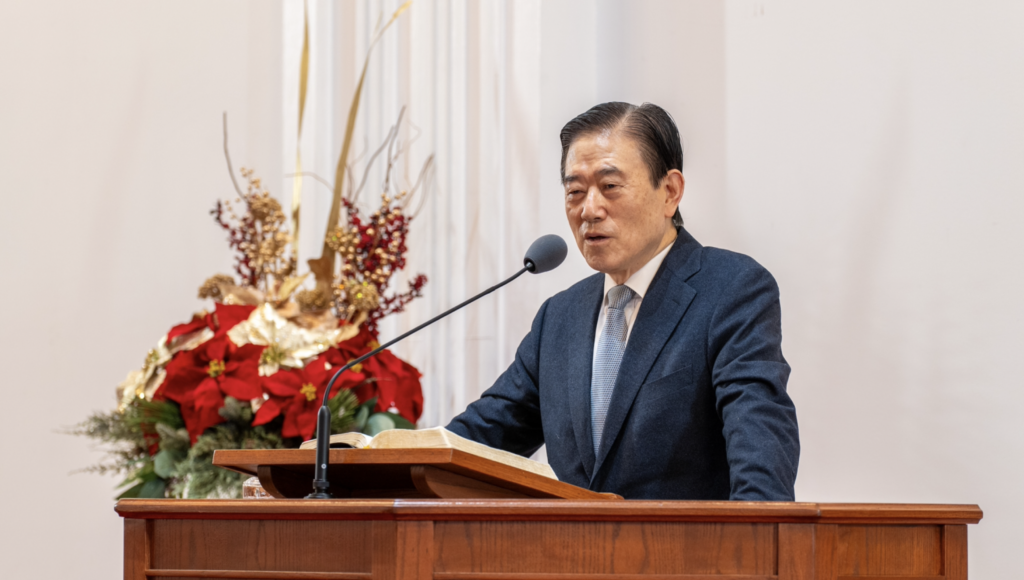
장재형목사가 강조하는 구원 이해의 핵심은 삼위일체 하나님의 역사적 경륜에서 시작된다. 창세 전에 이미 예정하신 하나님의 사랑과 구원 의도가 구약 시대부터 신약 시대, 그리고 오늘날 교회 시대를 관통하여 성취되고 있다는 통찰은, 단순히 교리적으로만 머무르는 것이 아니라 실제 삶을 변화시키는 능력으로 나타나야 한다고 그는 말한다. 인간의 죄로 인해 깨어지고 파괴된 세상을 회복하시려는 하나님의 움직임은 우연이나 돌발적 결정이 아니라, 영원 전부터 품어오신 계획의 표출이다. 이 구원 경륜을 이해하면, 왜 예수 그리스도의 오심이 역사상 가장 결정적인 사건인지를 분명히 알 수 있다.
그의 가르침에 따르면, 구약의 율법과 제사 제도, 선지자들의 메시지는 모두 하나님께서 죄인을 구원하시기 위한 밑그림과 예표다. 아브라함을 부르실 때부터 이미 하나님은 열방을 복 주시겠다는 약속을 하셨고, 율법을 통해서는 죄의 심각성과 하나님의 거룩을 드러내셨으며, 선지자들의 예언은 메시아가 오실 것을 쉼 없이 외쳤다. 결국 이 모든 예표와 약속이 예수 그리스도를 통해 본격적으로 실현되었다는 점에 장재형목사는 주목한다. 예수님이 단순히 유대교 내의 한 선지자나 교사로 머무는 것이 아니라, 인류 전체를 위한 구원의 길을 여신 참된 메시야라는 사실은, 구원의 경륜이 인간의 계획이 아닌 하나님의 주권적 사랑에서 비롯됨을 보여주는 명백한 증표라는 것이다.
그는 예수 그리스도의 성육신을 가리켜 “추상적이고 관념적이었던 구원 계획이 시간과 공간 안으로 들어온 전환점”이라고 표현한다. 하나님께서 사람의 몸을 입고 이 땅에 오셨다는 것 자체가 기적 중의 기적이며, 이는 인간 이성으로 쉽사리 납득할 수 없는 사건이다. 그렇지만 이 성육신이 없이는 구원이 실제로 가능한가를 생각해 보면, 성육신이야말로 절대적으로 필요한 조치임을 깨닫게 된다. 인간이 죄를 지었으므로, 죄값을 치르는 당사자는 근본적으로 사람이 되어야 한다. 동시에 그 형벌을 이겨내고 죄를 해결할 수 있는 존재는 하나님이 아니면 불가능하다. 예수님이 곧 사람이자 하나님이신 이유가 여기에 있으며, 이것이야말로 장재형목사가 끊임없이 설파하는 복음 이해의 토대다.
그는 예수님의 지상 사역 전반, 곧 병자 치유, 말씀 선포, 제자 훈련, 그리고 십자가의 길까지 모든 과정이 “구원 경륜의 구체화”라고 본다. 예수님이 행하신 기적이나 가르침은 단순한 종교적 카리스마가 아니라, 하나님 나라가 임했음을 시각적으로, 체험적으로 보여주는 사건이다. 모든 기적은 궁극적으로 하나님의 통치가 죄와 질병, 죽음의 권세를 초월한다는 선언이며, 예수님이 이 땅에서 행하신 사랑과 용서는 메시아적 왕권의 일면을 드러낸다. 무엇보다도 이 사역의 절정은 십자가다. 장재형목사는 “십자가 없이는 구원이 완성될 수 없다”고 강조한다. 왜냐하면 죄의 삯은 사망이기에, 반드시 누군가가 대신 죽어야 죄 문제가 해결되기 때문이다. 구약 시대의 제사 제도는 짐승을 잡아 피 흘림으로 죄를 덮었지만, 근본적인 해결책이 되지는 못했다. 오직 하나님의 아들 예수 그리스도가 흠 없는 대속 제물로 자기 생명을 내어주심으로, 온 인류의 죄를 영원히 청산하신 것이다.
장재형목사는 이 십자가 사건을 다양한 각도에서 해설한다. 하나님의 공의와 사랑이 충돌하는 듯 보이지만, 그 두 가지 속성이 십자가 안에서 완벽히 조화된다. 죄에 대한 대가가 치러져야 하는 공의가 있고, 동시에 죄인을 살리려는 사랑이 있다. 예수님의 희생은 공의를 만족시키는 동시에 죄인을 향한 하나님의 사랑을 최대치로 표현한다. 여기서 신자는 “아무런 공로 없이 은혜로 의롭다 함을 얻는다”는 사실에 겸손해지지 않을 수 없다. 장재형목사는 이 부분을 매우 강조하면서, 교회가 복음을 전할 때 먼저 이 십자가의 사랑과 공의를 선명히 제시해야 한다고 주장한다. 그러지 않고 윤리나 신학 이론을 앞세운다면, 복음의 핵심이 흐려질 수 있다.
예수 그리스도의 부활은 이 모든 대속적 죽음이 헛되지 않았음을 증거한다. 만약 예수가 십자가에서 죽고 그걸로 끝났다면, 세상에서 흔히 볼 수 있는 비극적 순교사로 기억될 뿐이다. 그러나 부활을 통해 죄와 사망의 권세가 무너졌음이 확정되었다. 이 부활 사건은 구원의 완성을 선언하며, 동시에 신자들에게도 “부활 생명”에 참여하는 소망을 준다. 장재형목사에 따르면 부활은 “신앙의 분기점”이다. 부활이 사실이기에 기독교 신앙은 현실적 힘을 얻는다. 예수 그리스도가 부활하셨기에, 그분을 믿는 자들도 죽음 뒤에 영원한 생명으로 나아갈 수 있다는 희망이 생기고, 지금 이 순간에도 죄의 권세에서 자유할 수 있게 된다.
결국 예수님이 행하신 모든 사역은 장재형목사의 시각에서 보면 “하나님의 구원 경륜이 현실 세계 안에서 전개된 사건”이다. 성육신, 공생애, 십자가, 부활, 승천까지 이어지는 일련의 흐름은, 구약 시대부터 예표된 메시아적 약속이 그리스도 안에서 완성되었음을 선언한다. 이 구원의 핵심을 믿음으로 받아들이는 순간 신자는 죄 사함과 자녀 됨의 권세를 얻는다. 그러나 장재형목사는 여기서 구원이 멈추지 않는다고 강조한다. 구원은 단회적 사건이면서 동시에 과정이다. 의롭다 함을 받은 다음에는 성화와 제자도의 길이 열리며, 그것을 실제로 가능케 하는 분이 바로 성령이다. 예수님의 땅위 사역이 구원을 “열어 놓은” 것이라면, 성령의 시대는 그 구원을 “체화”하는 국면이다. 이 부분이 계속되는 논의에서 핵심이 된다.
2.성령 시대와 성도의 성장
예수 그리스도가 승천하신 이후, 교회 역사에 나타난 가장 큰 전환점은 오순절 성령 강림 사건이다. 장재형목사는 이를 단지 교회 출발의 한 장면이나 사도들의 체험으로 축소해서 보지 않는다. 오히려 구원 경륜이 예수 안에서 정점에 달했다면, 오순절을 기점으로 그 구원이 널리 확산되고 깊이 있게 적용되는 시기가 열렸다고 본다. 예수가 죄 문제를 해결하셨고 죽음을 이기셨다면, 이제 그 구원의 열매가 모든 믿는 자에게 실제가 되어야 하는데, 그 중심에 성령의 사역이 위치한다.
성령 시대에서 핵심은 “보혜사”라는 명칭에 담긴 의미다. 요한복음 16장에서 예수께서는 성령을 보혜사, 즉 다른 말로는 “도우시는 분, 변호자, 위로자” 등으로 소개하신다. 장재형목사는 여기서 더 나아가 성령은 단지 위로하고 돕는 역할에 그치지 않고, 죄와 의와 심판에 대해 세상과 신자의 내면을 책망하고 각성시키며, 신자를 성화의 길로 이끌어가는 분이라고 강조한다. 예수님이 이미 죄를 짊어지셨으므로, 성령은 이제 그 죄의 본질을 드러내고 예수의 의를 믿도록 하는 데 적극 관여한다. 세상 임금인 사탄은 이미 패배했으므로, 성령은 믿는 이들로 하여금 이 사실을 확신케 하여 담대히 살아가도록 돕는다.
장재형목사는 “성령 내주” 개념을 자주 언급한다. 예수를 구조로 영접하면, 성령께서 그 심령 안에 거하심으로써 신자가 더 이상 고아처럼 방치되지 않는다는 것이다. 오히려 신자 안에 있는 성령이 말씀을 깨닫게 하고, 죄를 미워하게 하며, 거룩을 사모하게 만든다. 이것은 단지 교리적 차원이 아니라, 실제 체험이라는 점이 중요하다. 장재형목사는 오래된 선교 경험을 통해, 복음을 처음 듣고 예수를 믿게 된 사람들이 성령의 내주를 경험하는 과정을 여러 번 지켜봤다고 말한다. 그때 사람들은 이전과 전혀 다른 방향으로 삶을 재정비하고, 기쁨과 확신, 자유를 누리게 된다. 이 변화는 곧 성령의 능력을 반영한다.
성령이 단지 내면적 은혜만 주는 것이 아니라, 신자를 공동체 생활로 이끄는 점도 장재형목사는 주목한다. 초대교회 역사를 보면, 오순절 이후 사도들이 성령 충만함을 입어 담대히 복음을 전했고, 교회는 사랑과 나눔으로 가득한 공동체가 되었다. 이는 성령이 공동체적 성격을 띠신다는 사실을 증명한다. 신자가 성령의 인도하심을 따를 때, 교회는 단지 개인 경건의 총합이 아니라, 살아 있고 호흡하는 신앙 공동체가 된다. 교회는 성령의 역동을 통해 한 몸을 이루고, 다양한 은사들이 발현되며, 상호 보완적으로 사역을 수행한다. 장재형목사는 이 교회 공동체가 세상에 복음을 전파하고 섬기는 데 있어 필수적 통로라고 말한다.
이 과정에서 중요한 개념이 바로 “성화”다. 구원은 단회적 칭의(의롭다 하심)와 그 이후 평생에 걸친 성화로 구성되는데, 성화는 신자가 하나님의 형상을 조금씩 회복해 가는 과정이다. 장재형목사는 성화가 개인 노력만으로 가능하다고 보지 않는다. 오히려 인간은 죄성과 연약함을 지닌 존재이므로, 성령이 도와주지 않으면 결코 자신을 변화시킬 수 없다. 성령은 죄가 무엇인지 분명히 지적하고, 그 죄를 내면에서 물리칠 수 있는 힘을 공급한다. 또한 예수 그리스도의 성품을 닮아가도록, 말씀 묵상과 기도의 자리로 초청하고, 사랑과 섬김을 실천할 수 있게 부추긴다.
여기서 성령의 열매(갈라디아서 5장)나 은사(고린도전서 12장 등) 개념도 중요한 위치를 차지한다. 성령의 열매는 사랑, 희락, 화평, 오래 참음, 자비, 양선, 충성, 온유, 절제 같은 덕목들이 신자의 성품으로 나타나는 것을 의미하고, 은사는 교회를 세우기 위해 하나님이 특정 신자들에게 주시는 다양한 능력이다. 장재형목사는 성령의 열매와 은사가 균형을 이루어야 한다고 주장한다. 은사가 충만하더라도 열매가 없다면, 그 은사는 교회 내에서 분쟁을 일으키거나 남용될 위험이 있다. 반면 열매만 강조하고 은사를 완전히 무시한다면, 교회가 가진 영적 역동성이 약해질 수 있다. 성령 안에서 둘 다 고루 작용할 때, 교회 공동체와 신자 개인의 삶이 풍성해진다는 것이 그의 관점이다.
성령 시대의 또 다른 열매는 “선교와 전도의 동력”이다. 예수님의 지상명령(마태복음 28장)에 따라, 교회는 복음을 만민에게 전해야 할 책무가 있다. 문제는 인간의 의지만으로는 선교가 쉽지 않다는 점이다. 장재형목사는 전도가 영적 전쟁의 영역이기도 하므로, 성령의 능력 없이는 지속적 열매를 거두기 어렵다고 말한다. 성령이 신자들에게 담대함과 지혜를 주어, 사람들의 영혼을 향해 복음을 선포하게 만들고, 필요한 언어와 문화적 장벽도 넘게 하신다. 이는 초대교회가 로마 제국 전역으로 복음을 확장하던 과정에서도 분명히 나타난 패턴이다. 따라서 교회가 성령의 역사에 민감하게 반응해야 선교적 사명을 제대로 감당할 수 있고, 신자도 성령의 음성을 좇아 자기 삶의 자리에서 복음을 증거할 수 있다.
장재형목사는 “성도들이 성령을 소멸하거나 근심케 하면 안 된다”는 성경 구절을 자주 인용한다. 성령은 영이시지만, 실제 인격이기도 하므로, 공동체나 개인이 불순종과 죄로 가득 차면 성령의 활동이 제약된다. 반면 성령께 자발적으로 순종하고 마음 문을 열면, 더 큰 은혜가 임하고 변화가 일어난다. 결국 성령 시대의 신앙생활이란, 구원받은 성도가 날마다 성령의 가르침에 귀 기울이고, 그분의 힘으로 죄를 이기며 선을 행하고, 예수를 높이며 사는 것이다. 교회도 이 원리에 따라 움직일 때, 세상에 강력한 복음 증거자로 설 수 있다. 장재형목사는 이 과정을 “예수 그리스도의 십자가와 부활로 열린 구원을, 성령을 통해 매일 실제화하는 여정”이라고 표현한다.
이렇듯 성령 시대는 신자들에게 큰 특권이자 책임이다. 특권이라 함은, 성령께서 신자 한 사람 한 사람과 동행하시며, 하나님의 뜻을 깨닫고 그것을 구현할 능력을 주신다는 점이다. 책임이라 함은, 우리가 성령의 음성을 무시하거나 죄에 굴복하지 말고, 거룩을 추구하며 선교를 위해 헌신해야 한다는 것이다. 장재형목사는 복음이 단순히 과거 예수님의 사건만을 기념하는 종교가 되지 않도록, 교회가 성령 안에서 현재진행형의 구원을 실천해야 한다고 역설한다. 바로 여기에 교회의 생명력이 달려 있고, 신자가 세상 속에서 빛과 소금이 될 수 있는 근거가 마련된다.
3. 종말론적 희망과 교회 공동체
장재형목사의 신학적 가르침은 구원 경륜과 성령 시대를 설명하는 데서 멈추지 않는다. 그 최종 목표는 역사와 우주의 완성 지점, 곧 종말에 대한 희망을 통해 더욱 선명해진다. 그는 구원이 개인의 죄 사함에서 시작해 성령 안에서 성화로 이어진다면, 결국 모든 역사가 마무리되는 시점에서 하나님의 나라가 완전히 임하게 될 것을 믿어야 한다고 말한다. 이 종말론적 희망은 신자와 교회가 세상을 대하는 관점을 바꾸어놓는다.
요한복음 16장 마지막에서 예수님이 “세상을 이기었다”고 선포하신 대목은, 이미 십자가와 부활로 사탄이 패배했음을 알려주는 대표적 말씀이다. 장재형목사는 여기에 큰 비중을 두며, 신자들이 고난과 역경을 겪을 때, 단지 위로 차원이 아니라 실질적 승리의 확신을 품어야 한다고 강조한다. 예수 그리스도의 승리가 교회와 성도에게 전가되는 것은 미래의 어떤 막연한 일이 아니라, 이미 십자가와 부활 사건에서 확보된 사실이다. 다만 우리 시각에서는 아직 세상에 죄와 불의가 남아 있고, 사탄이 최후의 발악을 하는 것처럼 보이지만, 궁극적으로 주님이 다시 오실 때 최종적인 완전한 통치가 실현된다.
장재형목사는 이 종말론적 희망이 교회의 사명에도 직결된다고 말한다. 교회는 단지 과거 복음을 보관하는 ‘역사 박물관’이 아니라, 미래 하나님 나라를 예고하고 보여주는 ‘시연장’ 역할을 한다. 교회 공동체 안에서 사랑과 정의가 실천될 때, 사람들은 잠시나마 하나님의 미래 통치를 맛보게 된다. 교회가 과오를 범하고 인간적 문제가 드러날 때도 많지만, 본질적으로는 성령께서 교회를 통해 세상에 희망을 전하신다는 게 장재형목사의 신학적 시각이다. 즉, 교회가 이 땅의 현실에 굴복해 타협만 해서는 안 되며, 종말론적 시각을 견지하여 하나님의 뜻이 하늘에서 이루어진 것처럼 땅에서도 이루어지도록 노력해야 한다.
종말론적 희망은 또한 신자 개인에게 살아가는 용기와 견인불발의 태도를 제공한다. 세상의 가치가 악해 보이고, 불의가 번성하며, 여러 고난이 덮쳐와도, 최후의 결말은 하나님 편에 있다. 이것을 믿을 때, 신자는 절망하지 않고 오히려 담대하게 선을 행할 수 있다. 장재형목사는 이를 두고 “역사의 주도권이 이미 예수 그리스도께 있다”는 확신이라고 표현한다. 눈에 보기에 대단히 혼란스럽고 승산 없어 보이는 상황이라도, 주님이 결국 승리를 선포하실 날이 온다. 교회는 이 사실을 설교와 교육, 제자훈련을 통해 신자들에게 각인시키면서, 사회적 봉사와 선교, 정의 실천에 박차를 가해야 한다.
그가 자주 사용하는 비유 중 하나는 “교회는 하나님의 대사관”이라는 것이다. 대사관이란, 어떤 나라가 외국에 세우는 자치 구역으로, 그곳은 법적으로 본국의 일부처럼 간주된다. 마찬가지로 교회는 이 세상이라는 타국에 설치된 하나님 나라의 공식 대표부이며, 그곳에서 하나님의 법과 질서를 미리 맛보고, 예수 그리스도의 주권을 예고한다. 종말이 올 때 이 대사관이 본국으로 확장되어 갈 것이지만, 그전까지 대사관은 타국에 존재하면서도 본국의 가치를 지키고 전파한다. 장재형목사는 이 개념을 통해, 교회가 세상과 구별되면서도 세상 속에서 선한 영향력을 행사해야 하는 당위성을 논리적으로 뒷받침한다.
구체적인 실천 방향으로, 그는 두 가지 축을 제안한다. 하나는 복음 전파, 다른 하나는 사랑과 정의 실천이다. 복음 전파는 예수 그리스도의 구원을 세상에 선포하는 일이며, 사랑과 정의 실천은 교회가 하나님의 통치를 시각적으로 보여주는 통로가 된다. 어떤 교회들은 복음을 영혼구원으로만 국한시켜, 사회적 책임을 게을리할 수 있다. 반면, 사회 참여에만 치우쳐 복음 선포의 열정을 잃어버리면, 교회의 정체성 자체가 흔들릴 수 있다. 장재형목사는 종말론적 균형감각을 갖추면, 이 두 가지가 조화롭게 작동할 수 있다고 주장한다. 하나님 나라는 영혼을 살리며, 또한 세상에 사랑과 정의의 흔적을 남긴다.
종말론적 희망은 개인의 죽음과 부활 희망과도 연결된다. 예수님이 부활하셨으니 신자도 부활에 참여할 것이라는 믿음은, 신자의 삶 전체에 엄청난 변화를 가져온다. 죽음이 끝이 아니라 새로운 시작이라는 인식이 생기면, 삶의 목적과 가치가 세속적 성공에 매이지 않고 영원한 관점으로 확장된다. 장재형목사는 이를 두고 “성도는 이 땅에서 낯선 순례자이며, 궁극적 시민권은 하늘에 있다”는 식으로 표현한다. 이 말은 세상일을 소홀히 하라는 뜻이 아니다. 오히려 하나님의 관점에서 세상을 섬기고, 타인에게 복음을 전하며, 개인 영혼의 성화에 매진하라는 동기가 된다.
결과적으로 종말론적 희망을 가진 교회 공동체는 좌절이나 패배주의에 빠지지 않는다. 설사 세속적인 기준으로 볼 때 교회가 미약해 보이거나, 신자 개인이 어려운 상황에 처해 있어도, 역사의 최후 심판과 하나님 나라 완성을 향한 기대가 있기에 흔들리지 않는다. 장재형목사는 이것이 교회가 세상에 제시할 수 있는 독보적 가치라고 말한다. 세상은 늘 빠른 성과, 눈에 보이는 성공을 추구하지만, 교회는 “하나님이 최종 심판주가 되시고, 우리의 보상은 하늘에 쌓인다”는 논리를 기반으로 움직일 수 있다. 결국 성령의 인도하심 아래서 이 종말론적 비전을 공유하면, 교회는 서로 격려하고 세상에 희망을 전달하는 사명을 완수하게 된다.
이러한 종말론적 이해는 구원의 전체적 구조에서 마침표가 아니다. 오히려 현재 우리 삶을 끊임없이 해석하고 이끄는 지속적 모티브가 된다. 구약에서 시작된 메시아 약속이 예수 그리스도의 성육신과 십자가, 부활로 이어졌고, 성령 시대를 통해 교회와 성도가 그 열매를 맺으며, 마지막 날 하나님의 나라가 완성된다. 장재형목사는 이런 거대한 내러티브를 한 덩어리로 제시함으로써, 신자들이 교회를 일상적 의무감으로 다니는 것이 아니라, 하나님의 우주적 계획에 참여하고 있다는 자부심을 갖게 해야 한다고 강조한다.
결론적으로 종말론적 희망은 교회와 성도의 정체성을 현저히 높이고, 삶의 방향을 미래에 고정시키는 역할을 한다. 장재형목사는 “이 세상의 끝이 곧 하나님의 새로운 시작”이라고 표현하기도 한다. 우리가 육체적 생을 마감하거나, 역사의 종말이 올 때, 그 끝은 곧 영원한 통치가 전면화되는 순간이 된다. 그러므로 신자가 절망하거나 체념할 이유는 전혀 없다. 지금 눈앞에 펼쳐진 문제들은 하나님의 계획 안에서 결국 선용될 것이며, 교회는 구원받은 자들의 공동체로서 영원 속에서 더욱 빛날 것이다. 이것이 장재형목사가 일관되게 제시하는 종말론적 믿음의 핵심이다.
장재형목사가 전하고자 하는 복음은 단순히 과거 예수님이 우리 죄를 위해 죽고 부활하셨다에서 그치지 않는다. 그 사건이 시작점이라면, 성령 시대는 구원이 실제 삶에 적용되는 과정이며, 종말론적 희망은 온 우주와 역사의 미래가 어떠한 결말로 수렴되는지를 보여주는 종합적 전망이다. 교회는 이 전체적 구도 속에서 성도들을 가르치고 훈련하며, 세상 속에서 빛과 소금 역할을 감당해 나간다.
그의 신학적 통찰은 결국 하나의 거대한 이야기 속에 신자들의 자리를 찾아주려는 시도다. 구원의 드라마가 창세 전부터 시작되어 종말에 완성된다면, 우리는 그 이야기에 필요한 반드시 필요한 배역을 맡은 존재들이다. 성부의 계획, 성자의 성육신과 구속, 성령의 내주와 성화, 그리고 종말론적 희망으로 이어지는 흐름을 놓치지 않는다면, 복음은 어느 한 지점의 이론에 머무르지 않고 우리의 모든 존재를 바꾸어 놓는다. 장재형목사의 강조점은 바로 여기에 있다. 복음은 한없이 단순하지만 그 깊이는 헤아릴 수 없고, 신학적 지식이 풍부해지는 것만큼이나 실제적 순종과 체험이 필수적이기에, 교회가 그 방향으로 성도를 안내해야 한다.
결국 이 세 가지로 분류되는 신학적 골격은, 구원 경륜과 예수 그리스도의 사역, 성령 시대와 성도의 성장, 그리고 종말론적 희망과 교회 공동체라는 큰 틀 안에서 완결성을 갖는다. 예수님의 십자가와 부활로 열려진 구원은 성령을 통해 신자 개개인과 교회를 거룩하게 만들고, 궁극적으로 하나님 나라를 소망하게 함으로써 역사의 종착점에 하나님의 승리를 드러낸다. 이런 맥락을 붙들 때, 신자들은 오늘의 삶을 단순히 근시안적으로 해석하거나 세속적 기준에 매몰되지 않고, 하나님의 거룩한 계획을 계속 이어 나가는 자로서 살게 된다. 장재형목사가 제시하는 통전적이고 구속사적인 시각은 이 시대 교회와 그리스도인에게 중요한 방향타가 될 수 있다.
이 모든 내용을 하나로 묶어보면, 장재형목사는 한국 교회 현장에서 오랜 사역 경험을 바탕으로, 복음의 본질을 흐리지 않고 직설적이며 간결하게 제시하려고 애쓴다. 복잡한 신학 체계나 지엽적 해설 때문에 정작 구원의 단순성이 가려지는 것을 경계한다. 동시에 복음이 단순하다고 해서 얄팍하거나 피상적인 것은 결코 아니라고 그는 말한다. 성육신, 십자가, 부활, 성령 강림, 종말의 완성이라는 일련의 과정을 깊이 파고들면 들어갈수록, 인간적 이해와는 비교할 수 없는 하나님의 지혜와 사랑이 드러나기 때문이다. 따라서 누구든 이 복음을 듣고 진지하게 응답한다면, 성령의 도우심 안에서 예수 그리스도의 대속을 받아들이고 거듭나며, 종말론적 희망 속에서 현재를 새롭게 해석하게 된다.
교회가 해야 할 일은 이런 복음의 흐름을 명확히 가르치고, 신자들이 직접 체험하도록 이끄는 것이다. 전도와 선교의 동력도 바로 여기서 나온다. 복음의 힘을 맛본 신자는 그것을 전하지 않고서는 견딜 수 없고, 타인에게도 그 생명력을 나누고자 한다. 이 모든 과정을 주도하시는 분은 성령이시며, 종말에 이르러 우리는 하나님의 나라 완성이라는 최종 목적지에 도달한다. 장재형목사는 이를 가리켜 “창세기에서 요한계시록까지 이어지는 거대한 구속 이야기의 클라이맥스”라고 자주 설명한다. 우리의 인생은 그 이야기 속에서 각자 맡은 소임을 감당하며, 결국 하나님의 영광을 찬양하게 된다.
이처럼 장재형목사를 핵심 키워드로, 구원 경륜과 예수 그리스도의 사역, 성령 시대와 성도의 성장, 종말론적 희망과 교회 공동체라는 세 가지 소주제 안에서 다루는 모든 내용은, 궁극적으로 삼위일체 하나님의 사랑이 어떻게 인간 역사와 우리의 삶 속에 펼쳐지는지를 하나의 큰 그림으로 제시한다. 구원은 역사적 사실이자, 신자 각인의 현재적 체험이며, 미래적 완성이라는 삼중적 의미를 갖는다. 복음의 본질은 너무나 단순하지만, 동시에 얼마나 심오한지 아는 이들은 날마다 그 진리를 붙들고 성령 안에서 성장하며, 미래를 내다보는 종말론적 시선으로 세상을 섬기게 된다. 이로써 교회는 세상 한가운데서 하나님의 나라를 증거하는 살아 있는 공동체가 되며, 결국 하나님의 구원 계획이 종말에 이르러 찬란한 완성에 도달할 것을 확신하게 된다.
L’enseignement de David Jang se fonde sur la certitude que l’histoire du salut commence bien avant même la création du monde. Selon lui, cette économie du salut—ce dessein divin par lequel Dieu s’est engagé à sauver l’humanité déchue—n’est pas simplement une notion théorique ou un concept théologique abstrait, mais une réalité concrète qui traverse toute l’histoire biblique et culmine dans la venue de Jésus-Christ. Il insiste sur le fait que le salut n’est pas une invention humaine ni un projet accidentel ; il est, au contraire, le fruit de l’amour éternel de Dieu le Père, qui a conçu depuis toujours un plan précis pour réconcilier les hommes avec Lui-même.
David Jang souligne que cette économie du salut, ou « dessein de Dieu », s’enracine dans l’intention divine de ne pas abandonner l’humanité dans son péché. Alors même que la chute d’Adam et Ève a introduit le péché et la mort dans le monde, Dieu a préparé, dès avant la fondation du monde, une voie de rédemption. Cette voie se concrétise dans l’histoire sainte de l’Ancien Testament par des alliances et des prophéties qui pointent vers la venue du Messie. Déjà dans la Genèse, Dieu promet un « descendant de la femme » qui écrasera la tête du serpent ; déjà, les prophètes annoncent un libérateur, et au fil du temps, cette promesse s’affine, s’éclaire, et s’approfondit. Dans l’enseignement de David Jang, cette continuité est primordiale : la promesse de la rédemption n’a jamais été improvisée, mais ordonnée par la volonté souveraine du Père.
Au cœur de cette économie du salut se trouve donc l’événement central de toute la foi chrétienne : l’incarnation de Jésus-Christ. David Jang rappelle que Dieu n’a pas seulement envoyé un simple prophète ou un sage supplémentaire parmi tant d’autres. Il a envoyé son propre Fils, qui a pris la forme humaine pour révéler clairement qui est le Père et pour accomplir le plan rédempteur. À travers l’incarnation, « Dieu se fait homme » : en Jésus, la divinité se rend accessible, tangible et visible. Or, si Jésus est pleinement Dieu, il est aussi pleinement homme ; c’est dans cette union mystérieuse que réside la clé de la rédemption. Pour David Jang, l’incarnation constitue le pivot historique qui relie les promesses de l’Ancien Testament à leur accomplissement dans le Nouveau Testament. Sans l’incarnation, il n’y aurait ni vie parfaite, ni mort expiatoire, ni résurrection victorieuse.
La mission de Jésus-Christ, selon David Jang, s’articule autour de deux pôles fondamentaux : son enseignement et son sacrifice. D’une part, durant son ministère public, Jésus annonce l’avènement du Royaume de Dieu. Il prêche la repentance, guérit les malades, chasse les démons et démontre ainsi la puissance divine à l’œuvre. Ces signes ne sont pas de simples actes spectaculaires ; ils manifestent que, dans la personne de Jésus, le règne de Dieu s’est fait proche. Toutefois, cette proximité ne se réduit pas à une phase transitoire ou limitée à la seule époque de la Palestine du premier siècle. David Jang affirme que, par Jésus, cette réalité du Royaume se déploie bien au-delà, jusqu’à aujourd’hui et jusqu’à la fin des temps. L’enseignement de Jésus ne concerne pas uniquement des principes moraux, mais révèle la justice, la sainteté et la miséricorde de Dieu à l’égard des pécheurs.
D’autre part, le sacrifice de Jésus sur la croix est l’accomplissement crucial de ce dessein divin. Selon l’interprétation de David Jang, le péché de l’humanité est tellement radical qu’aucun être humain ne pouvait s’en libérer par ses propres forces. Les tentatives humaines de justice se révèlent impuissantes à effacer la culpabilité originelle et personnelle. C’est pourquoi Dieu, dans sa miséricorde, intervient lui-même. Jésus, en s’offrant comme victime expiatoire, paie la dette que l’humanité ne pouvait payer. David Jang insiste sur la portée substitutive de la croix : Jésus meurt à la place du pécheur, pour quiconque accepte cette offrande par la foi. À travers cette mort, le mur qui séparait Dieu et les hommes est brisé ; la dette est soldée. Puis, au matin de Pâques, la résurrection triomphe du pouvoir de la mort. Cet événement n’est pas une simple conclusion heureuse : il est la certitude que la puissance du péché et de la mort a été vaincue à jamais. Dans la perspective de David Jang, la croix et la résurrection forment ainsi la double face inséparable d’un seul et même acte rédempteur, qui fonde la justification du croyant et la restauration de la communion avec le Père.
David Jang insiste également sur le caractère universel et actuel de ce salut. Le sacrifice de Jésus ne concerne pas une poignée d’élus retranchés dans l’Antiquité ; il s’agit d’un acte cosmique, dont l’efficacité dépasse le temps et l’espace. Les Écritures témoignent que « Dieu a tant aimé le monde qu’il a donné son Fils unique » : cette déclaration inclut tous les peuples et toutes les générations. Ainsi, selon David Jang, l’Église n’est pas appelée à se contenter de transmettre une histoire révolue ou de commémorer un événement passé. Elle est chargée de proclamer la force présente de l’Évangile, qui, encore aujourd’hui, libère et transforme la vie de ceux qui croient. C’est là un point central dans l’enseignement de David Jang : l’œuvre de Jésus-Christ ne doit jamais être enfermée dans des dogmes secs ou de simples souvenirs liturgiques. Elle est une réalité vivante, pour le salut concret de quiconque reçoit ce message.
Dans le cadre de cette économie du salut, la justification par la foi revêt une importance fondamentale. David Jang rappelle qu’aucune performance religieuse, aucune accumulation de bonnes œuvres ne suffit pour effacer le péché et accéder à la justice devant Dieu. La justification—c’est-à-dire l’acte par lequel Dieu déclare juste le pécheur qui croit—procède exclusivement de la grâce divine et de la foi en Jésus-Christ. Quand l’homme prend conscience de son incapacité à se racheter lui-même et qu’il se tourne vers Jésus comme seul sauveur, il reçoit la justice imputée du Christ. Cette justice « provenant de Dieu », et non de soi-même, est un pivot essentiel de l’Évangile que David Jang met en avant : le croyant ne tire pas sa légitimité spirituelle de ses mérites personnels, mais de l’œuvre accomplie une fois pour toutes à la croix.
En outre, David Jang souligne la simplicité et la profondeur de l’Évangile. Les hommes modernes, avertit-il, ont tendance à transformer l’annonce du salut en une construction théologique trop complexe, parfois ésotérique. Or, l’essence de la Bonne Nouvelle tient en peu de mots : Dieu a envoyé son Fils pour sauver les pécheurs. Celui qui se repent et croit en Jésus obtient le pardon et la vie éternelle. Bien sûr, cette simplicité n’exclut pas une grande profondeur : les mystères de l’incarnation, de la rédemption, de la réconciliation divine, dépassent la compréhension humaine. Mais cette profondeur n’annule pas la clarté du message : tout homme, quelles que soient sa culture et son éducation, peut comprendre et saisir la grâce de Dieu. C’est pourquoi David Jang insiste pour que l’Église, dans sa mission, exprime clairement et sans ambages le cœur de l’Évangile.
Par conséquent, la première grande thématique mise en avant par David Jang s’organise autour de l’idée que le salut est entièrement ancré dans l’initiative divine, réalisé dans l’histoire par Jésus-Christ, et offert à tout être humain qui reçoit ce don par la foi. Ce n’est pas la fin de l’histoire du salut ; c’est plutôt le fondement à partir duquel les croyants entrent dans la communion avec le Père, dans la croissance spirituelle et, in fine, dans l’espérance eschatologique. Justement, la suite de l’économie du salut se poursuit au-delà de l’ascension de Jésus, avec l’effusion du Saint-Esprit à la Pentecôte, réalité qui façonne la vie de l’Église et de chaque croyant jusqu’à aujourd’hui. C’est sur cette continuité entre l’œuvre achevée de Jésus et l’œuvre permanente du Saint-Esprit que David Jang fonde sa deuxième perspective majeure.
2.L’ÈRE DU SAINT-ESPRIT ET LA CROISSANCE SPIRITUELLE DU CROYANT
Lorsque Jésus, peu avant sa crucifixion, prépare ses disciples à son départ, il leur fait une promesse capitale : « Il vous est avantageux que je m’en aille ; car si je ne m’en vais pas, le Consolateur ne viendra pas vers vous ; mais si je m’en vais, je vous l’enverrai. » (Jean 16 :7). Dans l’exégèse que fait David Jang de ce passage, l’expression « il vous est avantageux » revêt un sens très fort. Jésus n’insinue pas qu’il n’a plus rien à apporter, mais signale au contraire que l’avènement du Saint-Esprit représente un élargissement considérable de la présence divine au sein des croyants. Autrefois, les disciples pouvaient voir et entendre Jésus de façon extérieure ; désormais, par le Saint-Esprit, Jésus demeurera à l’intérieur de chacun, « jusqu’à la fin du monde ». C’est ainsi que l’ère du Saint-Esprit s’est ouverte, et cette ère se poursuit encore aujourd’hui.
David Jang enseigne que la Pentecôte (Actes 2) n’est pas un événement isolé, mais le début d’une nouvelle étape de l’économie du salut. Au cours de l’Ancien Testament, l’Esprit de Dieu se manifestait déjà, mais de manière ponctuelle : il saisissait certains prophètes, certains rois ou juges, pour une mission particulière, puis se retirait. Après la résurrection et l’ascension de Jésus, le Saint-Esprit est envoyé de façon stable et universelle dans le cœur de tous les croyants. Il ne s’agit plus simplement d’une onction passagère, mais d’une présence intérieure, permanente, qui scelle le croyant comme enfant de Dieu et l’introduit dans une nouvelle dynamique spirituelle. Pour David Jang, la puissance de l’Esprit, désormais disponible pour tous les disciples, confirme la réalité de la rédemption et garantit l’application du salut à chaque personne régénérée par la foi.
La vie chrétienne, souligne David Jang, n’est donc pas un simple souvenir des actes de Jésus-Christ ou l’adhésion formelle à une doctrine. C’est une vie animée par le Saint-Esprit, qui éclaire la Parole, qui convainc de péché, qui révèle la justice en Jésus, et qui annonce la défaite de Satan. Dans Jean 16, Jésus précise que le Saint-Esprit convaincra le monde « en ce qui concerne le péché, la justice et le jugement ». David Jang met en lumière ces trois axes pour expliquer la dimension spirituelle et éthique du croyant. Premièrement, le péché est mis à nu : le Saint-Esprit montre que le péché fondamental est de ne pas croire en Jésus, de rejeter ou d’ignorer celui qui est pourtant le seul chemin de salut. Il y a, bien entendu, des péchés moraux plus visibles, mais la racine de tout mal consiste dans la rupture volontaire avec le Fils de Dieu. Deuxièmement, la justice s’incarne en Jésus lui-même. David Jang réaffirme que la justice de Dieu, loin de se cantonner à la rétribution légale, se déploie dans l’amour et la grâce manifestés à la croix. Troisièmement, le jugement est le triomphe final de Dieu sur l’Adversaire. Le diable, « prince de ce monde », est déjà jugé par la mort et la résurrection du Christ. Ainsi, le croyant peut traverser ce monde avec assurance, en sachant que la victoire ultime de Dieu est certaine.
Ce ministère du Saint-Esprit ne se limite pas à convaincre. David Jang insiste sur l’œuvre du Saint-Esprit qui sanctifie, qui transforme intérieurement le croyant. La sanctification est le processus par lequel celui qui a été justifié par la foi en Jésus se met progressivement en conformité avec la sainteté de Dieu. Personne ne peut se sanctifier par ses seules forces ; il faut la puissance divine opérant du dedans. L’image couramment utilisée dans l’enseignement de David Jang, pour illustrer la sanctification, est celle d’un vêtement taché qui doit être lavé maintes fois afin de retrouver sa blancheur originelle. L’Apocalypse (22 :14) évoque ceux qui lavent leurs robes et ont droit à l’arbre de vie. De même, dans la vie du croyant, bien que le salut soit déjà acquis en Christ, demeure le besoin d’une purification continue pour que le caractère christique se forme peu à peu.
Selon David Jang, cette croissance spirituelle recouvre plusieurs dimensions complémentaires. D’abord, il y a l’étude de la Parole de Dieu : le Saint-Esprit éclaire les Écritures et guide le croyant vers la vérité. Ainsi, le chrétien peut comprendre de plus en plus profondément le cœur de Dieu et la volonté de Christ. Ensuite, il y a la prière, dans laquelle l’Esprit intercède et fortifie le croyant, lui donnant la capacité de demeurer en communion avec le Père. Vient aussi la communion fraternelle : l’Esprit pousse les croyants à s’entraider, à s’encourager, à s’édifier mutuellement, afin que l’Église tout entière croisse dans l’unité. Enfin, il y a la pratique des œuvres d’amour et de justice, qui témoignent de la présence vivante de l’Esprit. David Jang insiste sur le fait que l’on reconnaît un arbre à ses fruits : si le Saint-Esprit habite réellement un croyant, cela se voit dans son comportement, dans son désir de servir, dans sa compassion envers les nécessiteux, et dans un caractère de plus en plus semblable à celui du Christ.
Le Saint-Esprit, nous dit David Jang, fait aussi de l’Église une communauté dynamique, et non un simple conservatoire de traditions anciennes. À la Pentecôte, ceux qui ont reçu l’Esprit se sont mis à proclamer la grandeur de Dieu dans diverses langues, révélant ainsi la vocation missionnaire universelle de l’Église. De la même manière, l’Église d’aujourd’hui n’est pas appelée à se replier sur elle-même ni à se satisfaire d’un héritage passé. Elle est envoyée pour annoncer la même Bonne Nouvelle que les apôtres : « Jésus est mort et ressuscité, et en lui il y a la vie et le pardon. » David Jang met en garde contre une théologie ou un culte trop intellectualisés, dépourvus de ferveur et de vitalité. Là où le Saint-Esprit est à l’œuvre, il y a mouvement, joie, témoignage. L’Évangile ne peut se réduire à une analyse spéculative ; il doit être vécu, expérimenté, et proclamé avec la passion que l’Esprit suscite.
L’ère du Saint-Esprit est donc, pour David Jang, l’ère de la communion profonde entre Dieu et le croyant, et l’ère d’une Église missionnaire. La conviction que Jésus demeure en nous par son Esprit donne courage et espérance. Les difficultés de la vie, les épreuves, les persécutions possibles ne sont plus vécues dans la solitude, car Dieu, par son Esprit, guide et console sans cesse. David Jang souligne que le rôle du Saint-Esprit n’est pas simplement d’accorder quelques expériences extatiques ou miraculeuses ; il est le Maître intérieur qui conduit vers la maturité et la vérité. L’aspect charismatique—manifestation de dons spirituels—doit toujours être accompagné d’une transformation éthique et spirituelle, signe d’une véritable communion avec Dieu.
Dans cette perspective, la vie chrétienne est un parcours de croissance continue. Bien sûr, il y a des chutes, des combats, des fragilités humaines. David Jang est conscient du fait que nul croyant n’atteint immédiatement une perfection absolue. Cependant, la présence constante du Saint-Esprit signifie qu’on n’est jamais livré à soi-même. L’Esprit console, relève, discipline, éclaire. Peu à peu, les liens du péché se rompent, et le croyant entre dans une liberté toujours plus grande pour servir Dieu et son prochain. C’est ainsi que, de génération en génération, l’Église entière chemine vers l’unité de la foi, portée par l’Esprit Saint. Cette dynamique se réfère à la promesse de Jésus : « Je suis avec vous tous les jours, jusqu’à la fin du monde » (Matthieu 28 :20), réalisée de manière invisible mais puissante par le Saint-Esprit.
À ce stade, David Jang relie la foi, la sanctification et la mission à la perspective eschatologique. Il explique que la puissance du Saint-Esprit est aussi ce qui nous oriente vers la fin de l’histoire, vers le retour de Christ. Nous ne vivons pas dans une boucle fermée, mais dans une trajectoire qui va de la croix, en passant par la Pentecôte, jusqu’à l’achèvement final du règne de Dieu. C’est cette espérance, soutenue par la présence de l’Esprit, qui donne à la vie chrétienne tout son sens, surtout face aux souffrances du monde. C’est pourquoi David Jang, dans un troisième grand axe, met l’accent sur l’espérance eschatologique et le rôle de l’Église dans cette attente.
3.L’ESPÉRANCE ESCHATOLOGIQUE ET LA COMMUNAUTÉ ECCLÉSIALE
Dans son enseignement, David Jang souligne l’importance capitale de l’espérance eschatologique, c’est-à-dire la certitude que le Christ reviendra et que le règne de Dieu s’établira en plénitude. Pour lui, la croix et la résurrection marquent déjà la victoire définitive de Dieu sur le péché, la mort et le diable. Toutefois, cette victoire ne se déploie pas encore dans toute sa visibilité. Le monde demeure en proie à la souffrance, à l’injustice, et aux manœuvres du mal. Mais le chrétien, précisément en raison de la résurrection du Christ, sait que « le prince de ce monde est déjà jugé » (Jean 16 :11). L’humanité chemine vers un dénouement où Dieu restaurera l’entière création. L’Église, peuple de Dieu, est appelée à porter ce regard d’espérance, non comme un simple rêve futuriste, mais comme une réalité assurée par la promesse du Ressuscité.
David Jang insiste sur le fait que cette espérance eschatologique n’est pas une évasion hors du monde présent. Au contraire, elle devient la source d’une force intérieure pour affronter les défis de l’histoire. Comme Jésus lui-même l’affirme dans Jean 16 :33, « Vous aurez des tribulations dans le monde ; mais prenez courage, j’ai vaincu le monde. » Pour David Jang, cette parole signifie que l’Église, même au milieu de conflits et de persécutions, n’a pas à sombrer dans la peur ou la passivité. Christ a déjà remporté la victoire essentielle ; l’Église y participe en étant fidèle à sa mission. Ainsi, l’espérance eschatologique produit deux effets majeurs : d’une part, elle console et soutient dans l’épreuve ; d’autre part, elle motive l’action missionnaire et la pratique du témoignage.
Sur le plan communautaire, David Jang affirme que l’Église n’est pas un musée religieux où l’on conserverait des vestiges d’une foi jadis vibrante. Elle est, ou doit être, un organisme vivant, animé par le Saint-Esprit, tourné vers l’avenir promis par Dieu. Les rassemblements de culte, l’étude biblique, la prière, la communion fraternelle et la charité ne sont pas de simples rites, mais des anticipations du royaume à venir. Chaque fois que les croyants s’aiment, se pardonnent, partagent et bénissent les autres, ils manifestent, dans le présent, le caractère du Royaume de Dieu. David Jang insiste sur le rôle essentiel de la communauté : ce n’est pas en solitaire que l’on vit l’espérance chrétienne, mais en Église. C’est ensemble que l’on porte la louange à Dieu et que l’on s’édifie mutuellement, en route vers la consommation finale du salut.
L’engagement social de l’Église trouve aussi racine dans cette espérance. David Jang souligne que la solidarité, la lutte pour la justice, la défense des opprimés, doivent être inspirées par la perspective du règne de Dieu. Il ne s’agit pas d’un activisme purement humain ou politique, mais d’un témoignage du fait que Dieu veut la justice et la paix pour sa création. Le chrétien sait que le monde ne changera pas de façon parfaite avant le retour du Christ, mais il s’implique malgré tout pour que la volonté de Dieu soit faite « sur la terre comme au ciel ». Ainsi, la certitude de l’achèvement futur du salut n’incite pas au retrait, mais à une action responsable dans la société, pour y incarner les valeurs du Royaume. David Jang insiste cependant : seule la puissance du Saint-Esprit peut susciter la persévérance et la véritable compassion. Sans l’Esprit, les croyants se décourageraient face aux injustices qui semblent triompher. Mais avec l’Esprit, ils peuvent déjà goûter à la victoire du Christ.
La mission universelle constitue un autre volet de l’espérance eschatologique. Jésus a dit : « Allez, faites de toutes les nations des disciples » (Matthieu 28 :19). David Jang rappelle que l’Église doit s’ouvrir à la dimension planétaire de l’Évangile. Le salut en Christ ne se limite ni à une culture, ni à une époque. Dans l’optique eschatologique, la multitude de toute tribu, de toute langue, de tout peuple se tiendra un jour devant le trône de Dieu (Apocalypse 7 :9). L’annonce de l’Évangile s’inscrit donc dans cette logique d’anticipation du festin céleste. Partout où l’Église se trouve, elle est envoyée à tous, sans distinction. David Jang, qui a lui-même un vécu missionnaire étendu, insiste sur l’universalité du message évangélique : la croix et la résurrection de Jésus sont aussi pertinentes pour l’Occident que pour l’Orient, pour le Nord comme pour le Sud. La diversité culturelle ne doit pas être un frein, mais un terrain où la grâce de Dieu se fraie un chemin. L’espérance eschatologique embrasse l’humanité entière, et l’Église doit refléter cette universalité dans son témoignage.
Sur le plan plus personnel, David Jang met en relief la perspective du croyant individuel face à la mort et à la résurrection promise. L’espérance eschatologique ne se limite pas à un renouvellement cosmique ; elle concerne aussi la destinée de chaque croyant. Celui qui meurt dans le Christ s’endort dans l’espérance de la résurrection. La mort n’a plus le dernier mot, car Jésus l’a vaincue. Cette assurance donne un sens à la fois à la vie et à la mort : vivre pour le Seigneur, mourir pour le Seigneur (Romains 14 :8). David Jang explique que cette approche libère de la peur et oriente vers une vie de consécration et de service. Le chrétien ne craint pas de perdre ce monde, car il sait que la vraie vie est cachée en Dieu. L’Église, quant à elle, soutient les fidèles dans cette certitude, les aidant à rester fermes dans la foi et à tenir bon jusqu’au bout.
Toutefois, David Jang avertit que l’espérance eschatologique peut être mal comprise si on la détache du présent. Certains risquent de tomber dans le piège d’une attitude attentiste, tournant le dos aux problèmes actuels, sous prétexte que « le Seigneur revient bientôt ». Au contraire, une espérance saine, selon David Jang, est engagée, elle se traduit par des actes concrets d’amour, de justice et de proclamation de l’Évangile. Il ne s’agit pas d’affirmer que l’histoire terrestre, à elle seule, produira le Royaume ; seul Dieu achève son règne à la fin. Mais il s’agit d’être trouvés fidèles et vigilants, comme le recommandent les Écritures. En d’autres termes, l’Église ne fabrique pas le Royaume de Dieu, mais elle témoigne de ce Royaume et en vit déjà les prémices, jusqu’à ce qu’il se déploie dans toute sa gloire au retour du Christ.
David Jang rattache donc indissociablement la vie communautaire, la mission, la sanctification et l’espérance eschatologique. Il montre que la foi chrétienne est un tout cohérent : le salut inauguré par Jésus-Christ, reçu dans la foi et entretenu par la présence du Saint-Esprit, ouvre une perspective d’éternité qui motive à la fois la piété personnelle et l’action ecclésiale. De fait, cette triple dimension—économie du salut, ère du Saint-Esprit, espérance eschatologique—forme, dans l’enseignement de David Jang, un panorama global de ce que signifie « vivre en chrétien » à notre époque. Rien ne manque : la croix nous sauve de la puissance du péché, l’Esprit nous sanctifie et nous équipe pour le témoignage, et l’espérance du retour du Christ nous propulse vers la réalisation finale du plan divin.
C’est dans cette vision d’ensemble que David Jang exhorte l’Église à rester fidèle à la simplicité et à la puissance de l’Évangile, évitant de se laisser distraire par des controverses spéculatives ou des systèmes théologiques démesurément complexes. Il insiste sur la nécessité de revenir à l’essentiel : proclamer clairement la venue de Jésus pour le pardon des péchés, inviter les pécheurs à la repentance et à la foi, affermir la communion des croyants par la puissance du Saint-Esprit, et garder les yeux fixés sur le retour imminent du Seigneur. Cette orientation simplifie grandement le message : Dieu a donné son Fils, le salut est offert, l’Esprit nous est envoyé pour nous guider, et le Royaume s’approche. Nul besoin d’ajouter de lourdes fioritures à ce qui est déjà suffisamment profond et exigeant.
En définitive, on pourrait résumer la théologie de David Jang, telle qu’elle ressort de ces trois sous-thèmes, de la manière suivante : premièrement, le salut est l’initiative souveraine de Dieu, accomplie en Jésus-Christ, qui libère l’humanité du péché. Deuxièmement, l’ère du Saint-Esprit ouvre la possibilité pour chaque croyant de vivre cette réalité du salut dans sa vie quotidienne, d’expérimenter la sanctification, et de devenir acteur de la mission de l’Église. Troisièmement, l’espérance eschatologique ancre la vie de l’Église dans la perspective du Royaume final ; elle libère de la peur de la mort et incite à l’engagement missionnaire et à la pratique de la justice. La croix est donc la porte d’entrée du salut, l’Esprit en est la puissance nourrissante, et l’espérance eschatologique en est l’horizon ultime. Au centre de tout cela, David Jang place inlassablement la personne de Jésus-Christ et l’action irrévocable du Père, qui jamais ne se repent de ses dons et de son appel (Romains 11 :29).
Ainsi, dans la pensée de David Jang, le croyant qui comprend et embrasse cette triple dynamique—le plan du salut, la présence du Saint-Esprit, et la certitude du dénouement eschatologique—peut avancer avec assurance. L’Église, quant à elle, prend conscience qu’elle n’est pas juste un regroupement de personnes aux idées communes, mais le Corps du Christ, appelé à témoigner, à aimer, à lutter contre le mal et à annoncer la venue du Royaume. Et toute cette vision procure un sens solide à la vie chrétienne, car elle unifie passé, présent et futur dans la perspective du dessein divin. L’incarnation et la rédemption de Jésus sont passées, mais leurs effets se poursuivent dans le présent, sous l’impulsion du Saint-Esprit, et se dirigeront vers la conclusion glorieuse lors du retour de Christ. De cette manière, la foi n’est ni un héritage figé ni une spéculation incertaine ; elle est la participation vivante à la grande histoire de Dieu, telle que David Jang la présente, avec une insistance permanente sur la grâce souveraine et la responsabilité du croyant dans le monde.
En conclusion, ces trois sous-thèmes, synthétisés autour de la notion du salut initié par le Père, accompli par le Fils et vécu par la puissance du Saint-Esprit, montrent bien la cohérence de la théologie de David Jang. Il rappelle que, malgré la complexité de la vie et la multiplication des approches théologiques, le cœur du message chrétien demeure étonnamment simple : Jésus a sauvé les pécheurs, le Saint-Esprit les conduit dans la sainteté et la mission, et le Père achèvera son Royaume. Celui qui s’approprie cette vérité en toute humilité, dans la foi, expérimente déjà l’avant-goût du siècle à venir, et devient ainsi un témoin vivant de la grâce infinie que Dieu offre au monde.
1) David Jang’s Theological Foundations and Emphasis on the Simplicity of the Gospel
David Jang has devoted extensive time and effort to clarifying the essence of the Christian gospel, emphasizing that the core message is neither an overly abstract doctrine nor a dense system of philosophical constructs but rather a life-giving truth that has broken into human history. His background in long-term ministry, particularly within the Korean church context, has led him to witness firsthand the challenges that both new believers and longstanding church members face when they encounter theological intricacies. Observing many people becoming overwhelmed by complicated theological disputes or narrowly defined doctrinal agendas, David Jang has consistently endeavored to strip away extraneous complexities and reorient believers around the simplicity, clarity, and transformative power of the gospel message.
In articulating this simplicity, David Jang repeatedly underscores that the gospel is grounded in the incarnational work of Jesus Christ—the historical and tangible reality that the Son of God entered the flow of time and space to bring salvation to humankind. This incarnational perspective is a centerpiece of David Jang’s theological framework: the incarnation is not a mere myth or symbolic tale, but the definitive event wherein God took on human flesh in order to reveal the Father’s heart and provide a definitive remedy for sin. Rather than conceptualizing salvation as a distant or purely spiritual transaction, David Jang teaches that salvation, in its truest sense, is inaugurated by God’s plan set forth before the foundation of the world and accomplished through Christ’s real-life birth, ministry, death, and resurrection. By stressing the incarnational nature of Christianity, David Jang clears away speculative theological debates that render the faith unnecessarily complex. In so doing, he recalls believers to Jesus Himself, the incarnate Word, who is the central figure of salvation.
For David Jang, there can be no true understanding of the gospel without recognizing sin’s deadly reality and the comprehensive solution God provides in Christ. He frequently directs attention to the fact that all humans have fallen short of God’s glory. This notion is not meant to reduce believers to a posture of permanent guilt but rather to emphasize the depth of God’s grace. If sin were minor or trivial, the cross would not have been necessary; the gravity of sin underscores the momentous love displayed in Christ’s sacrificial death. David Jang’s preaching highlights that the cross is not merely a historical tragedy or a pious symbol: it stands as the vital intersection between human sin and God’s redemptive grace. There, on Calvary, Jesus willingly bore the penalty that humankind, in its fallenness, deserved. Thus, when believers gaze upon the cross, they see both the costliness of sin and the immeasurable depth of God’s redeeming love.
Flowing from this is David Jang’s insistence on the resurrection’s pivotal role in the gospel narrative. He teaches that Jesus’ resurrection is not simply a miraculous conclusion to the crucifixion story but the divine vindication of Christ’s authority over sin and death. In rising from the dead, Jesus triumphed over the power of the grave, guaranteeing that those who trust in Him would share in eternal life. This resurrection power is not confined to a distant future but has real, tangible implications for believers in the present. Through the resurrection, Christ’s followers are given living hope, enabling them to face life’s trials with courage. They understand that if Jesus overcame the final enemy—death—He can certainly equip them to overcome the manifold difficulties of the present age. David Jang reminds believers that the resurrection is the capstone of the simple gospel message: Christ died for their sins, was buried, and rose again on the third day, according to the Scriptures. This straightforward storyline is what the early apostles preached and what the contemporary church must continue to proclaim without overcomplication.
At the heart of David Jang’s theological emphasis on simplicity is the notion of faith. He reiterates that the gospel is a divine invitation extended to all people, regardless of culture, social standing, intellectual capacity, or personal background. Because of the cross and resurrection, the good news is freely offered to every sinner in need of grace. By placing faith in Jesus Christ and His atoning work, one experiences forgiveness of sins, gains the status of righteousness before God, and is adopted into God’s family as a beloved child. This transformation is not restricted to a privileged few with advanced theological knowledge. Rather, David Jang proclaims that “whoever believes” receives justification and eternal life (cf. John 3:16). This doctrinal clarity stands in contrast to spiritual elitism or the idea that only a select group can grasp the fullness of salvation. For David Jang, the gospel is inherently inclusive, grounded in the love and justice of God, and accessible to the humble and contrite of heart.
However, while he underscores the simplicity of salvation, David Jang does not endorse a shallow understanding of the gospel. He makes a distinction between “simplicity” and “shallowness,” insisting that the gospel is infinitely deep precisely because it is so free and gracious. That is, the news of God becoming flesh, bearing sin, conquering death, and calling human beings into eternal fellowship with Himself is monumental. One can spend an entire lifetime discovering the boundless riches of this grace. The deeper one probes the mystery of Christ’s incarnation and atonement, the more awe-inspiring it becomes. Yet, in his approach, David Jang seeks to steer believers away from intellectual arrogance or from thinking that reams of theological speculation are prerequisites for receiving salvation. Instead, he highlights the apostolic preaching in the New Testament, which centered simply on Christ crucified and risen. This apostolic model fuels David Jang’s conviction that the church should prioritize communicating the pure gospel message: that Jesus died for sinners and rose again as their victorious Lord, and that through faith in Him, all might enter into newness of life.
Another critical facet of David Jang’s theological foundation is the Missio Dei, the concept of God’s mission. Drawing upon a broad biblical narrative, he argues that salvation did not emerge as an afterthought following humanity’s fall into sin. Rather, in the grandeur of divine love, God the Father orchestrated a plan of redemption even before creating the cosmos. That plan, hidden in the divine counsel from eternity past, found its ultimate expression in the sending of the Son to become the Savior of the world. David Jang underscores how this redemptive mission is carried forward by the Holy Spirit through the church, indicating that the gospel, though simple in its core message, possesses universal implications and calls believers to active participation in God’s ongoing work. The entire narrative, from Genesis to Revelation, is best understood as the outworking of God’s overarching purpose to reconcile humanity to Himself and eventually restore all creation.
Related to this sweeping understanding is David Jang’s view that theology should never be confined to theoretical speculation. In other words, if theological reflection does not eventually give rise to practical transformation and a deeper awareness of the gospel, it has deviated from its biblical foundation. Too often, David Jang observes, believers can be swept into theological complexity without ever arriving at a personal encounter with Christ’s redemptive love. This intellectual detour can become a barrier that prevents people from experiencing the power of the gospel in their lives. Consequently, his emphasis on simplicity is not a call to anti-intellectualism but rather an appeal to ensure that all theological exploration remains anchored in the unchanging truth of Christ’s person and work.
Furthermore, David Jang places great importance on the local church as the context in which the gospel is experienced, shared, and lived out. The local church, for David Jang, should be a place of genuine community where the truth of God’s Word is proclaimed plainly and powerfully. In such an environment, believers encourage each other to cling to the gospel’s transforming truth and to guard against theological confusion that undermines the church’s witness. There, in gathered worship and fellowship, believers are reminded of the cross and resurrection, partake of the sacraments, and build one another up in faith. David Jang’s teaching insists that no amount of theological complexity or modern methodology can substitute for this simple yet profound reality: that the church is first and foremost the people of God, grounded in the gospel, and sustained by the ongoing presence of Christ through the Holy Spirit.
Still, this simplicity should never be mistaken as content lacking in substance or depth. On the contrary, David Jang’s work, both in written form and in preaching, reveals an extensive engagement with Scripture and the broader Christian tradition. However, all such engagement is ultimately funneled back into the central question: “How does this illuminate and exalt the incarnate, crucified, and risen Christ?” If a particular theological system or tradition diverges from Christ-centeredness, no matter how historic or venerable it may be, David Jang encourages believers to evaluate it in the light of Scripture. He advocates a humble but unyielding approach, suggesting that the Holy Spirit can guide the church to hold firm to what is good and discard what is extraneous. This does not imply a rejection of tradition; rather, it highlights a commitment to a gospel purity that transcends denominational or cultural boundaries.
In many teachings, David Jang also touches on the dynamic interplay of love and justice within God’s nature—an interplay that surfaces most clearly in the cross. The notion that God is love does not eliminate His righteousness, nor does divine justice overshadow His compassion. Instead, the cross stands as the ultimate revelation of how God’s love and justice meet. Jesus’ substitutionary atonement demonstrates the necessity of dealing with sin seriously while extending grace to sinners. David Jang believes that fully grasping this truth prevents believers from succumbing to either cheap grace (which overlooks sin’s severity) or a legalistic approach (which forgets the breadth of divine mercy). The simple gospel message, then, is that God’s love has triumphed over sin, not by ignoring evil but by absorbing its penalty in the person of His Son.
Closely linked to this perspective is David Jang’s viewpoint on repentance and faith. Rather than seeing repentance as a single event, he teaches it as an ongoing posture of the heart in response to God’s holiness and love. He warns against confusing repentance with mere regret or remorse; true repentance involves a fundamental turn from sin to God, a reversal enabled by grace. Faith, similarly, is more than intellectual assent. It is a heartfelt trust in Jesus as Savior and Lord, a relationship that reorients one’s entire life around His person and teachings. Although these themes are abundantly scriptural, David Jang laments how they are sometimes buried under theological jargon or denominational disputes. His resolute focus on the gospel’s core is, in part, an effort to reinstate repentance and faith to their rightful centrality in the Christian life.
When examining David Jang’s broader theological writings, one can see how these foundational emphases coalesce into a coherent vision of the Christian life. This vision is profoundly Christ-centered, mission-oriented, and rooted in Scripture. Believers, drawn to Christ by the Holy Spirit, experience the joy of salvation and are then called to be agents of that same saving message in the world. In fact, David Jang highlights that any theology that does not foster a zeal for the lost or cultivate genuine love for neighbors is not truly aligned with the God who, in Christ, reached out to the world in redemptive love. The local church, therefore, should not merely be a social gathering or cultural institution but the living body of Christ, commissioned to proclaim Him crucified and risen, to make disciples, and to reflect the transforming power of the gospel in its communal life.
Much of the confusion that arises in contemporary discussions about salvation, according to David Jang, stems from the human propensity to add layers of requirement or tradition on top of the simple biblical invitation to believe in Christ and follow Him. When these extra layers accumulate, people may become unsure about how they can be assured of salvation. David Jang counters this by reiterating the biblical promise: if you believe in your heart that God raised Jesus from the dead and confess Him as Lord, you will be saved (Romans 10:9-10). He acknowledges that following Christ does not end there—indeed, it inaugurates a lifelong journey of discipleship. However, the path of discipleship itself rests on the unshakeable foundation of God’s grace received by faith. This approach provides believers a deep assurance in their relationship with God, freeing them to grow in holiness without fear that their standing before God is continually in doubt.
In describing the beauty and power of this simple gospel, David Jang frequently invokes biblical narratives that portray Jesus Himself teaching in parables and stories easily grasped by common people. The Son of God did not deliver impenetrable academic lectures but employed down-to-earth illustrations from farming, fishing, and everyday life, thereby revealing the nature of God’s kingdom in ways accessible to the simplest peasant and the most educated scholar alike. David Jang believes this exemplifies how the gospel is meant to be communicated: with clarity and directness, yet always pointing to eternal truths of incalculable worth. Complexity can arise in deeper theological reflection, but the essential call of Christ remains intelligible: “Come, follow Me.” That invitation, David Jang insists, should not be drowned out by subsequent controversies or scholastic disputes.
Another of David Jang’s repeated concerns is that the church, if it loses sight of the simple core of the gospel, may inadvertently offer people a moralistic or cultural version of Christianity that lacks spiritual power. Moral exhortations, though beneficial for ethical formation, cannot alone transform a sinner into a child of God. Cultural traditions, while sometimes reflecting the historic faith of previous generations, do not inherently produce a living faith in Christ. Instead, it is the power of the Holy Spirit working through the clear proclamation of the gospel that regenerates hearts and brings about authentic conversion. David Jang points to the accounts in the Book of Acts, where the apostles preached Christ’s death and resurrection as the center of their message, and where the Holy Spirit confirmed that message with profound conviction and life-changing impact. He thus appeals to modern believers: “Proclaim the simple truth that Jesus died for our sins and was raised for our justification, and watch what the Holy Spirit can do in and through the church.”
In light of all this, David Jang’s theological position can be summarized as one that orbits around the person and work of Jesus Christ, rooted firmly in the biblical testimony. By emphasizing the simplicity of the gospel, he provides a unifying perspective that cuts across denominational lines and cultural barriers, for it is not about adopting a new system of complicated doctrines, but rather about encountering and trusting the living Christ who freely offers salvation. This is not to say that doctrine or theology are unimportant, but rather that their rightful place is as a servant to the gospel, clarifying and defending the truth, rather than becoming an obstacle that obscures the direct call to repent and believe.
Ultimately, the hallmark of David Jang’s ministry has been to bring people back to the “first things”—the unconditional love of God displayed at the cross, the victorious resurrection of Jesus that secures eternal life, the free offer of grace to any who will receive it by faith, and the ongoing work of the Holy Spirit who applies this redemption to the hearts of believers. Everything else in Christian life, from deeper theological study to ethical living and church organization, is seen as fruit that naturally grows when the root—Christ Himself—is firmly planted in the hearts of believers. By championing this vision, David Jang has contributed to a renewal of focus among many congregations, reminding them that the gospel’s power lies in its simplicity, accessible to young and old alike, to scholars and laypeople, to the churched and the unchurched, and indeed to all who long for redemption.
2) The Holy Spirit’s Role in Salvation and Sanctification
While David Jang’s theological approach begins with the simple truth of the gospel as centered on Jesus Christ, it does not ignore the critical dimension of the Holy Spirit’s ministry. Drawing particular insight from John 16, he highlights Jesus’ teachings regarding the Holy Spirit’s coming and His conviction of sin, righteousness, and judgment. According to David Jang, these three elements are indispensable for understanding the Spirit’s role in every stage of the believer’s journey, from initial conversion to progressive sanctification, culminating in the eschatological completion of God’s kingdom.
From the outset, David Jang explains that Jesus’ promise of the Holy Spirit was closely tied to His impending departure from His disciples. The Lord said that it would be better for Him to go away, so that the Helper (the Holy Spirit) would come. This assertion might initially sound counterintuitive; how could the physical absence of Jesus be beneficial? David Jang clarifies that through the Holy Spirit, God’s presence and power would no longer be confined to Christ’s localized ministry in first-century Palestine but instead be universally available to believers across the globe and throughout the centuries. Hence, Pentecost marks the inaugural moment when Christ’s followers truly stepped into the era of the Holy Spirit, wherein the Spirit would both indwell them and empower them to continue the work Jesus began.
Central to the Spirit’s work is the conviction of sin. David Jang reminds believers that in John 16, Jesus specifically said that sin, at its root, is unbelief in Christ. This does not diminish the seriousness of other transgressions; rather, it shows that failure to recognize or receive the Son is the deepest form of rebellion against God’s redemptive plan. The Holy Spirit exposes this unbelief by illuminating the truth of the gospel. Before someone truly grasps Christ’s saving work, the Holy Spirit often convicts them, prompting a sense of spiritual need or dissatisfaction with worldly pursuits. Such conviction is not meant to condemn but to lead the sinner to repentance and faith. David Jang interprets this process as indispensable for any genuine conversion. Unless the Spirit reveals one’s alienation from God, the cross and resurrection will remain abstract historical facts rather than the personal ground of salvation. Therefore, David Jang repeatedly emphasizes the necessity of the Holy Spirit’s convicting power in evangelism: the gospel is proclaimed, and the Spirit penetrates the hearts of listeners, showing them both their need for forgiveness and Christ’s sufficiency to save.
Next, David Jang discusses how the Holy Spirit also convicts the world concerning righteousness. In biblical language, righteousness indicates being in right standing with God and living in conformity to His will. Under the old covenant, righteousness was often equated with adherence to the Mosaic Law; yet Jesus’ life, death, and resurrection ushered in a new revelation of God’s righteousness that surpasses a mere legal standard. David Jang points out that Jesus referred to His going to the Father as a demonstration of the new righteousness made available in Him. By ascending to heaven, Christ effectively completed the work of atonement, fulfilling the righteous requirements of the Law. Thus, the Spirit testifies to this fact, guiding believers into understanding that righteousness is now found through union with Christ rather than adherence to an external code of regulations. David Jang teaches that this dimension of the Spirit’s conviction shapes the believer’s ongoing relationship with God. No longer bound by the anxiety of trying to earn favor through human effort, the Christian can rest in the perfect righteousness of Christ imputed by faith. At the same time, the Spirit nurtures a genuine desire to please God through obedient living, a fruit of the new life in Christ rather than a prerequisite for salvation.
Regarding judgment, David Jang explains that the Holy Spirit makes clear the ultimate downfall of Satan and the forces of evil, proving that the ruler of this world has already been judged. From the standpoint of the New Testament, Christ’s death and resurrection inflicted a decisive blow on Satan’s dominion. While believers still witness the presence of evil in the world, they are assured that the final verdict has been rendered, and the complete eradication of evil is only a matter of time. For David Jang, this perspective instills hope and courage in believers, encouraging them to persevere amid trials, temptations, and the apparent victories of wickedness around them. Since the Spirit confirms that the outcome of the cosmic battle is secure, Christians can stand confidently, fully engaged in God’s mission, knowing that they are on the winning side of history. Indeed, one of the Spirit’s vital ministries is to keep reminding believers that their struggle is not futile, for God’s plan is unfolding to a triumphant conclusion.
This intricate work of the Holy Spirit is intimately tied to sanctification. Having been justified by faith and made righteous in Christ, believers do not instantly become perfect in their daily conduct. Rather, they begin a lifelong process of transformation, gradually being conformed to the image of Christ. David Jang emphasizes that this process cannot be accomplished by human willpower alone; it requires the ongoing presence and power of the Holy Spirit. The Spirit acts as a teacher, counselor, and comforter, imparting understanding of Scripture, empowering believers to resist sin, and cultivating in them the fruit of the Spirit such as love, joy, peace, and patience. When believers struggle with temptation, the Spirit brings conviction that turns them back to dependence on Christ. When they face hardships or persecution, the Spirit instills a supernatural peace and assurance that God’s grace is sufficient. All these aspects of the Spirit’s ministry reveal why Jesus said it was advantageous for Him to go away, since through the Spirit, the divine presence could indwell every believer permanently.
David Jang frequently links this personal sanctification with the corporate life of the church. He notes that the Spirit not only dwells in individual believers but also among the gathered community of faith. In this communal dimension, spiritual gifts are distributed, building up the body of Christ and equipping it to serve. David Jang encourages churches to remain open to the Holy Spirit’s leading, not fearing that His activity will undermine order, but expecting that genuine Spirit-led worship and ministry will always exalt Christ and strengthen relationships within the church. He is cautious, however, about an overemphasis on dramatic signs that might overshadow the central place of the gospel. The Holy Spirit’s primary mission is to glorify Christ, so any purported manifestation of the Spirit that draws attention away from the crucified and risen Savior or causes division in the church must be weighed against Scripture. David Jang thus champions a balanced pneumatology: one that fully embraces the Spirit’s power, gifts, and presence, yet remains anchored in the truth of the gospel.
Building on Paul’s teaching in Romans and Galatians, David Jang further unfolds how walking in the Spirit signifies a new modus vivendi for believers—no longer living under the dominion of the flesh but in the freedom of God’s children. This is not a freedom to indulge in sinful desires; rather, it is a liberation from the law’s curse and sin’s bondage, enabling obedience to God from a place of love instead of fear. David Jang sees this interior transformation as evidence of the Spirit’s sanctifying work: Christians are gradually shaped into the likeness of Christ in their thoughts, attitudes, and actions. Though they may stumble, the Spirit continually draws them back to repentance, renewing their hope and reinforcing their identity in Christ. This ongoing sanctification, in turn, produces tangible fruit in interpersonal relationships, within marriages and families, and in workplaces and societies. Thus, David Jang insists that the Spirit-filled life is not confined to Sunday worship or private devotions but permeates every dimension of daily existence.
In David Jang’s framework, holiness occupies a paramount place, yet it is always presented as a result of God’s grace rather than the prerequisite for it. The Holy Spirit’s presence in the believer is a deposit guaranteeing final redemption, and through the Spirit, believers are progressively purified. David Jang often alludes to biblical metaphors, such as laundering soiled garments until they are gleaming white. This process imagery underscores that sanctification is not instant but progressive. It also dispels any notion that Christians should expect sinless perfection in this life. Rather, the faithful disciple embraces an ongoing journey, comforted by the fact that God Himself, by His Spirit, is orchestrating their growth into Christlikeness. As believers align themselves with the Spirit—through prayer, meditation on Scripture, fellowship, and obedience—this transformation intensifies.
Given David Jang’s emphasis on the Holy Spirit’s central role, it is no surprise that he advocates fervent prayer and expectancy for the Spirit to move powerfully in believers’ lives and in the broader church community. He exhorts believers to seek the Spirit’s guidance in all matters, whether personal decisions, interpersonal conflicts, or corporate vision. In many of his teachings, he points to the early church in the Book of Acts as the prototype: the Spirit’s descent at Pentecost galvanized a small band of ordinary people to become bold witnesses, eventually transforming the world around them through preaching, miracles, and sacrificial love. David Jang believes that this same Spirit continues to be at work today, animating mission, inspiring worship, and uniting believers across barriers of language, culture, and tradition. The simple gospel, powered by the Spirit, remains God’s instrument for rescuing and renewing souls in every generation.
David Jang also expands on the role of the Spirit in illuminating Scripture. While the Bible is God’s inspired Word, believers need the Spirit’s help to comprehend and apply its truths effectively. Without spiritual illumination, Scripture can be misread, twisted, or approached merely as literature. In contrast, with the Spirit’s guidance, believers can discern the life-changing messages embedded in the text, seeing how all Scripture ultimately points to Christ and instructs them in righteous living. David Jang cautions that those who neglect the Spirit’s ministry of illumination can slip into either legalism (reducing the Bible to a list of rules) or cynicism (treating the Bible as an antiquated document). By contrast, a Spirit-illuminated reading recognizes Scripture as living and active, relevant for instruction, rebuke, correction, and training in righteousness, so that God’s people may be thoroughly equipped for every good work.
One key pastoral application that David Jang frequently addresses is the believer’s assurance of salvation. He acknowledges that many Christians may encounter seasons of doubt, wondering whether they have truly been saved or if they have forfeited their salvation through sin. Here again, the Holy Spirit assumes a pivotal role: He bears witness with our spirit that we are children of God (Romans 8:16). David Jang encourages believers to seek that internal testimony, which does not rely on external works or fluctuating emotions but rests on the unshakable promise of the gospel and the Spirit’s inward confirmation. According to David Jang, this assurance fosters spiritual confidence and maturity, empowering believers to grow rather than remain stuck in fear or insecurity.
Moreover, David Jang integrates his understanding of the Spirit’s conviction and sanctifying work with the church’s mission in the world. He teaches that the proclamation of the gospel is incomplete if it does not come with the Spirit’s enabling power. While apologetics, social outreach, and cultural engagement are valuable, they must be accompanied by humble dependence on the Spirit to convict hearts and transform lives. In this regard, David Jang appeals to Paul’s approach in 1 Corinthians, where the apostle did not rely on human wisdom or eloquence, but on the demonstration of the Spirit’s power. Modern believers, David Jang argues, would do well to recapture that mindset, recognizing that changed hearts are ultimately the fruit of divine intervention rather than human skill. When individuals and congregations yield to the Spirit, they become conduits of God’s grace, able to bring healing, restoration, and hope to a broken world.
It is crucial to note that David Jang does not reduce the Holy Spirit’s ministry to purely individualistic or interior experiences; he consistently links personal transformation with communal impact. As believers grow in holiness and experience the Spirit’s gifts, they are compelled to engage in acts of service, mission, and reconciliation. In that sense, sanctification is not a retreat from the world but a preparation to love and serve the world more effectively in Christ’s name. David Jang reiterates that the greatest evidence of the Spirit’s sanctifying work is love—love for God, for fellow believers, and for a world that desperately needs the hope of the gospel.
Finally, David Jang frames the Holy Spirit’s role as one that both anchors believers in the present and points them forward to the final consummation. On the one hand, the Spirit is the immediate helper and guide who strengthens them for daily trials and fosters their growth in grace. On the other hand, the Spirit stirs an eschatological longing for the full manifestation of God’s kingdom. This yearning is not escapism; it is the biblical hope that Christ, who was crucified and raised, will return to establish perfect justice and harmony. Until that day, the Spirit sustains believers in the tension between the “already” of Christ’s victory and the “not yet” of complete fulfillment. David Jang calls this posture “living in the Spirit’s age,” a time marked by the foretaste of the kingdom’s blessings, the ongoing conflict with evil, and the confident anticipation of Christ’s return. The key to navigating this era, he insists, is to remain rooted in the gospel, reliant on the Spirit, and committed to holiness and mission.
3) Eschatological Hope and the Role of the Church
The final major theme that David Jang consistently weaves into his theological teaching concerns eschatological hope and the church’s role in God’s unfolding plan. For David Jang, eschatology—the doctrine of the last things—is not an isolated field of academic speculation but a life-shaping reality that permeates how believers understand their present calling. Drawing from John 16 and various passages across the New Testament, he paints a picture of a decisive divine victory over evil, culminating in the consummation of God’s kingdom, and highlights the church as the instrument through which Christ’s life and message continue to be proclaimed until His return.
At the heart of David Jang’s eschatological teaching is the conviction that history is ultimately under God’s sovereign direction. Though human headlines may suggest chaos and tragedy, the arc of history bends toward the revelation of God’s justice and glory. David Jang points out that Jesus, shortly before the cross, assured His disciples that He had overcome the world. This victory would find its ultimate expression in the resurrection, signaling that the power of sin, death, and the devil was decisively broken. Nevertheless, believers inhabit a period where that victory is both an accomplished fact and an unfolding reality. Evil and suffering still persist, but they do so without ultimate dominion. Because of this, David Jang insists that Christians live with a sense of hope that transcends worldly fluctuations.
This hope, however, should not be misconstrued as escapism. David Jang often criticizes strands of eschatological thought that encourage believers to withdraw from societal engagement, waiting idly for the end. Instead, he echoes the apostolic vision that the church, empowered by the Holy Spirit, is commissioned to be salt and light in the world (cf. Matthew 5:13-16). If the ultimate outcome of history is God’s reign of peace and righteousness, then the church’s task is to bear witness to that kingdom in the present. David Jang frames this witness in practical terms: acts of love, justice, mercy, and evangelism that anticipate the future consummation. The knowledge that Satan’s defeat is assured should embolden believers to confront injustice, share the gospel, and cultivate communities that mirror the kingdom’s values. Far from fostering complacency, eschatological hope galvanizes the church for active mission.
Closely tied to this perspective is David Jang’s vision of the church as an eschatological community. He believes that the church is not merely an institution preserving historical traditions, but rather a living body that already partakes of the powers of the age to come (Hebrews 6:5). Through the Holy Spirit, believers experience the firstfruits of God’s new creation in their corporate worship, fellowship, and ministry. David Jang often points to the Book of Acts, where the early church functioned as a preview of God’s kingdom: diverse peoples were reconciled, the poor were cared for, miracles validated the apostolic witness, and the gospel spread rapidly despite opposition. While modern cultural contexts differ, David Jang contends that the fundamental principle remains: the church, guided by the Spirit, demonstrates the reign of Christ through its unity, love, and commitment to truth. This demonstration is both an invitation to unbelievers and a rebuke to the principalities and powers that resist God’s reign.
Moreover, David Jang connects eschatological hope with pastoral care. He observes that many believers endure deep suffering, whether due to personal loss, illness, persecution, or societal injustice. In such circumstances, the promise of God’s ultimate victory provides comfort. Yet David Jang warns against a superficial application of eschatological hope that dismisses or trivializes present suffering. Instead, he advocates a pastoral approach that holds in tension the reality of present pain with the assurance of eventual redemption. In weeping with those who weep, the church mirrors Christ’s compassion. But in proclaiming that pain does not have the final say, the church testifies that redemption is on the horizon. This is a delicate balance, requiring sensitivity to immediate suffering as well as confidence in the future that God has promised. When handled properly, it fosters resilience, perseverance, and a deepening trust in God’s character.
From an ecclesiological standpoint, David Jang also emphasizes the church’s calling to be a prophetic voice in the world, particularly as it pertains to issues of justice and moral decay. If believers truly await God’s judgment—a judgment that will set right what is wrong—then they cannot remain silent in the face of oppression, corruption, and systemic evil. David Jang references biblical prophets as examples, noting how their proclamations combined a call to repentance with a vision of God’s holy rule. Likewise, the church today has a mandate to announce both God’s grace and His righteous standard. By doing so, the church witnesses to the reality that a day of reckoning is coming and that God’s patience, while immense, is not infinite. Yet this prophetic mandate is never divorced from the cross-shaped love exemplified in Christ. David Jang thus balances the urgency of calling out sin with a posture of humility and compassion.
Another dimension of David Jang’s eschatological teaching involves the hope of bodily resurrection and the renewal of creation. He underscores that the Christian future is not a purely spiritual realm where souls float disembodied, but a renewed heaven and earth wherein Christ’s victory is fully manifested. This view aligns with the New Testament promise that believers will receive glorified bodies and that creation itself will be set free from corruption (Romans 8:20-21). David Jang argues that this robust eschatological vision has real-world implications. When believers recognize that the physical creation matters to God and will be transformed, it motivates responsible stewardship of the environment and compassionate care for people’s bodily needs. Eschatological hope, in this sense, affirms the goodness of God’s created order and points to its ultimate restoration, thus reinforcing a holistic Christian ethic that addresses spiritual and material dimensions alike.
In tandem with this cosmic scope, David Jang highlights the urgency of evangelism and mission. If history is moving toward a climactic unveiling of Christ’s lordship, then proclaiming the gospel takes on a pressing significance. David Jang often references the Great Commission (Matthew 28:18-20) and the instruction Jesus gave in Acts 1:8, pointing out that the church is sent to the ends of the earth in the power of the Holy Spirit. Because the ultimate outcome of salvation history is secure, the mission of the church is not undertaken with anxiety or defeatism but with confident expectation that many will come to faith before the final day. This conviction has propelled David Jang and many of the communities influenced by his ministry into active engagement in local and global outreach. Such outreach is propelled not by a sense of religious duty but by the reality that God’s redemptive plan is unfolding, and believers have the privilege of participating.
A recurring motif in David Jang’s preaching is the idea that, while the church looks forward to the wedding supper of the Lamb (Revelation 19:9), it must presently adorn itself in holiness and faithful service. David Jang sees this as the church’s active preparation for Christ’s return. He quotes passages such as Revelation 19:7-8, which speak of the bride of Christ making herself ready, clothed in fine linen that symbolizes the righteous deeds of the saints. In David Jang’s understanding, these righteous deeds arise from a faith that is animated by the Holy Spirit; they are not performed to earn salvation but to display gratitude for a salvation already given. The church’s moral integrity, unity, and love thus become essential signs of authentic hope in Christ’s second coming. Without these signs, believers risk losing credibility in their witness to the gospel’s transformative power.
All these themes converge in a portrait of a church that is eschatologically oriented but deeply engaged in the present. David Jang thus elaborates on how a healthy eschatology guards believers against two extremes: on one side, an over-realized eschatology that presumes they can bring about a utopia by human effort alone, ignoring that the fullness of the kingdom awaits Christ’s return; on the other side, an under-realized eschatology that falls into passivity, expecting no real transformation until Jesus comes back. Properly balanced, David Jang argues, eschatological hope fosters both an active pursuit of justice and a humble recognition that final perfection rests in God’s hands. It grants the believer both motivation to serve and patience to endure, in the knowledge that the ultimate outcome is assured.
Within this eschatological framework, David Jang also addresses spiritual warfare. Since the ruler of this world is judged but still actively opposes God’s people, believers must be spiritually vigilant. In passages like Ephesians 6:10-18, Paul calls the church to stand firm, clothed in spiritual armor. David Jang teaches that while Christ’s victory over Satan is definitive, it does not negate the need for believers to resist temptation and confront demonic influences. Prayer, worship, and the proclamation of the gospel are all means by which believers advance God’s kingdom in contested territory. Eschatological awareness, in David Jang’s view, galvanizes such spiritual resistance, knowing that the darkness is already defeated, even though it continues to lash out. Far from producing fear, this approach fuels confidence, as believers look to the day when even the vestiges of evil will be eradicated.
A pivotal aspect of David Jang’s eschatology is its communal emphasis. God is bringing forth a redeemed people, not just isolated individuals. Consequently, corporate worship, mutual encouragement, and cooperation among churches play critical roles in preparing for the Lord’s return. David Jang often references the apostolic fellowship described in Acts 2:42-47, where believers gathered for prayer, teaching, breaking of bread, and shared life. This pattern, he believes, remains relevant: a church saturated in the Holy Spirit, grounded in Scripture, and united in love will be an authentic witness to the hope of Christ’s return. In contrast, division, complacency, and worldliness undermine the church’s testimony. David Jang thus challenges believers to foster unity rooted in the gospel, so that the church might serve as a foretaste of the harmony that will characterize the new heavens and new earth.
Moreover, David Jang links eschatological hope with a distinct kind of endurance or perseverance. Jesus Himself warned that in the last days, there would be trials, persecutions, and even the love of many growing cold. David Jang warns that believers must brace themselves against these realities by staying anchored in the Word and filled with the Spirit. He frequently cites John 16:33, where Jesus proclaims that in this world believers will have tribulation but should take heart because He has overcome the world. This promise does not exempt Christians from suffering; rather, it assures them that suffering does not have the final word. In times of hardship, eschatological hope is the spiritual oxygen that keeps faith alive. Whether facing personal tragedy or widespread persecution, David Jang encourages believers to remember that the path of the cross leads to resurrection glory, both for Christ and for His church.
Crucially, in David Jang’s theological vision, the church’s eschatological hope is not only a motivational force but also a unifying one. If believers truly perceive themselves as pilgrims journeying toward the same heavenly destination, then they have grounds for setting aside petty disputes, forgiving each other, and working together for God’s mission. Rivalries and divisions are exposed as incongruent with the kingdom perspective. David Jang appeals to the Pauline exhortation for believers to maintain the unity of the Spirit in the bond of peace (Ephesians 4:3), reminding them that they share one hope, one Lord, one faith, and one baptism. Here again, eschatology converges with ecclesiology in a dynamic synergy: the future reality of God’s kingdom fosters present unity and collaborative mission.
Finally, David Jang reiterates that all these elements—Christ’s victory over sin and death, the Spirit’s ongoing sanctifying work, and the church’s eschatological mission—are integrated in the overarching drama of God’s salvation plan. To grasp one aspect without the others risks an unbalanced theology. For instance, focusing only on personal piety without acknowledging God’s cosmic redemption might reduce Christianity to private spirituality. Conversely, fixating on social reform devoid of the cross and resurrection might become a form of humanistic activism. Instead, David Jang’s approach maintains that true biblical theology perceives the Trinitarian God—Father, Son, and Holy Spirit—operating throughout creation and history to bring about redemption that is both personal and universal. In this grand narrative, the church stands as a community redeemed by Christ, indwelt by the Spirit, and charged with representing God’s kingdom until the day it arrives in fullness.
In conclusion, David Jang’s eschatological vision calls believers to live in the tension between the “already” and “not yet” of Christ’s kingdom. They already enjoy forgiveness of sins, the indwelling Spirit, and membership in the body of Christ, yet they await the full restoration of creation and the final defeat of all evil. This tension does not lead to passivity but to active hope, evidenced by evangelistic zeal, humanitarian compassion, moral integrity, and persevering prayer. Through the Spirit, the church is continually renewed and equipped to proclaim the simple yet profound truth of the gospel: Jesus Christ has come, died, risen, and is coming again. All who put their trust in Him become heirs of His everlasting kingdom. By holding fast to this promise, David Jang teaches, believers can walk boldly in a troubled world, confident that the One who began a good work in them will bring it to completion at the day of Jesus Christ.
1. El fundamento teológico de la salvación según el pastor David Jang
El pastor David Jang ocupa un lugar destacado en el panorama teológico contemporáneo por su énfasis en la centralidad del evangelio y la obra salvífica de Jesucristo. Para comprender de manera adecuada la perspectiva de David Jang sobre la salvación, es necesario remontarse a la idea de que el evangelio no es un mero constructo humano, ni un sistema de pensamiento complejo solo apto para eruditos, sino la revelación divina del plan de Dios en la historia para rescatar a la humanidad caída. Según 이 신학, Dios no se limita a ser una entidad distante que observa la creación sin involucrarse, sino que interviene activa y amorosamente por medio de Su Hijo encarnado y, posteriormente, por la presencia del Espíritu Santo en el creyente. En primer lugar, David Jang subraya que la salvación parte del amor eterno de Dios Padre, quien, antes de la fundación del mundo, planeó reconciliar al ser humano consigo a pesar del pecado que entraría en la historia. El origen de todo el entramado salvífico se encuentra en el carácter divino: Dios es santo, justo y, al mismo tiempo, ama a su creación con una pasión incalculable. Este amor no es un sentimiento abstracto ni una fuerza impersonal, sino la manifestación viva de un Dios relacional que decide no abandonar a su criatura caída. Para David Jang, esta dimensión amorosa y relacional de la deidad es la raíz de toda la teología de la salvación: el Creador no desea la destrucción definitiva del pecador, sino su restauración y adopción como hijo. En este punto, surge la figura de Jesucristo, a quien David Jang considera el centro del plan redentor. El Hijo de Dios, segunda persona de la Trinidad, se encarna para introducirse en la realidad concreta del ser humano y enfrentar, en la cruz, la cuestión del pecado y la muerte. El pastor David Jang enfatiza que no se trata de un mero ejemplo moral, ni de un maestro más que viniera a instruir con palabras sabias, sino del Redentor que carga con la culpa que la humanidad no podía expiar por sí misma. Cristo, al morir y resucitar, no solo demuestra Su deidad, sino que hace posible la reconciliación definitiva entre Dios y el hombre. Esta reconciliación se fundamenta en la noción de expiación sustitutiva: Jesús muere en lugar del pecador, desmantelando así el poder que el pecado ejercía sobre la humanidad. A la luz de esta obra de Cristo, David Jang enfatiza la simplicidad del evangelio: no es un complejo entramado filosófico, sino el anuncio directo de que Dios ama a cada persona y ha provisto, en Jesucristo, el perdón y la posibilidad de comenzar una vida nueva. Aquí radica el primer elemento crucial de la soteriología propuesta por el pastor David Jang: el evangelio, aunque profundo en sus implicaciones espirituales y morales, se expresa de manera sencilla en el mensaje de la fe en Cristo, la conversión y la recepción del Espíritu Santo. Desde esta óptica, la salvación no se agota en la obtención de un nuevo estatus legal de “justo” delante de Dios, sino que implica, además, el inicio de una relación personal con el Creador. Por otro lado, en la teología de David Jang, la dimensión trinitaria de la salvación es de suma relevancia. El Dios trino —Padre, Hijo y Espíritu Santo— obra conjuntamente para llevar a cabo la redención del hombre. El Padre planifica y envía; el Hijo se encarna, muere y resucita; el Espíritu Santo aplica la obra redentora al corazón del creyente. En esta economía divina, el Espíritu pasa a ocupar un papel protagónico tras la ascensión de Jesucristo, abriendo lo que puede considerarse la era del Espíritu Santo. Sin la acción efectiva del Espíritu en el hombre, el mensaje de la cruz permanecería como un relato histórico o un conjunto doctrinal, pero no operaría la transformación interior que se requiere para vivir en santidad y experimentar la comunión con Dios. Para comprender mejor cómo David Jang expone este fundamento teológico, conviene destacar la importancia que él otorga a la Escritura como norma de fe. La Biblia, en su perspectiva, no es un libro antiguo que relata historias anacrónicas, sino la Palabra viva de Dios, actual y eficaz para todo creyente. Al abordar pasajes como Juan 16 —donde Jesús promete la venida del Espíritu Santo—, David Jang señala que esta promesa no se limita a una descripción histórica de los hechos de Pentecostés, sino que se actualiza permanentemente en la vida de la iglesia y de cada creyente. El Espíritu Santo es quien convence al mundo de pecado, de justicia y de juicio. Ello tiene un correlato directo en el mensaje evangélico: el hombre debe reconocer su pecado (incredulidad y alejamiento de Dios), aceptar la justicia divina (que se revela y se otorga en Cristo) y percatarse de que el maligno está ya juzgado (la victoria de la cruz es definitiva). Otro de los pilares fundamentales en la soteriología de David Jang es la necesidad de la fe como respuesta humana. Esta fe no es un simple asentimiento intelectual, sino la confianza personal y voluntaria en la persona y la obra de Jesucristo. Para el pastor David Jang, creer en Cristo significa rendir el corazón ante la verdad de que solo a través de Él se accede a la reconciliación con Dios. Esta entrega implica no depender de méritos propios o de sistemas religiosos humanos, sino abrazar la gracia como el medio por el cual el hombre es salvado. En este sentido, la fe actúa como la llave que abre la puerta hacia la vida eterna y la comunión con Dios. Sin ella, la salvación permanece como una oferta externa, una posibilidad nunca apropiada en la experiencia de quien la rechaza. Asimismo, David Jang recalca el carácter eclesial de la salvación. Aunque la conversión y la respuesta de fe son individualmente vividas, la iglesia desempeña un rol crucial como comunidad de creyentes donde se testimonia la obra de Cristo. Para él, la iglesia no es un grupo elitista de personas perfectas, sino la comunidad de pecadores redimidos que, movidos por el Espíritu Santo, se constituyen en familia espiritual, nutrida por la Palabra y los sacramentos. Allí se cultiva la enseñanza bíblica, se fortalecen los vínculos fraternos y se practica la adoración conjunta. Todo ello apunta al fortalecimiento de la fe y a la capacitación de los creyentes para cumplir la misión de propagar el evangelio en medio de un mundo que continúa bajo el dominio del pecado y la injusticia. Así, dentro de este primer subtema, el fundamento teológico de la salvación según David Jang se resume en la acción trinitaria, la centralidad de Cristo y la encarnación, la necesidad de la fe como respuesta humana y la comprensión de la iglesia como agente activo de la gracia. El plan eterno de Dios Padre se hace manifiesto en el Hijo, y el Espíritu Santo asegura que esta salvación pase de ser un acto histórico a una realidad espiritual que transforma la vida concreta de cada persona. El pastor David Jang insiste en que la simplicidad del evangelio radica en su poder para cambiar corazones, no en la complejidad de argumentos teológicos. Jesús, al morir por los pecadores y al resucitar, garantiza el perdón y la esperanza de vida eterna. Esa verdad, grabada en la Escritura, se actualiza en cada generación mediante la obra del Espíritu Santo, quien sigue convenciendo, iluminando y transformando al creyente día tras día. Desde esta perspectiva, el amor de Dios no se concibe como una mera abstracción, sino como un compromiso divino en el que Él mismo, a través de Jesucristo, asume las consecuencias del pecado humano para librar al hombre de la condenación que le corresponde. La salvación que propugna David Jang, entonces, se caracteriza por la sencillez del mensaje central —la cruz y la resurrección— y por la profundidad de sus implicaciones. Cuando un individuo reconoce su bancarrota espiritual, se arrepiente y deposita su fe en Cristo, puede experimentar la paz con Dios, el perdón de pecados y la promesa de una vida eterna que comienza en el presente y se extiende más allá de la muerte. En consecuencia, el pastor David Jang subraya la relevancia de volver constantemente a las Escrituras, de orar y de cultivar una relación íntima con Dios. La práctica devocional, el compañerismo cristiano y la predicación bíblica son para él canales a través de los cuales el Espíritu Santo mantiene viva la experiencia de salvación en el creyente. No se trata de un mero momento estático en la historia personal —como podría ser el día de la conversión—, sino de un proceso dinámico que incluye la santificación, la conformación a la imagen de Cristo y la preparación para el encuentro definitivo con el Señor en la consumación escatológica. Por último, en el marco de este primer subtema, la insistencia de David Jang en que el evangelio sea anunciado con claridad y sencillez deriva de su convicción de que la obra de Jesucristo sobrepasa cualquier esquema humano. Los conceptos teológicos más complejos pueden desviar la atención de lo esencial si no están enraizados en la persona viva de Cristo y en la experiencia del Espíritu. Según él, todo el que escuche el mensaje de la cruz con un corazón dispuesto a la verdad puede recibir la salvación, sin necesidad de una erudición especial. La salvación es un regalo, y esta humildad en su presentación es fundamental para que más personas experimenten el poder redentor de Dios en su propia vida.
2. El proceso de justificación, santificación y el papel del Espíritu Santo Una vez establecido el fundamento teológico de la salvación según el pastor David Jang, resulta imprescindible describir el desarrollo de esa salvación en la experiencia del creyente. El punto de partida, que conecta con la perspectiva anterior, es la justificación por la fe. Para David Jang, la justificación significa el cambio radical de estatus ante Dios: el pecador, al creer en Jesucristo, es declarado justo y libre de culpa, no porque haya hecho méritos propios, sino porque Jesús pagó el precio de su pecado en la cruz. Este acto jurídico-espiritual se fundamenta en la gracia divina y es accesible a todos los que responden con fe al mensaje del evangelio. El pastor David Jang recalca que esta justificación no se limita a la remoción de la culpa, sino que abre las puertas a la reconciliación y a la adopción como hijos de Dios. El creyente ya no es un simple siervo, sino que pasa a ser parte de la familia divina, heredero de la promesa y receptor de la vida eterna. Este paso inicial es obra del Espíritu Santo, quien convence al pecador de su necesidad de salvación y lo lleva a contemplar la cruz con arrepentimiento y esperanza. Así, el Espíritu Santo no solo actúa cuando la persona ya es cristiana, sino que está presente desde el inicio de su despertar espiritual, revelando la verdad de la Palabra y susurrando en el corazón la urgencia de volverse a Dios. Sin embargo, David Jang insiste en que la justificación no es el final del camino, sino el principio de una nueva vida que progresa hacia la santificación. Este segundo concepto, la santificación, describe el proceso en el que el creyente, progresivamente, va siendo transformado a la imagen de Cristo. El pastor David Jang hace hincapié en la necesidad de reconocer que la santificación no depende exclusivamente del esfuerzo humano, ni es un “perfeccionismo” inalcanzable, sino una dinámica donde el Espíritu Santo ilumina, capacita y purifica el corazón de todo aquel que se somete a la Palabra de Dios. En la visión de David Jang, la santificación es una trayectoria de vida en la que el creyente lucha contra el pecado que aún habita en él, se aparta progresivamente de las costumbres y pasiones mundanas y crece en la gracia y en el conocimiento de Jesucristo. Este progreso no se realiza de manera automática ni a través de un activismo religioso estéril, sino por la íntima comunión con el Espíritu, quien hace real la presencia de Cristo en la persona del creyente. Así, la oración, el estudio de la Biblia, la vida congregacional y la obediencia a los mandatos de Jesús se convierten en medios a través de los cuales la gracia santificadora del Espíritu opera de forma concreta. Cabe señalar que, para David Jang, la santificación no debe verse como un mero cumplimiento de normas externas, sino como la manifestación de una vida que refleja el carácter de Dios. Según su enseñanza, las acciones externas del creyente que ha nacido de nuevo son consecuencia de una transformación interior que se origina en el corazón y fluye al resto de la existencia cotidiana. En este sentido, la caridad, la justicia, la honestidad, la humildad y el servicio son frutos del Espíritu que evidencian el avance en la santificación. Ahora bien, este proceso se desarrolla en un entorno marcado por la tensión entre la promesa divina y la realidad del pecado que todavía está presente en el mundo. David Jang afirma que el creyente no está exento de tentaciones ni suprime por completo su naturaleza caída de manera instantánea. Por ello, necesita continuamente del socorro y la guía del Espíritu, quien lo fortalece y lo consuela en medio de las pruebas. La victoria sobre el pecado no es un logro humano, sino una gracia que se recibe a lo largo de la vida, en respuesta a la disposición constante de rendir la voluntad ante Dios. En este aspecto, el papel del Espíritu Santo se revela más amplio y profundo de lo que a veces se comprende en círculos cristianos. No se trata de una “energía” impersonal, sino de la tercera persona de la Trinidad, que mora en cada creyente y que construye la comunión eclesial. Para David Jang, el Espíritu Santo es el maestro interior que recuerda la enseñanza de Cristo, que confronta y reprende cuando caemos en pecado, que consuela en la aflicción y que impulsa hacia la acción evangelizadora y misionera. De esta manera, la vida cristiana, vista bajo esta luz, no se reduce a la emulación de un ideal moral, sino que se basa en la relación viva con el Espíritu, quien hace de puente entre el creyente y Cristo. Además, David Jang destaca la importancia de la llenura del Espíritu Santo como experiencia fundamental para la iglesia. Según su enseñanza, el día de Pentecostés marca un hito en la historia de la salvación, pues a partir de ese momento el Espíritu se derrama sobre todos los que creen, sin distinción de raza, sexo o condición social. La iglesia pasa a ser, entonces, el cuerpo de Cristo en el que habita el Espíritu, y cada creyente recibe dones y capacidades específicas para edificar a los demás y testificar del evangelio. Esta perspectiva pentecostal resalta que la obra del Espíritu no finalizó en el primer siglo, sino que sigue actuando en cada generación, renovando, fortaleciendo y dirigiendo a la comunidad cristiana. Por consiguiente, el pastor David Jang subraya la importancia de una relación estrecha y continua con el Espíritu Santo. Para él, no basta con haber tenido un “encuentro” con Dios en un momento puntual, sino que hay que mantener una búsqueda perseverante: orar sin cesar, anhelar la comunión con el Espíritu y disponerse a obedecer las directrices divinas que se reciben a través de la Escritura y de la voz interior del Espíritu. Así, la santificación y la vida cristiana se transforman en una aventura cotidiana de fe, en la que el creyente, respaldado por la presencia de Dios, va creciendo en madurez espiritual y testificando del poder de Cristo ante un mundo incrédulo. En todo este proceso, David Jang señala la relevancia de la comunidad eclesial. Es dentro de la iglesia que el creyente, provisto de dones espirituales, puede servir, ser servido, exhortar y recibir exhortación, amar y ser amado. La espiritualidad no se entiende como una hazaña individualista, sino como un caminar solidario en el que la gracia de Dios fluye y se comparte. A la vez, la iglesia se convierte en un testimonio viviente de la nueva humanidad redimida por Cristo, un anticipo del reino venidero y una señal para el mundo de que Dios sigue transformando vidas. Por otro lado, David Jang también advierte que, aunque el Espíritu Santo provee poder y guía, el creyente no queda privado de responsabilidad personal. La obediencia, el arrepentimiento constante y la perseverancia en la fe son aspectos indispensables del desarrollo espiritual. La santificación implica asumir la cruz cada día, negarse a uno mismo en los ámbitos donde el pecado busca prevalecer y tomar la decisión de caminar según el Espíritu en vez de ceder a los deseos de la carne. Este equilibrio entre la gracia divina y la respuesta humana refleja el dinamismo de la vida cristiana: sin la ayuda del Espíritu nada es posible, pero sin la cooperación del creyente, la gracia es estéril en la práctica. En la reflexión de David Jang, queda patente que la santificación conduce gradualmente a una vida de victoria sobre el pecado, una mayor cercanía con Dios y un testimonio más eficaz ante el mundo. No se trata de alcanzar una perfección absoluta en esta tierra, sino de caminar hacia ella con la confianza de que el Espíritu Santo nos guía y fortalece. El creyente es consciente de que, al final, la meta de la salvación se consumará en la plenitud del reino de Dios, cuando la carne haya sido redimida por completo y no haya huella de pecado ni de muerte. Así, el segundo subtema —sobre la justificación, la santificación y el papel del Espíritu— concluye señalando que, para David Jang, la salvación en Jesucristo abarca tanto el acto instantáneo de ser declarados justos ante Dios como el proceso continuo de conformarnos al carácter divino. El Espíritu Santo es, en todo este recorrido, el agente que hace real en nosotros la obra de Cristo y que nos sostiene en la lucha contra el pecado. Esta visión dinamiza la fe, alejándola de posturas meramente legalistas o centradas en el autosacrificio y, en cambio, la inserta en la relación viva con un Dios que se ha acercado a su pueblo y que obra dentro de cada corazón disponible.
3. La perspectiva escatológica y la misión de la iglesia según David Jang
En la teología de David Jang, la salvación no solo alude al perdón de pecados y a la transformación moral o espiritual del creyente, sino que se proyecta hacia la consumación escatológica. Para él, la obra salvadora de Dios encuentra su culminación cuando el reino de Dios se establece plenamente y la historia humana llega a su clímax en el retorno de Jesucristo. Esta esperanza futura, lejos de ser una simple especulación, cumple una función vital en la forma en que los creyentes viven y experimentan su fe en la actualidad. La perspectiva escatológica que enfatiza David Jang parte de la idea de que la historia no es un círculo vicioso ni un campo donde el mal prevalecerá eternamente, sino que avanza con un propósito definido hacia la victoria final de Dios. Aunque el pecado y las fuerzas de las tinieblas parecieran tener un dominio amplio en el mundo, el pastor David Jang insiste en que, desde la cruz y la resurrección, el enemigo ha sido derrotado, y su poder está limitado bajo la soberanía divina. El reinado de Dios se está manifestando y se manifestará de manera total cuando Cristo regrese. Mientras tanto, la iglesia vive en un estado de “ya, pero todavía no”: experimenta las primicias de la victoria de Cristo, pero aguarda la redención final de todas las cosas. En consecuencia, esta perspectiva escatológica infunde valor y sentido a la misión de la iglesia. Según David Jang, la iglesia es el cuerpo de Cristo en la tierra, llamada a reflejar los valores del reino de Dios: justicia, amor, santidad y misericordia. Por medio de la predicación del evangelio y las obras de servicio, la comunidad cristiana se convierte en sal y luz para el mundo. De esta manera, la iglesia no se reduce a un club social ni a una institución meramente humana, sino que está dotada de un propósito trascendente: anticipar y anunciar el gobierno venidero de Dios, invitando a todos los hombres y mujeres a reconciliarse con el Creador mediante Jesucristo. El pastor David Jang señala que esta misión no puede cumplirse eficazmente sin la guía y el poder del Espíritu Santo, quien dirige a la iglesia, da dones espirituales a sus miembros y fortalece la unidad y el amor mutuo. La adoración, la enseñanza bíblica y la acción misionera constituyen pilares esenciales de la labor eclesial, y todo ello se dinamiza cuando el Espíritu impulsa a los creyentes a orar, a testificar y a servir a los más necesitados. Así, la iglesia se convierte en un signo visible de la presencia de Dios en el mundo. Aunque existan errores y debilidades, David Jang recalca que la iglesia está llamada a la renovación continua bajo la guía del Espíritu para cumplir con su vocación y dar fruto que glorifique a Dios. A la luz de la enseñanza de David Jang, la misión cristiana no se limita a difundir una doctrina; consiste, sobre todo, en proclamar a Cristo como el único mediador entre Dios y los hombres. Esta proclamación se sustenta en la convicción escatológica de que la segunda venida de Jesús, que traerá la consumación del reino, está más cerca cada día. No se trata de alarmar a la gente con profecías dramáticas sin fundamento, sino de apelar a la responsabilidad presente que surge de la esperanza futura. La iglesia anuncia que el pecado y la injusticia no tienen la última palabra, y que quienes se someten a Cristo y reciben su salvación participan de la vida eterna que Él ha prometido. En este marco, el pastor David Jang también analiza la relación entre la escatología y la ética cristiana. Puesto que el retorno de Cristo es inminente (aunque se desconozca el día exacto), el creyente se ve urgido a vivir con sobriedad, amor y justicia, no para ganar méritos, sino como respuesta natural a la certeza de que el Señor vendrá a juzgar al mundo con justicia. Quien espera al Señor no se entrega a la pasividad, sino que se empeña en trabajar con diligencia por la causa del evangelio, sabiendo que sus esfuerzos tienen un valor eterno ante los ojos de Dios. Desde la óptica de David Jang, la comprensión escatológica del reino de Dios ofrece consuelo y esperanza en medio de las pruebas. El mundo actual está plagado de guerras, injusticias y sufrimiento, pero el creyente sabe que Dios está por encima de estas realidades dolorosas y que, finalmente, instaurará un orden perfecto. Este convencimiento no lleva a la evasión de las responsabilidades temporales, sino a enfrentarlas con la certeza de que el mal no triunfará para siempre. Por ello, David Jang anima a los cristianos a involucrarse en acciones solidarias, en la promoción de la justicia y la reconciliación, y en el testimonio activo que refleje el amor de Dios a la humanidad. La iglesia, de esta forma, no espera el fin encerrada en sí misma, sino que vive y trabaja con la mirada puesta en la esperanza futura. Además, la escatología, tal como la plantea David Jang, fortalece la identidad de la iglesia como “peregrina” en la tierra. Los cristianos saben que su patria definitiva no se halla en las estructuras temporales de este mundo, sino en el reino eterno. Este reconocimiento los lleva a no aferrarse a las glorias ni a las posesiones de la vida presente, sino a utilizarlas para el servicio de Dios y del prójimo. Así, la comunión eclesial y la administración de los recursos se orientan a la expansión del evangelio y al socorro de los más vulnerables. Lejos de ser un simple activismo, este servicio se fundamenta en la realidad espiritual de que la fe se traduce en actos concretos de amor y justicia. Otro elemento fundamental en la enseñanza de David Jang sobre la escatología es la importancia de la vigilancia y la perseverancia. Ante los múltiples desafíos que enfrenta la iglesia (tentaciones, persecuciones, falsedades doctrinales, discordias internas), el pastor David Jang insta a los creyentes a aferrarse fielmente a la Palabra de Dios, a discernir la voz del Espíritu y a cultivar una vida de oración. Esta actitud vigilante no se fundamenta en el temor infundado, sino en la consciencia de que el enemigo intentará, por todos los medios, socavar la fe genuina y la unidad de la iglesia. La perseverancia, por tanto, se convierte en la prueba de que la esperanza escatológica no es un mero ideal, sino una convicción arraigada en la certeza de la victoria de Cristo. En el núcleo de esta perspectiva escatológica, la resurrección de Jesucristo aparece como la garantía de la resurrección futura de los creyentes y la restauración de la creación. Para David Jang, la iglesia ha de ser testigo de esta verdad poderosa: así como Cristo venció la muerte y ascendió al cielo, así sus seguidores participarán de la gloria de Dios y reinarán con Él en la consumación de la historia. De aquí se desprende un aliento constante para la predicación y la adoración: se canta y se proclama la soberanía de Cristo, el Resucitado, que volverá para llevar a sus hijos a la plenitud de la vida eterna. Finalmente, esta visión escatológica moldea la praxis misionera. El pastor David Jang recalca que la urgencia del tiempo presente debería movilizar a la iglesia a compartir el evangelio “hasta lo último de la tierra”, cumpliendo el mandato de Jesús de hacer discípulos a todas las naciones. El hecho de que Cristo retorne en gloria no debe llevar a la inactividad, sino a un mayor compromiso con la proclamación de Su mensaje. Cuantas más personas escuchen la Palabra y se vuelvan al Señor, más se prepara el camino para la manifestación plena de Su reino. La iglesia, pues, no puede encerrarse en su círculo de comodidad, sino que ha de salir, guiada por el Espíritu, a los lugares donde la luz del evangelio aún no ha brillado. En conclusión, el tercer subtema —centrado en la perspectiva escatológica y la misión de la iglesia en la enseñanza de David Jang— resalta que el creyente vive en la espera activa del retorno de Cristo. Esta esperanza confiere sentido y fuerza a toda la vida cristiana: la adoración, la santificación, la comunión fraterna y la tarea misionera. El convencimiento de que la historia tendrá un desenlace glorioso en Cristo y de que el mal no posee la última palabra impulsa a los santos a perseverar, a amar y a servir con pasión. La iglesia, como manifestación visible del cuerpo de Cristo, está llamada a ser un instrumento de reconciliación y de invitación para todo el mundo, proclamando que el reino de Dios ya ha irrumpido en la historia y que un día se consumará para siempre. Desde la visión de David Jang, esta dinámica escatológica enmarca y corona la soteriología cristiana: comienza en el plan eterno de Dios, se centra en la encarnación, muerte y resurrección de Cristo, continúa con la obra santificadora del Espíritu Santo en los creyentes y halla su culminación en la gloria futura que la iglesia aguarda. Así, la salvación no es solo un acontecimiento del pasado ni un mero cambio legal, sino un proceso transformador que abarca todo el ser, toda la historia y toda la eternidad, iluminando el presente con la luz de la promesa divina. De esta manera, la esperanza no es un vago deseo, sino la certeza viva de que el Señor que comenzó la buena obra la perfeccionará en el día de Jesucristo. Y, mientras tanto, el pueblo de Dios, guiado por el Espíritu, camina con fe y valor en medio de un mundo necesitado de la luz del evangelio.
La seconde épître aux Corinthiens, de la fin du chapitre 12 (12.11 et suivants) jusqu’au dernier verset du chapitre 13 (13.13), constitue la conclusion particulièrement marquante de la lettre de l’apôtre Paul à l’Église de Corinthe. Dans ce passage, Paul ne se contente pas de donner de simples enseignements. Il dévoile la situation grave à laquelle il est confronté, réaffirme son autorité et la sincérité de sa vocation apostolique, et en appelle à la pureté de l’Évangile ainsi qu’à la maturité de la communauté. Ce texte est à la fois le fruit de la longue relation qu’il a entretenue avec l’Église de Corinthe, et l’ultime avertissement solennel qu’il lance.
En commentant et en prêchant ce texte, le pasteur David Jang souligne combien les problèmes de l’Église de Corinthe restent d’actualité, deux mille ans plus tard, dans l’Église contemporaine. La nature humaine et les travers de la communauté chrétienne n’ont guère changé : immaturité spirituelle, questions financières, malentendus autour de l’autorité, faux enseignements, etc. Ainsi, la seconde épître aux Corinthiens, souvent appelée la « lettre écrite dans les larmes » (tearful letter), ne se réduit pas à un document historique ; elle demeure un avertissement vivant et un message d’espérance pour toutes les Églises et tous les croyants de tous les temps.
À travers les dernières exhortations et remontrances de Paul aux chrétiens de Corinthe, le pasteur David Jang met en lumière la manière dont l’Église d’aujourd’hui peut rester solidement enracinée dans l’Évangile, tendre à la maturité communautaire, gérer correctement l’autorité des responsables et l’obéissance des membres, tout en veillant, dans le Saint-Esprit, à un examen constant de la foi et à la pratique de l’amour. Il indique également, de façon concrète, comment l’Église peut surmonter spirituellement des problèmes complexes tels que la gestion financière, les faux docteurs, les conflits personnels ou la négligence du péché.
Dans les pages qui suivent, nous proposons une relecture en cinq thèmes essentiels.
1. La réprimande ferme de Paul et la compréhension du contexte historique de Corinthe
2. L’autorité apostolique et le paradoxe de l’humilité
3. L’argent, les faux docteurs et la défense de la pureté de l’Évangile
4. L’édification de la communauté par l’équilibre entre amour, patience et discipline
5. La bénédiction trinitaire et la croissance intégrale de l’Église
Ces cinq axes, s’appuyant sur la perspicacité pastorale et le regard théologique du pasteur David Jang, visent à aider l’Église d’aujourd’hui à mieux comprendre et appliquer l’enseignement de 2 Corinthiens 12–13.
Thème 1 : La réprimande ferme de Paul et la situation de l’Église de Corinthe
1. Contexte historique et détresse de Paul Au cours de son deuxième voyage missionnaire, Paul séjourna à Corinthe (environ un an et demi) et y fonda l’Église, y établissant les bases de l’Évangile. Par la suite, il poursuivit son œuvre missionnaire ailleurs. Pendant son absence, de faux docteurs s’infiltrèrent dans la communauté, semant la confusion et mettant en doute l’autorité apostolique de Paul. En propageant un autre évangile, ils troublèrent la foi des fidèles. Pour endiguer cette crise, Paul écrivit plusieurs lettres et tenta de se rendre sur place, mais la situation ne se résolut pas facilement.
Le pasteur David Jang souligne ici l’ampleur de l’épreuve humaine et spirituelle que Paul a dû endurer. L’Église qu’il avait nourrie avec amour se retournait contre lui, remettant en cause sa sincérité. Alors qu’il avait donné sa vie pour l’Évangile, il devait désormais se justifier et même se “vanter” de ses exploits, une position qu’il jugeait elle-même absurde. Pourtant, par amour pour la vérité, Paul ne pouvait pas rester silencieux.
2. Parallèle avec l’Église contemporaine À partir de cet exemple, le pasteur David Jang met en évidence la pertinence de ces problèmes pour les Églises actuelles. Nos communautés sont elles aussi confrontées à des déformations de l’Évangile, à la remise en question de l’autorité pastorale, aux conflits financiers, aux tensions entre membres, etc. L’Église est une communauté de pécheurs rachetés, en marche vers la sanctification, mais jamais exempte de faiblesses. Ainsi, les difficultés qu’a rencontrées l’Église de Corinthe risquent à tout moment de réapparaître dans nos paroisses.
3. Quand le silence n’est plus possible : la fermeté de Paul Le modèle idéal de l’Évangile est celui du Christ, l’agneau silencieux d’Ésaïe 53 qui endure la souffrance. Pourtant, devant la confusion et la défiguration de la bonne nouvelle, Paul choisit de s’exprimer avec fermeté : il défend son ministère et “se vante” de manière qu’il qualifie lui-même d’« insensée ». Le pasteur David Jang en tire une leçon : l’amour authentique n’est pas un prétexte pour couvrir tous les torts, mais suppose le courage de faire face au péché et à l’erreur, et de les corriger.
4. La motivation d’amour au cœur du reproche Derrière la sévérité de Paul se cache un profond amour. Son désir est de voir l’Église de Corinthe fermement établie dans la vérité. Il se résout à la réprimande et à l’apologie de son ministère pour le bien de la communauté. Le pasteur David Jang considère cela comme un appel lancé aux responsables chrétiens d’aujourd’hui : devant la confusion, on ne doit pas dissimuler les fautes sous le couvert de l’amour ou se soumettre à la logique du monde, mais s’armer de fermeté et d’humilité pour ramener l’Église à la vérité.
Thème 2 : L’autorité apostolique et le paradoxe de l’humilité
1. Les signes apostoliques et la source réelle de l’autorité Paul rappelle qu’il a pleinement manifesté les signes de l’apôtre au milieu des Corinthiens (2 Co 12.12) : il a accompli des miracles, fait preuve de patience, enseigné. Cependant, l’Église a, non seulement manqué de reconnaissance, mais encore suspecté ses motivations sous prétexte qu’il ne recevait pas de rémunération de leur part. « Pourquoi l’apôtre ne prend-il pas d’argent de nous ? Quel est son secret ? » Ces questions trahissent un manque de gratitude et une méfiance injustifiée.
Selon le pasteur David Jang, la véritable autorité ne se vérifie pas uniquement par des miracles ou des résultats visibles, mais avant tout par la fidélité à l’Évangile, le sacrifice de soi, la persévérance et la volonté d’édifier la communauté. Autant d’éléments que Paul a clairement démontrés.
2. Le but de l’autorité : édifier, non détruire Dans 2 Co 13.10, Paul affirme que l’autorité qui lui est accordée n’a pas pour but de détruire, mais de bâtir. Voilà le fondement même de l’autorité dans l’Église. Celle-ci ne doit ni oppresser les croyants ni démolir la communauté, mais seulement la fortifier et la conduire à la maturité. Le pasteur David Jang insiste sur l’importance, pour les dirigeants d’aujourd’hui, de se souvenir de cette finalité. L’abus d’autorité blesse l’Église, tandis qu’un manque total d’autorité peut conduire à sa désintégration. L’autorité doit être exercée conformément à sa raison d’être : l’édification du corps de Christ.
3. La puissance dans la faiblesse : la logique de la croix À l’exemple du Christ, qui a semblé faible sur la croix mais a révélé sa puissance par la résurrection, Paul soutient que c’est dans sa propre faiblesse que se manifeste la force de Dieu (2 Co 13.4). Une telle vision doit prémunir les responsables chrétiens contre toute glorification excessive d’eux-mêmes, et empêcher l’Église de succomber à un esprit de triomphalisme. Pour le pasteur David Jang, l’aveu de la faiblesse et la totale dépendance à la puissance divine consolident l’autorité véritable.
4. Incidences actuelles : gérer la tension entre autorité et humilité L’Église d’aujourd’hui oscille souvent entre un leadership autoritaire et un abandon de toute autorité. Au regard de l’exemple paulinien, le pasteur David Jang enseigne que le véritable leader chrétien doit unir l’autorité et l’humilité. L’autorité est nécessaire pour défendre la vérité et faire grandir la communauté, mais elle doit se déployer dans la modestie, selon l’esprit du Christ. Cette tension ne peut être gérée que sous la direction du Saint-Esprit, et reste un défi permanent pour tous les conducteurs ecclésiaux.
Thème 3 : L’argent, les faux docteurs et la pureté de l’Évangile
1. Les conflits et malentendus autour des finances L’Église de Corinthe, relativement riche, était particulièrement sensible aux questions d’argent. Dans ce contexte, Paul n’acceptait volontairement aucun soutien financier de sa part afin d’éviter tout soupçon de marchandisation de l’Évangile. Cependant, cette précaution suscita une nouvelle suspicion : « Pourquoi refuse-t-il notre argent ? Que cache-t-il ? » Cette interrogation manifeste une conception faussée de l’Évangile, réduit à un jeu d’intérêts financiers.
Le pasteur David Jang en conclut que, si l’argent est un outil nécessaire à la vie communautaire, il ne peut servir de critère pour évaluer la valeur de l’Évangile ou la sincérité d’un serviteur de Dieu. Accorder trop d’importance à la dimension financière compromet la pureté du message de la grâce.
2. L’action sournoise des faux docteurs Les faux docteurs, introduits au sein de la communauté, discréditent Paul et sèment la division. À l’instar du serpent qui trompa Ève, ils sont rusés et sapent la confiance en l’apôtre, tout en propageant d’autres doctrines. Le pasteur David Jang avertit que des menaces similaires existent encore : sectes, théologies de prospérité, mentalité de profit… L’Église doit les contrecarrer avec vigilance et défendre la vérité de l’Évangile.
3. Préserver l’essentiel de l’Évangile La passion qui anime Paul vient de sa fidélité à l’Évangile. Lorsqu’il déclare : « Nous n’avons pas de pouvoir contre la vérité ; nous n’en avons que pour la vérité » (2 Co 13.8), il révèle son cœur de serviteur. L’Évangile, c’est la croix et la résurrection du Christ, le don gratuit de la grâce. Aucun compromis financier ou intérêt humain ne peut le dénaturer.
Le pasteur David Jang insiste sur le caractère inestimable de l’Évangile, qui repose sur la grâce offerte gratuitement et l’amour sacrificiel de Dieu. L’Église doit donc rejeter tout enseignement ou toute démarche qui subordonnerait ce message à des considérations matérielles. Sa priorité demeure le règne de Dieu, sa justice et sa vérité.
4. La femme au flacon de parfum et la “saine prodigalité” L’attitude de Judas, qui reproche à la femme d’avoir gaspillé un parfum de grand prix pour oindre Jésus, illustre le même raisonnement erroné que celui qui prévalait à Corinthe. Le Christ corrige cette supposée rationalité et souligne que l’amour, même “déraisonnable” aux yeux du monde, est au cœur de l’Évangile. Le pasteur David Jang invite l’Église à témoigner parfois de ce “gaspillage sacré” aux yeux du monde, signe de son amour pour Dieu. Les biens matériels doivent être envisagés comme des moyens, et non une fin : la valeur véritable se trouve dans la mise en pratique de la croix.
Thème 4 : Amour, patience et discipline : les principes apostoliques pour édifier l’Église
1. La nature de l’amour et la relation communautaire Paul témoigne d’un amour profond pour l’Église de Corinthe. « Je ne cherche pas vos biens, mais vous-mêmes » (2 Co 12.14) exprime sa disponibilité à se dévouer pour leurs âmes. Pourtant, les croyants lui rendent souvent mépris et scepticisme au lieu de lui rendre son amour. Pour le pasteur David Jang, c’est un rappel de la nature authentique de l’amour chrétien : un don volontaire et sacrificiel, qui n’exige pas forcément de réponse immédiate.
2. La patience, une vertu cruciale L’amour est patient (1 Co 13). Dans la détresse, Paul continue de supporter et d’attendre un changement de la part des Corinthiens. Cette patience ne résulte pas d’une faiblesse, mais d’une volonté stratégique de préserver la communauté. Le pasteur David Jang définit la patience comme la force de « tenir bon et d’attendre, malgré la douleur, dans la poursuite du bien ». Cependant, la patience n’équivaut pas à tolérer indéfiniment le péché et le mensonge : au moment opportun, il faut agir pour restaurer la vérité.
3. Le rôle nécessaire de la discipline Dans les premiers versets du chapitre 13, Paul déclare qu’à sa prochaine venue, il ne laissera plus impunis ceux qui persistent dans le péché (2 Co 13.2). Ainsi, l’amour ne signifie pas tout dissimuler. La discipline (ou “exercice de la correction”) est un processus de purification pour la communauté et une occasion de repentance pour ceux qui se sont égarés. Le pasteur David Jang rappelle que la discipline doit être comprise comme un acte d’amour strict mais constructif, visant la restauration des âmes. Sans elle, l’amour et la tolérance peuvent conduire à la permissivité générale.
4. Rechercher l’équilibre entre amour, patience et discipline Aujourd’hui, il arrive que l’Église tolère le péché au nom de l’amour, ou qu’elle exerce un autoritarisme impitoyable, écrasant les croyants. Le pasteur David Jang nous ramène à l’exemple de Paul, qui illustre l’équilibre : aimer, patienter, mais finalement réagir face au péché pour amener à la repentance. La communauté grandit sainement lorsque l’amour s’allie à l’application fidèle de la vérité. Ainsi, l’Église peut incarner une communion où se conjuguent fermeté et miséricorde, un signe pour le monde d’une vérité unie à l’amour.
Thème 5 : La bénédiction trinitaire (2 Co 13.13) et la croissance intégrale de l’Église
1. Signification de la bénédiction finale Paul conclut sa lettre par ces mots : « Que la grâce du Seigneur Jésus Christ, l’amour de Dieu et la communion du Saint-Esprit soient avec vous tous » (2 Co 13.13). Pour le pasteur David Jang, il ne s’agit pas d’une simple formule de politesse, mais d’un véritable don trinitaire. Cette bénédiction invite l’Église de Corinthe à demeurer dans la grâce, l’amour et la communion divine. C’est un appel à entrer dans l’espace de foi où le Père, le Fils et l’Esprit s’unissent et nous accueillent.
2. La compréhension trinitaire de la communauté L’Église est appelée à refléter la vie d’amour partagée au sein de la Trinité. L’amour du Père, la grâce du Fils, la communion du Saint-Esprit : c’est ce courant divin qui doit animer la communauté. Quand des personnes d’origines diverses s’unissent pour former une telle harmonie, l’Église acquiert un visage distinctif, marqué par la présence de Dieu. Le pasteur David Jang exhorte l’Église à dépasser les limites de la mentalité purement humaine et à s’orienter vers la communion trinitaire.
3. La nécessité de l’examen de la foi et du progrès spirituel Paul demande aux Corinthiens de s’évaluer et de “vérifier leur foi” (2 Co 13.5). Ce commandement s’inscrit dans la dynamique trinitaire de la bénédiction : chacun doit reconnaître la présence du Christ en lui. Si le croyant échoue à ce test, il risque de demeurer un “chrétien de nom” et l’Église de rester fragile de l’intérieur.
Pour le pasteur David Jang, ce contrôle régulier de soi est central pour la croissance de l’Église. Chacun doit sonder son cœur, s’établir dans la vérité, et vivre dans l’amour et la communion de l’Esprit. Dans un monde envahi par le matérialisme, le syncrétisme ou la sécularisation, c’est par un tel examen continu que l’Église maintient sa fidélité à l’Évangile.
4. Le message de la bénédiction trinitaire pour l’Église d’aujourd’hui Dans la liturgie actuelle, la bénédiction est prononcée à la fin de chaque culte. Le pasteur David Jang insiste sur le fait que cette bénédiction ne doit pas être considérée comme un simple rituel, mais comme une proclamation spirituelle, par laquelle l’Église rappelle que la grâce, l’amour et la communion divines sont effectives dans la vie des croyants. C’est une invitation, semaine après semaine, à se recentrer sur la vérité et l’amour, et à puiser une force nouvelle dans le Seigneur.
Cette bénédiction trinitaire est le fondement sur lequel l’Église demeure inébranlable, même au milieu d’un monde en plein tumulte. Par la reconnaissance de la croix et de la résurrection, la méditation de l’amour divin et la réception de la communion de l’Esprit, la communauté devient ce que Paul désirait : un corps unifié en Christ, avec toute la richesse de ses dons et de ses diversités, et vivant pleinement l’essence de l’Évangile. Tel est l’idéal proposé par Paul et que le pasteur David Jang réactualise pour l’Église d’aujourd’hui.
Conclusion et application contemporaine
À la lumière de 2 Corinthiens 12–13, le pasteur David Jang met en évidence les difficultés des Églises anciennes et modernes et propose des pistes d’application concrètes. L’essentiel du message peut se résumer en plusieurs points :
1. La défense de la vérité et la pureté de l’Évangile Quelles que soient les circonstances, l’Église ne doit jamais transiger avec de faux enseignements ni dénaturer l’Évangile par l’argent, la sagesse du monde ou des calculs politiques.
2. Autorité du responsable et humilité L’autorité des dirigeants est un don pour l’édification de la communauté. Elle doit s’exercer dans la dépendance au Dieu tout-puissant, et non dans l’orgueil humain. L’abus ou le rejet de l’autorité conduisent inévitablement à la ruine de l’Église.
3. L’équilibre entre amour, patience et discipline En cas de crise ecclésiale, l’amour et la patience restent prioritaires. Cependant, elles n’excluent pas la discipline nécessaire pour traiter le péché et corriger les dérives. L’amour ne sacrifie jamais la vérité.
4. La présence trinitaire et la croissance spirituelle À travers la bénédiction finale, on découvre que la grâce, l’amour et la communion divines sont le socle de la vie communautaire. L’Église doit régulièrement s’examiner, veiller à sa solidité intérieure et faire progresser chaque membre dans la foi.
5. Le défi et l’espérance de l’Église actuelle Deux millénaires après Corinthe, les mêmes tentations guettent les communautés : sécularisation, dérives financières, divergences, etc. Mais l’enseignement de Paul, éclairé par le commentaire du pasteur David Jang, indique une voie : celle où vérité et amour, autorité et humilité, patience et discipline avancent de concert. Voilà ce qui demeure la vocation spirituelle fondamentale de l’Église à travers tous les âges.
Ce message offre aux croyants une perspective pour combattre la mondanisation, la marchandisation et l’abus d’autorité qui gangrènent parfois l’Église. Il nous exhorte à poursuivre le “bon combat” pour la vérité, à soutenir nos dirigeants légitimes, et à contribuer à l’édification mutuelle dans l’amour. Enfin, il invite chaque communauté à redécouvrir la force trinitaire : la grâce de la croix et de la résurrection, l’amour infini du Père, et la communion de l’Esprit qui unit les fidèles et fait de l’Église le corps du Christ.
The latter part of the New Testament book of 2 Corinthians (12:11 onward) through the final verse of chapter 13 (13:13) constitutes a highly memorable conclusion addressed by the Apostle Paul to the Corinthian church. In this passage, Paul is not merely leaving behind moral lessons but is exposing the serious situation he faces in order to set the church straight. He reaffirms his apostolic authority and sincerity, pleading for the purity of the gospel and the maturity of the church community. This text represents the culmination of his long-established relationship with the Corinthian church, while simultaneously issuing a final warning.
In his commentary and sermon on this passage, Pastor David Jang points out that the issues the Corinthian church faced still resonate in the modern church two thousand years later. A church’s nature does not change easily, and wherever the gospel is at work, various forms of human immaturity, financial problems, misunderstandings about authority, and false teachings inevitably appear. Against this background, the latter chapters of 2 Corinthians—often referred to as Paul’s “tearful letter”—are not merely a historical record but rather a vivid warning and a message of hope to churches and believers of every era.
Pastor David Jang, through Paul’s final exhortations and rebukes to the Corinthian believers, illuminates how the modern church can stand firm in the gospel, nurture communal maturity, rightly handle the authority of church leaders and the obedience of believers, and pursue spiritual examination and loving practice in the Holy Spirit. He also provides concrete proposals on how the church can address complex issues—such as finances, false teachers, personal conflict, and the neglect of sin—in a faithful and spiritual manner.
Below are five main themes drawn from the core message of the passage. First, Paul’s stern rebuke and an understanding of the historical context of the Corinthian church. Second, the paradox of apostolic authority and humility. Third, Paul’s stance on financial matters and false teachers, and his commitment to preserving the purity of the gospel. Fourth, building the community through the balance of love, patience, and church discipline. Fifth, the benediction of the Triune God and the church’s path to complete growth. Rooted in Pastor David Jang’s pastoral insight and theological perspective, these five themes help modern churches understand and apply the text of 2 Corinthians more effectively.
Theme 1: Paul’s Resolute Rebuke and Understanding the Corinthian Church’s Situation
1. Historical Background and Paul’s Distress
Paul stayed in Corinth during his second missionary journey (approximately a year and a half) to plant a church and establish the foundations of the gospel. Afterward, he left to continue his missionary work elsewhere. In his absence, false teachers infiltrated the Corinthian church and stirred up dissent. They undermined Paul’s apostolic authority and spread another gospel, thereby shaking the believers’ faith. In response, Paul tried to address the problem through letters and also by attempting personal visits, but resolving the conflict was not straightforward.
Pastor David Jang underscores the human distress and spiritual anguish Paul must have felt. A church that he once nurtured with love was now questioning his sincerity and tarnishing his reputation. Although he had willingly sacrificed himself for the gospel, he was now compelled to defend his actions and even resort to what he calls “foolish” boasting. Unable to remain silent for the sake of the gospel, the apostle had been forced into this awkward position.
2. Parallel with the Modern Church
Pastor David Jang uses this point to reflect on the reality of today’s church. Modern churches also face difficulties from various forms of corrupted gospels, voices challenging pastoral authority, suspicions arising from financial issues, and conflict among believers. Since the church is a community of sinners saved by grace, it never exists in a state of perfection but is always on the path of sanctification. Hence, the problems encountered by the Corinthian church can likewise confront the modern church at any time.
3. Choosing Resolution over Silence
The ideal of the gospel follows the example of Jesus Christ, the Lamb of Isaiah 53, who silently endures suffering. However, Paul discerned that silence under conditions of chaos and a distorted gospel might do more harm than good. Therefore, he “foolishly” boasted and defended himself, speaking sharply against the false teachers. In doing so, Pastor David Jang suggests that decisive action is sometimes required for the health of the church. Love is not merely a pretext for covering everything up; it includes the courage to face wrongdoing and to correct it.
4. The Motive of Love within Paul’s Rebuke
Behind Paul’s stern tone lies profound love. He wants the Corinthian church to be firmly grounded in truth. Thus, he has no choice but to rebuke them and defend himself, continuing the good fight to edify the church. Pastor David Jang applies this principle to contemporary leaders: in times of confusion, church leaders should not allow sin to persist under the banner of love or yield to worldly logic. Instead, they must lead the community toward truth with resolution and humility.
Theme 2: The Paradox of Apostolic Authority and Humility
1. Signs of an Apostle and the Basis of Genuine Authority
Paul demonstrated the signs of an apostle abundantly among the Corinthians (cf. 2 Cor. 12:12). He performed miracles and wonders, and he patiently taught the believers. However, the church not only failed to appreciate this, but even questioned why he did not receive financial support. “Why is the apostle not taking any wages from our wealthy church? Is he hiding something?” Such questioning reveals an ungrateful attitude that casts doubt on the apostle’s sincerity.
Pastor David Jang explains that genuine apostolic authority is not solely proven by miracles or outward success. True authority is justified by absolute devotion to the gospel, self-sacrifice, patience, and dedication to building up the community. Paul consistently demonstrated these essential qualities.
2. The Purpose of Authority: Building Up, Not Tearing Down
In 2 Corinthians 13:10, Paul states that the authority given to him is for “building up, not for tearing down.” This declares the true purpose of church authority. A leader’s authority is not intended to destroy or oppress the church but is meant only for the sake of its edification and maturity. Pastor David Jang emphasizes that modern church leaders must keep this principle in mind. Abusing authority wounds the church, while disregarding authority fragments it. Therefore, authority must be used for its original purpose, to strengthen and mature the community.
3. Power in Weakness: The Paradox of the Cross
Following the example of Christ, Paul asserts that God’s power is revealed in his own weakness (2 Cor. 13:4). Just as Christ appeared weak on the cross yet manifested ultimate authority in His resurrection, so Paul, in his weakness, testifies that God works powerfully. This serves as a safeguard against leaders who might exalt themselves or churches that get trapped in a success-oriented mindset. Pastor David Jang stresses that today’s leaders must acknowledge their weaknesses and rely solely on God’s power, thus establishing genuine authority.
4. Modern Implications: Balancing Authority and Humility
Today’s church often struggles between authoritarian leadership and the abandonment of all authority. Drawing from Paul’s example, Pastor David Jang observes that a genuine leader must embrace both authority and humility, made possible only through the Holy Spirit. Authority is essential for protecting truth and fostering communal growth, yet it must not stem from human arrogance but must be exercised through God’s power and the humility of Christ. This paradox is well worth church leaders’ careful reflection.
Theme 3: Financial Issues, False Teachers, and Preserving the Purity of the Gospel
1. Misunderstandings and Conflicts over Money
The Corinthian church was a wealthy community, making financial issues a sensitive subject. Paul deliberately chose not to receive any living expenses or support from the Corinthians. He did this to avoid any suspicion that the gospel was being commodified. However, the church, ironically, took this as something suspicious: “Why doesn’t the apostle accept money from us? What’s his ulterior motive?” Such a reaction indicates a skewed mindset that views the gospel in terms of financial transactions and self-interest.
From this, Pastor David Jang draws an important lesson. Although finances are a crucial resource in the church, they cannot be the basis upon which the gospel is assessed nor the driving criterion for questioning a leader’s dedication. Overemphasizing monetary matters can undermine the purity of the gospel.
2. The Cunning Infiltration of False Teachers
False teachers undermine the apostle and sow division. Like the serpent that deceived Eve, they proceed with crafty stratagems, disparaging Paul’s apostleship, exaggerating financial matters, and promoting an alternate gospel to shake the community’s foundations. Pastor David Jang uses these examples to highlight that the modern church faces similar challenges—heretical influences, prosperity theology, and the prioritizing of material values. Churches must diligently guard against such falsehoods and uphold the truth.
3. Guarding the Essence of the Gospel
Paul’s fervent statements throughout these chapters underscore the essence of the gospel. His declaration “we cannot do anything against the truth, but only for the truth” (2 Cor. 13:8) captures the apostle’s heart. The truth is the gospel, which is the message of Christ’s crucifixion and resurrection, the free gift of grace. Any attempt to quantify or evaluate it through money or human profit is utterly unacceptable.
Pastor David Jang stresses that the essence of the gospel is “grace given without cost” and “sacrificial love,” reminding churches that they should never allow any worldly perspective or false teaching that corrupts that essence. Rather than placing money in the forefront, the church’s fundamental pursuit must be the righteousness and truth of God’s kingdom.
4. The Woman with the Alabaster Jar and the Spirituality of “Holy Waste”
When the woman poured expensive perfume on Jesus, Judas condemned it on financial grounds—a viewpoint reminiscent of the Corinthian church’s attitude of interpreting the gospel in terms of money. Jesus rebuked such “reasonable criticism,” revealing that love’s seemingly extravagant waste is intrinsic to the gospel. Pastor David Jang uses this example to underscore that the church should sometimes demonstrate God’s love through forms of sacrifice that look like “waste” in worldly terms, thereby testifying to the truth of the gospel. All resources, including money, are tools for the gospel, not its goal. The church’s true value lies not in financial gain but in the practice of cross-shaped love.
Theme 4: Love, Patience, and Discipline—Paul’s Principles for Building the Church Community
1. The Nature of Love and Community Relationships
Paul deeply loved the Corinthian church. His statement, “I seek not what is yours but you” (2 Cor. 12:14), conveys his heartfelt love. He is willing to devote himself for their spiritual well-being. Yet, instead of reciprocating that love, the church doubts him. Pastor David Jang highlights that genuine love willingly sacrifices for the other’s sake, even when there is no guarantee of receiving anything in return.
2. The Importance of Patience
Love “endures all things” (1 Cor. 13). Even in this painful situation, Paul endures. This patience is neither cowardice nor weakness, but a strategic waiting designed to preserve the community. Pastor David Jang defines patience as “persevering and waiting for what is right, even when one’s heart is torn apart.” Modern churches, too, need this painful patience in order to love and build each other up. Yet patience is not an excuse for indefinitely tolerating sin or falsehood. At the appropriate time, discipline and rebuke are necessary to restore order.
3. The Necessity and Purpose of Church Discipline
At the beginning of 2 Corinthians 13, Paul declares that if he comes again, he “will not spare those who sinned” (2 Cor. 13:2). This shows that covering everything with love does not mean indefinitely overlooking sin. Discipline purifies the church community and brings the sinning member to repentance. Pastor David Jang emphasizes that discipline is not a destructive or cruel action but a solemn expression of love with a goal of restoration and edification. When churches lose sight of this principle, sin and falsehood can spread under the guise of love and tolerance.
4. Pursuing a Balance of Love, Patience, and Discipline
Modern churches must avoid two extremes: letting sin slide under the pretense of love or suppressing believers with overly strict authority. Pointing to Paul’s model, Pastor David Jang explains that the community grows healthily when love, patience, and discipline are kept in proper balance. Churches need both the decisive stance that leads sinners to repentance and the restorative love that raises them back up. By maintaining this balance, churches stand as communities that embody both truth and love.
Theme 5: The Benediction of the Triune God (2 Cor. 13:13) and the Church’s Path to Complete Growth
1. The Significance of the Benediction
Concluding his letter, Paul writes, “The grace of the Lord Jesus Christ, and the love of God, and the fellowship of the Holy Spirit be with you all” (2 Cor. 13:13). This is far more than a simple closing remark. Pastor David Jang underscores that, through this benediction, Paul bestows upon the Corinthian church the grace, love, and fellowship of the Triune God. It is an invitation for the church to dwell in the mutual communion of the Father, Son, and Holy Spirit, a place of genuine faith.
2. A Trinitarian Understanding of Community
The church should mirror the flow of love within the Triune God. Abiding in the Father’s love, the Son’s grace, and the Spirit’s fellowship, the church reflects God’s character. When believers of diverse backgrounds gather and harmonize in a Trinitarian manner, the church manifests a distinctly heavenly quality. Pastor David Jang urges churches to transcend narrow human calculations and instead form relationships centered on God.
3. The Need for Faith Examination and Growth
Paul commands the Corinthian church to “examine yourselves, to see whether you are in the faith” (2 Cor. 13:5). This implies that within the realm of Trinitarian blessing, believers must objectively assess their spiritual condition and recognize Christ’s indwelling presence. Failure in this examination reveals that one may be a Christian in name only, rendering the church internally weak.
Pastor David Jang states that this self-examination is vital for church growth. As believers each look within themselves—ensuring they stand firmly on truth, abide in love, and stay in the fellowship of the Spirit—the church collectively matures. Such habitual introspection is crucial for modern churches. In an era rife with secularism, syncretism, and materialism, sustaining true faith demands continual spiritual self-checks.
4. The Benediction’s Message for the Modern Church
Even today, worship services commonly end with a benediction. Pastor David Jang notes that though the benediction is repeated weekly, it should never be relegated to a mere formality. It is a spiritual proclamation that the power and love of the Triune God are actively at work in the lives of believers and in the life of the church. Through the benediction each week, the church reaffirms to whom it belongs and which direction it is heading, renewing its commitment to truth and love.
Amid the chaos of our contemporary world, the Trinitarian benediction provides the core foundation for the church to remain unshaken and stand upon the gospel. Through it, the church rediscovers the grace of the cross and the resurrection, is empowered by God’s love to love one another, and unites diverse gifts in the fellowship of the Holy Spirit to form one body. This is the model church that Paul so deeply desired and that Pastor David Jang holds up as an ideal for the modern church.
Conclusion and Modern Application
Through his exploration of 2 Corinthians 12–13, Pastor David Jang delves into the ancient and modern challenges faced by the church, offering insights for applying Paul’s teachings today. The core messages emerging from this passage can be summarized as follows:
Safeguarding the Truth and the Purity of the Gospel: Under no circumstances can the church compromise with false teachings that distort the essence of the gospel. Finances, worldly wisdom, or political interests cannot serve as a standard by which to evaluate the gospel.
The Leader’s Authority and Humility: A leader’s authority is given for building up the community. Leaders must acknowledge their own weakness and depend on God’s power. Abusing authority or disregarding it both harm the church.
The Harmony of Love, Patience, and Discipline: When problems arise in the church, believers must patiently bear with one another in love; however, allowing sin to fester indefinitely under the guise of love is unacceptable. Discipline that leads to repentance and purification is part of loving leadership. Genuine love never sacrifices truth.
The Presence and Growth of the Triune God: The benediction reveals that, through the grace of Christ, the love of the Father, and the fellowship of the Spirit, the church is continually called to self-examination and spiritual growth. The church must constantly reorient itself toward Christ and offer a gospel-centered alternative to the world.
Challenges and Hope for Today’s Church: The issues the Corinthians encountered 2,000 years ago parallel those in the modern church. Yet, Paul’s instruction and Pastor David Jang’s exposition provide a roadmap for implementing truth and love, authority and humility, patience and discipline. These are fundamental spiritual qualities the church needs to transcend time and culture.
These lessons offer concrete ways for contemporary churches to overcome secularism, commercialization, the abuse of authority, misunderstandings, and conflicts. Believers can, by heeding this teaching, continue in the good fight to protect the truth, respect God-given authority, and build one another up in love. Moreover, by reflecting on the grace, love, and fellowship of the Triune God, the church reaffirms that it is not merely an organization but a spiritual community—indeed, the body of Christ.